 Save
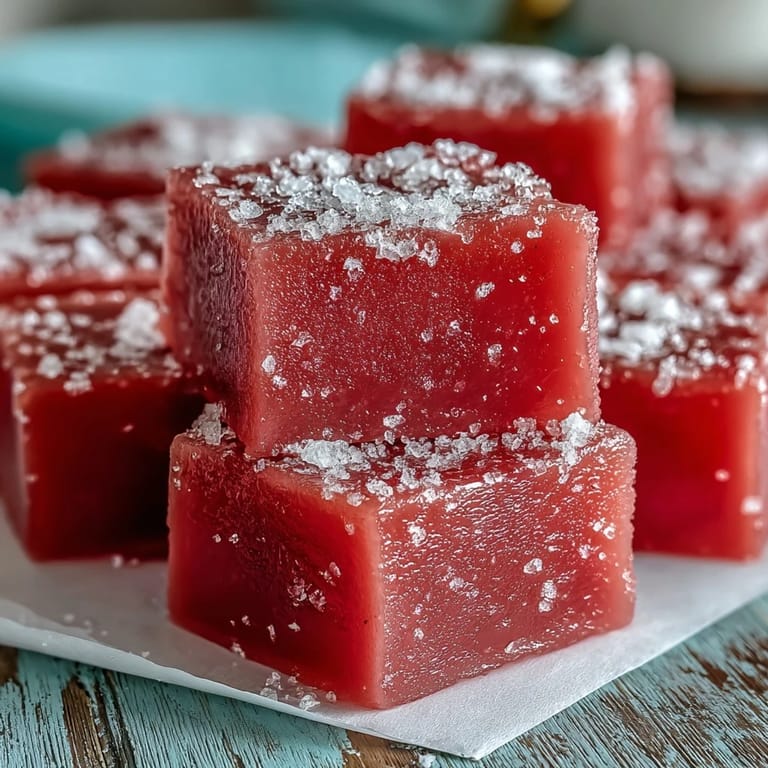
Save There's something about the smell of guava cooking down on the stove that stops you mid-conversation. A friend brought a bag of pink guavas to my kitchen one sticky afternoon, and instead of making the obvious smoothie, I found myself wondering what would happen if I let them transform into something dense and glossy and entirely different. Two hours later, I was cutting jewel-toned squares that tasted like a tropical secret wrapped in sugar and butter.
I served these at a dinner party and watched my mother-in-law reach for a third piece without asking what was in it. When I told her it was just guava, sugar, lime, and butter, she looked skeptical until she tasted it again. That moment—the quiet nod of approval—made the whole careful stirring worthwhile.
Ingredients
- Ripe guava (800 g, pink or white), peeled, deseeded, and chopped: The color matters here; pink guavas give you that stunning jewel tone, but white ones work beautifully too if you're after a more delicate look.
- Water (1/2 cup): Just enough to help the fruit break down without making your mixture watery or diluting that concentrated guava flavor.
- Granulated sugar (450 g): This amount is a starting point, so taste your guava first—some batches are sweeter than others, and you can adjust accordingly.
- Fresh lime juice (2 tbsp): The secret to brightness; it cuts through the sweetness and makes you taste guava all over again with each bite.
- Unsalted butter (2 tbsp, plus extra for greasing): Added at the very end, it makes the whole thing glossy and gives it that luxurious mouthfeel.
- Superfine sugar (1/4 cup, for optional coating): A light dusting makes these look like little jewels, though it's completely optional depending on your mood.
Tired of Takeout? 🥡
Get 10 meals you can make faster than delivery arrives. Seriously.
One email. No spam. Unsubscribe anytime.
Instructions
- Prepare your pan like you mean it:
- Grease an 8x8-inch baking pan with butter, line it with parchment paper, and let that paper hang over the edges—this is how you'll eventually lift the whole thing out without it sticking to your fingers. Think of it as giving yourself future you a break.
- Soften the guava gently:
- Drop your chopped guava and water into a heavy-bottomed saucepan and let it simmer over medium heat for about 15 minutes until the fruit completely falls apart. You'll know it's ready when a spoon passes through without resistance.
- Press it smooth:
- Blend everything until it's silky, then push it through a fine sieve to catch any stubborn seeds or fiber. This step feels tedious but makes all the difference in the final texture.
- Measure and return:
- You want exactly 2 cups of that puree back in your saucepan. Discard the rest or save it for tea.
- Build the mixture:
- Stir in sugar and lime juice, then turn the heat to medium and keep stirring constantly with a wooden spoon. This is where patience matters—don't walk away or you'll have scorched edges.
- Watch for the transformation:
- After 30 to 40 minutes, the mixture will thicken dramatically and start pulling away from the sides of the pan—you'll feel it resist the spoon. This is when you add butter and stir until everything looks glossy and holds its shape when you lift the spoon.
- Transfer while hot:
- Pour the entire mixture into your prepared pan and smooth the top with a spatula. It should be thick enough that it doesn't spread on its own.
- Let time do the work:
- Leave it untouched at room temperature for a full hour until it sets completely and firms up.
- Cut with confidence:
- Lift the whole block out using those parchment paper overhangs, then cut into squares or diamonds with a knife you've lightly greased. Wipe the knife between cuts for clean edges.
- Coat if you like:
- Roll finished pieces in superfine sugar if you want them to glisten, though they're beautiful plain.
 Save
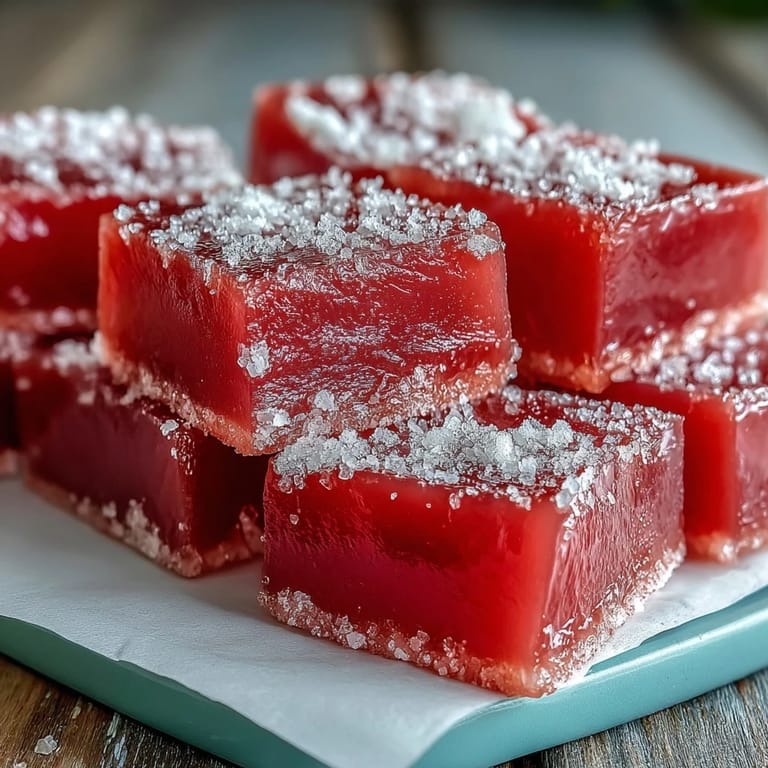
Save My neighbor stopped by while these were cooling and the aroma pulled her inside like a rope. She sat at my kitchen counter eating a piece of plain guava cheese with black tea, and we didn't talk about much—just the taste, the color, whether it was better than candy. Sometimes food is most honest in those quiet moments.
The Art of Knowing When It's Done
There's a specific moment when you'll feel the mixture shift under your spoon—it goes from moving freely to requiring actual effort, and that resistance is your signal that it's thick enough. Don't rely on time alone; watch for the glossy sheen and the way it holds a shape when you lift the spoon. Some people test it by dropping a tiny bit on a cold plate to check the consistency, which is smart if you're nervous about overcooking.
Why This Matters More Than Just Texture
Guava cheese isn't just a confection—it's how people in Goa have preserved the essence of their best fruit for generations, turning something fleeting into something that lasts. The careful cooking concentrates the flavor so intensely that each small piece tastes like summer itself. This recipe lets you do that at home, and suddenly you have something to gift or to reach for on an afternoon when you need a little brightness.
Storage, Serving, and the Unexpected Joy of Leftovers
These keep beautifully in an airtight container at room temperature for up to two weeks, though honestly they usually disappear faster than that. Serve them with strong tea, alongside soft cheese on a dessert board, or tucked into the pocket of someone you're thinking about. They're also wonderful crumbled over yogurt or tucked into the middle of vanilla cookies if you're feeling experimental.
- Keep your airtight container somewhere cool and dry, away from direct sunlight, so the color stays vivid.
- If you live somewhere humid, add a silica packet or two to prevent stickiness from building up.
- Bring them to room temperature before serving if you've stored them in a cool place—they taste better when they're not cold.
 Save
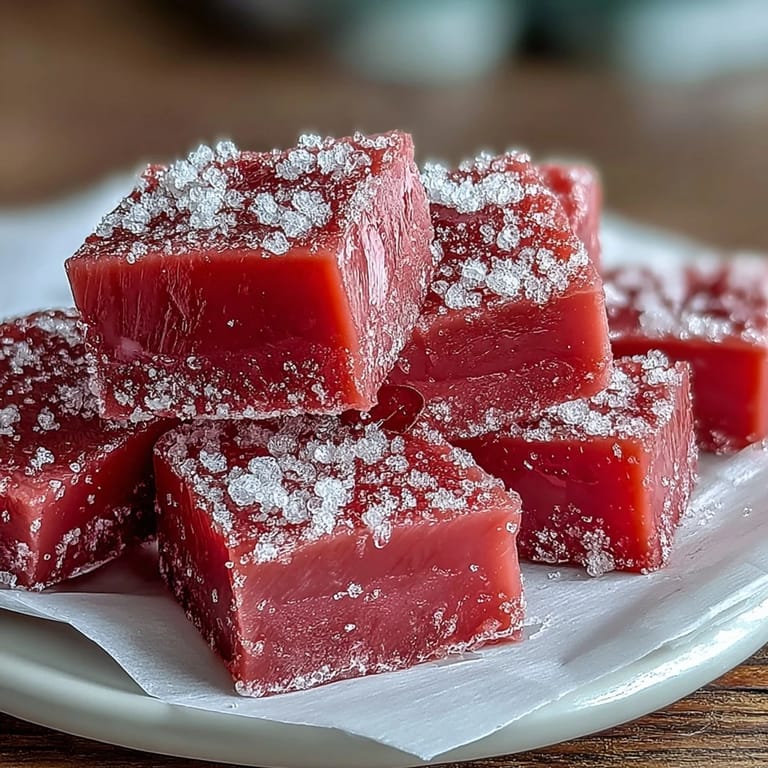
Save Make these once and you'll understand why they've been treasured for so long. They're the kind of thing that tastes like someone cared enough to spend time.
Recipe FAQs
- → What does guava cheese taste like?
Guava cheese offers a unique flavor profile combining sweet tropical guava with a subtle tang from fresh lime. The texture is dense and fudge-like, while the butter adds richness. It's less chewy than fruit leather but more concentrated than jam, with a fragrant, jewel-like appearance.
- → How do I know when the mixture is ready?
The mixture is ready when it thickens noticeably, pulls away from the sides of the pan, and forms a mass that holds its shape. This usually takes 30-40 minutes of constant stirring. The surface should appear glossy, and a spoon drawn through should leave a clear trail.
- → Can I use different types of guava?
Both pink and white guava varieties work well. Pink guava produces an attractive ruby-red color, while white guava yields a pale amber hue. The flavor difference is minimal, though pink guava tends to be slightly more aromatic.
- → How should I store guava cheese?
Store in an airtight container at room temperature for up to 2 weeks. The high sugar content acts as a natural preservative. Avoid refrigeration as it can make the texture too firm. If you must refrigerate, bring to room temperature before serving.
- → What can I serve with guava cheese?
This versatile confection pairs beautifully with soft cheeses like cream cheese or brie. Serve alongside afternoon tea, as part of a dessert platter, or crumbled over vanilla ice cream. Traditional Goan serving often includes it alongside savory snacks to balance flavors.
- → Why is it called cheese if there's no cheese?
The term cheese refers to the firm, sliceable texture rather than any dairy cheese content. The technique of cooking fruit puree with sugar until it sets into a solid mass is similar to cheese-making processes, hence the name common in Portuguese-influenced Goan cuisine.