 Save
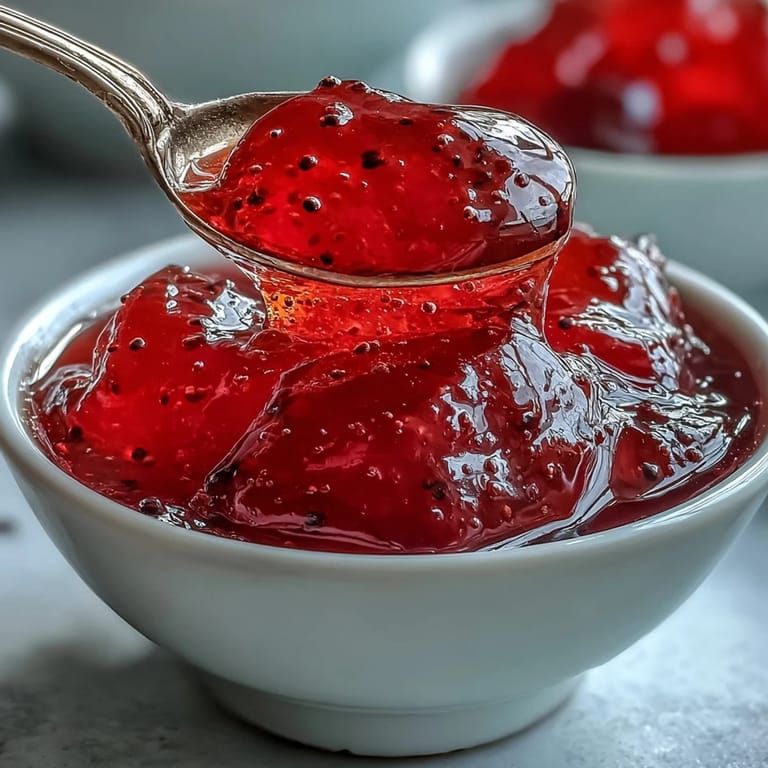
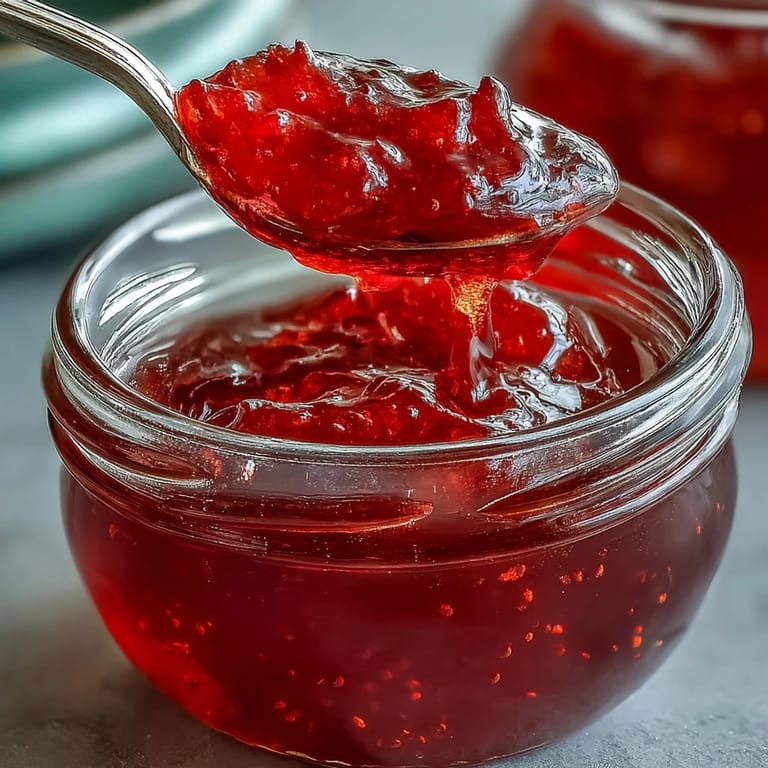
Save My first encounter with guava jelly happened in a small market in Puerto Rico, where an elderly vendor pressed a tiny spoon of it into my palm without asking. The color stopped me cold—deep rose, almost translucent, like stained glass catching afternoon light. That single taste unwound years of bland, artificially flavored preserves I'd grown used to, and I spent the rest of the trip hunting for the recipe. What I eventually learned is that the magic lives in patience: in letting fruit weep through cloth for hours without rushing it, in the discipline of not squeezing when every instinct says to.
Years later, I made this for my cousin's bridal shower, and it became the only thing people actually asked for the recipe of. I'd made elaborate desserts and savory tarts, but somehow this simple ruby jelly—spooned onto delicate wafers with soft cheese—was what made people close their eyes. Watching someone taste it for the first time still feels like sharing something intimate.
Ingredients
- Ripe guavas (1.5 kg): Choose fruit that yields slightly to pressure and smells perfumed, not the rock-hard ones—they have less juice and slower cooking. The skin should blush pink or yellow depending on variety.
- Water (4 cups): This extracts the guava's natural pectin and juice in a gentle simmer that keeps the color vibrant.
- Granulated sugar (4 cups): Measure after extraction; you'll adjust the ratio based on actual juice yield, using one cup sugar per cup of juice.
- Lemon juice (2 tbsp): Brightens the guava's flavor and helps the jelly set by boosting acidity without being obvious.
Tired of Takeout? 🥡
Get 10 meals you can make faster than delivery arrives. Seriously.
One email. No spam. Unsubscribe anytime.
Instructions
- Prepare your fruit:
- Wash each guava under running water, rubbing away any dirt. Quarter them roughly—the skins and seeds stay on because they're packed with pectin that you'll strain out later, not discard.
- Start the simmer:
- Pile the guava pieces into your largest saucepan, pour in the water, and bring it to a boil over medium heat. You'll smell the guavas' tropical sweetness intensify as they heat.
- Gentle cooking:
- Lower the heat and let it bubble gently for 30 minutes, stirring occasionally, until every piece is collapse-soft and the liquid has turned a sunset orange-red.
- The patience layer—straining:
- Line your strainer with two layers of damp cheesecloth and set it over a bowl. Pour everything in, and then—this is crucial—leave it completely alone for at least 2 hours, preferably overnight. The liquid drips through on its own, leaving skins and seeds behind. Do not press or squeeze.
- Measure and sweeten:
- Once the dripping stops, measure your juice carefully. Pour it into a clean pan, stir in lemon juice, then add sugar at a 1:1 ratio (one cup sugar per cup juice).
- Dissolve and reach gel stage:
- Over high heat, stir constantly until the sugar dissolves completely, then let it boil rapidly without stirring. Watch your candy thermometer—you're aiming for 220°F (104°C), which usually takes 15–20 minutes. Skim off any foam that rises.
- Test for doneness:
- Drop a small spoonful onto a cold plate. Push it gently with your finger—if it wrinkles and holds its shape, you've reached gel stage. If it's still liquid, keep boiling.
- Jar and seal:
- Pour the hot jelly into sterilized jars, leaving 1/4-inch headspace, and seal immediately with lids. The heat will form a seal as it cools.
- Cool completely:
- Let the jars sit undisturbed at room temperature until fully cool, then store in a cool, dark place.
 Save
Save There's a particular quiet that settles over the kitchen when jelly finally sets—a small but unmissable victory. I remember pressing the edge of a sealed jar with my thumb and feeling that slight resistance, knowing the chemistry had worked, and feeling oddly proud over something so simple.
Choosing the Right Guavas
The difference between a mediocre batch and an exceptional one often comes down to fruit selection. Ripe guavas should smell intensely fragrant—almost perfume-like—and give slightly to gentle pressure without being mushy. Slightly underripe fruit actually works best here because it contains more natural pectin, which means your jelly will set more reliably and taste brighter. Avoid the pink-fleshed varieties that are mealy or past their prime.
Why Patience Matters in Preservation
Making jelly teaches you something about accepting natural rhythms instead of forcing them. That overnight drip isn't wasted time—it's when the fruit gradually surrenders its essence through gravity alone, producing a clear, refined juice that boils down into something luminous. Rushing this step by pressing the fruit might give you more volume, but you lose the clarity that makes this jelly special. There's a lesson in that about quality versus quantity.
Creative Uses Beyond Toast
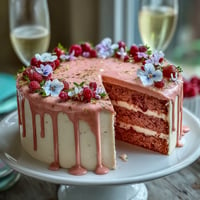
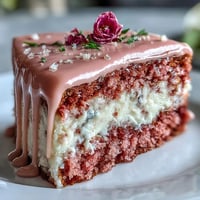
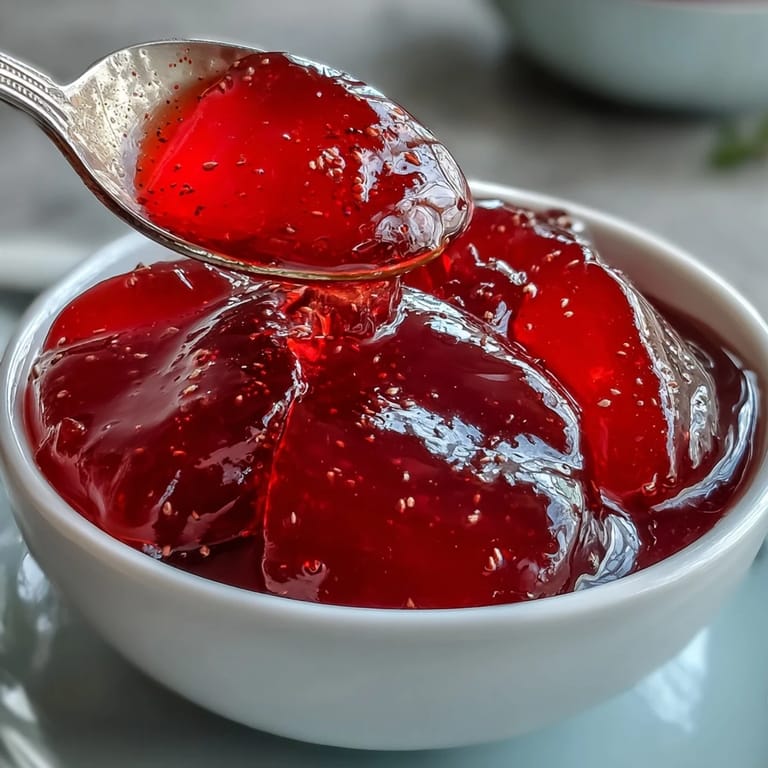
While guava jelly is perfect swirled onto morning toast, the real magic happens when you use it as a baker. A small spoonful fills thumbprint cookies or centers shortbread sandwiches with surprising elegance. I've brushed it over a baked ham in the last few minutes of cooking, thinned it with a splash of water as a cake glaze, or even stirred a spoonful into Greek yogurt for an afternoon snack that feels like dessert. The intensity of guava flavor means a little goes a long way, stretching those four cups further than you'd expect.
- Layer it between vanilla cake layers with whipped cream for a simple but impressive dessert.
- Swirl into cream cheese before spreading on a cheeseboard for unexpected depth.
- Store opened jars in the refrigerator and use within three weeks for best flavor.
 Save
Save This jelly is proof that the simplest recipes often contain the most satisfying chemistry. Make it once, and you'll understand why people have preserved guavas the same way for generations.
Recipe FAQs
- → How do I know when the jelly is ready to can?
The jelly reaches the proper consistency when it hits 220°F (104°C) on a candy thermometer. You can also test by placing a small spoonful on a cold plate—if it wrinkles when pushed with your finger, it's ready. This usually takes 15-20 minutes of rapid boiling.
- → Why shouldn't I press the fruit while straining?
Pressing or squeezing the fruit releases particles that make the final jelly cloudy. Allowing the juice to drip naturally through cheesecloth for several hours or overnight ensures crystal-clear results with that beautiful jewel-toned appearance.
- → Can I use overripe guavas for this?
While ripe guavas provide the best flavor, using slightly underripe fruit along with ripe ones actually helps. Underripe guavas contain more natural pectin, which helps the jelly set properly without needing additional commercial pectin.
- → How long does homemade guava jelly last?
Properly sealed and processed jars stored in a cool, dark place will keep for up to a year. Once opened, refrigerate and use within three weeks for the best quality and freshness.
- → What can I use guava jelly for besides toast?
This versatile preserve shines as a filling for thumbprint cookies, a glaze for sponge cakes or cheesecakes, a topping for ice cream, or even swirled into yogurt. Its tropical sweetness pairs beautifully with cream cheese on bagels too.
- → Do I need to add commercial pectin?
No additional pectin is required. Guavas naturally contain plenty of pectin, especially when using slightly underripe fruit. The combination of natural fruit pectin, sugar, and lemon juice creates perfect gelling without any additives.