 Save
Save My neighbor Maria handed me a jar of homemade guava paste one afternoon, the ruby-red contents gleaming like jewels against the afternoon light. She'd made it from guavas her cousin grew, and one taste—that perfect balance of floral sweetness and gentle tartness—made me understand why this simple preserve appears on tables across Latin America. I spent weeks reverse-engineering her recipe, standing at my own stove with a wooden spoon, watching the mixture transform from runny purée to glossy, thickened paste. What started as curiosity became an obsession, and now I make batch after batch, each one more confident than the last.
I first served this paste to friends at a weekend gathering, arranged it on a board with sharp Manchego and thin crackers, and watched their faces light up when they tasted it. Someone asked if I'd bought it from a specialty shop, and admitting I'd made it felt like sharing a small secret. That moment taught me that homemade condiments carry a different kind of generosity than fancy storebought versions—they say you took time, paid attention, and cared enough to get it right.
Ingredients
- Ripe guavas, 1 kg (2.2 lbs): Choose fruit that yields slightly to gentle pressure and smells floral and sweet—underripe guavas will taste too tart, while overripe ones may be mealy and lack structure.
- Granulated sugar, 450 g (2 1/4 cups): This ratio is a starting point; if your guavas taste particularly sweet, reduce the sugar by up to half a cup for a less cloying paste.
- Fresh lemon juice, 2 tbsp: Never skip this—the acid cuts through richness, brightens flavor, and helps the paste set properly as it cools.
- Water, 120 ml (1/2 cup): This initial liquid helps the guavas break down during simmering, but don't be tempted to add more or your paste will take forever to thicken.
Tired of Takeout? 🥡
Get 10 meals you can make faster than delivery arrives. Seriously.
One email. No spam. Unsubscribe anytime.
Instructions
- Prepare and cook the guavas:
- Wash each guava under running water, trim both ends with a sharp knife, then cut them into quarters lengthwise. If you prefer an ultra-smooth paste without any grittiness, remove the seeds now by scraping them out with a small spoon—otherwise, you'll strain them out later. Place the quarters in a large saucepan with the water and bring to a boil over medium heat, then reduce to a simmer, cover, and cook for 15 to 20 minutes until the fruit is completely soft and breaks apart easily when pressed.
- Strain into a silky purée:
- Working carefully, pour the hot cooked guavas into a fine mesh strainer set over a clean bowl, using the back of a wooden spoon to press the soft fruit through while leaving seeds and skins behind. If you have a food mill, use it instead for a faster, more even result—this step is crucial for that elegant, smooth final texture.
- Calculate and combine your sweetener:
- Measure your guava purée (it should yield roughly 3 to 4 cups depending on water content), then return it to the pot and add sugar and lemon juice. Stir well to dissolve the sugar, which should happen almost immediately over gentle heat.
- Cook down with patience and attention:
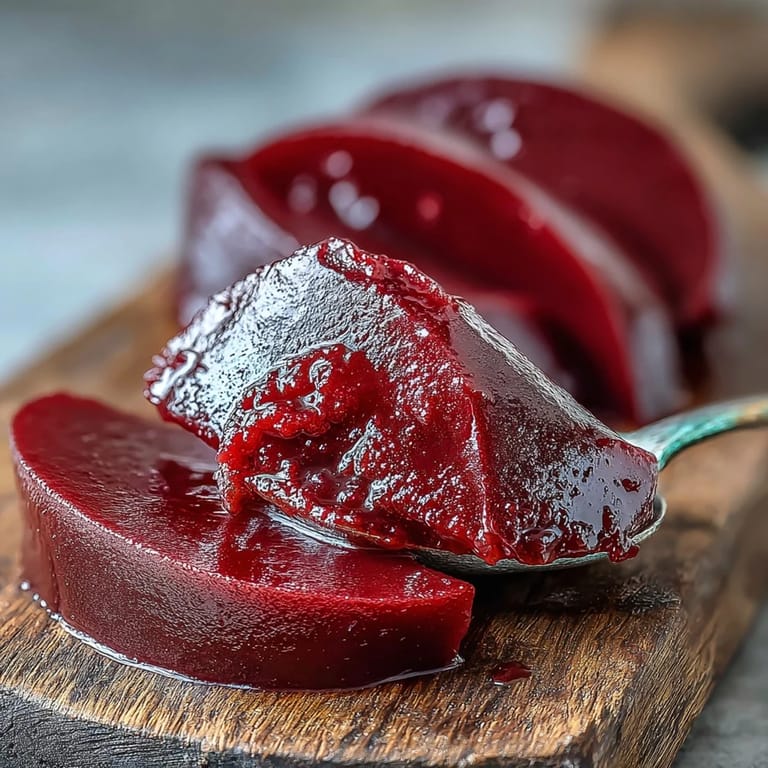
- Once combined, set your heat to low—this is non-negotiable, as high heat will cause the mixture to scorch on the bottom and taste burnt. Stir constantly with a wooden spoon for 40 to 50 minutes, scraping the edges and bottom regularly so nothing catches. You'll notice the mixture gradually darkening, thickening, and eventually becoming glossy and reluctant to drip from your spoon.
- Test for doneness and set:
- When a small amount of paste holds its shape on a cold spoon without running and pulls away from the sides of the pan as you stir, it's ready. Pour immediately into a parchment-lined loaf pan or shallow baking dish, smooth the top with a spatula, and let cool completely at room temperature for 2 to 3 hours—it will continue to firm up as it cools.
- Unmold and slice:
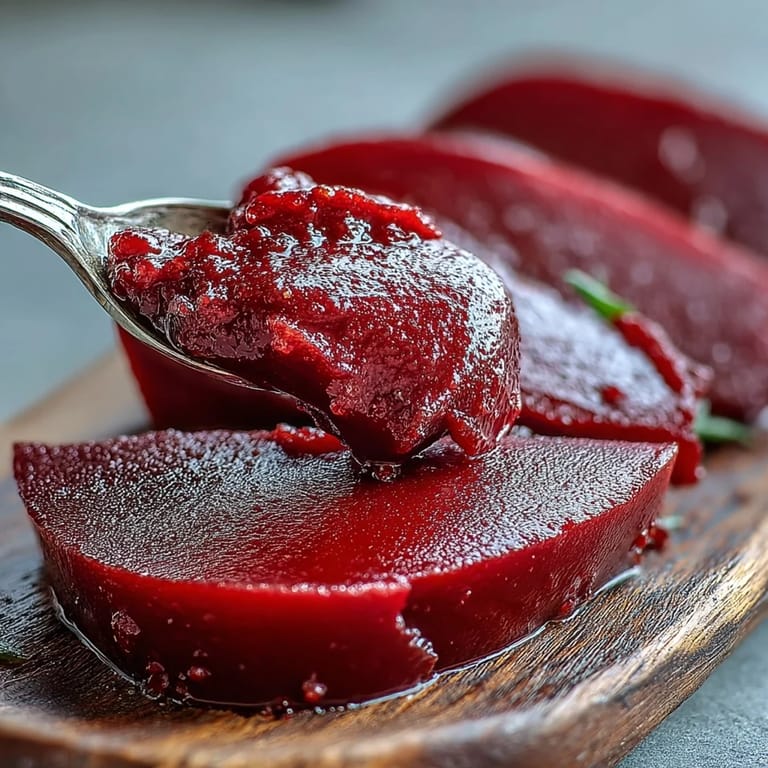
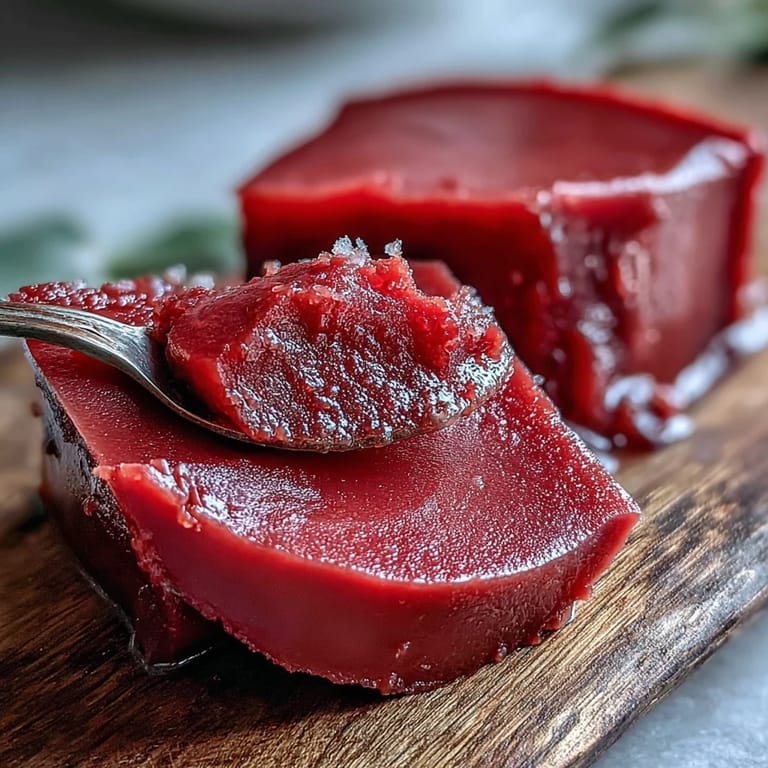
- Once set, run a thin knife around the edges and turn the paste out onto a cutting board. Slice with a sharp knife dipped in hot water and wiped dry between cuts for clean, neat slices.
 Save
Save Years later, I still make this paste in late summer when guavas flood the markets, and I've learned it's become the gift people request by name. There's something deeply satisfying about transforming fresh fruit into something that lasts, that improves with a few days of rest in the refrigerator, and that tastes even better weeks later than it did fresh from the pan.
Choosing Your Guavas
The success of your paste depends almost entirely on the fruit you begin with, and this is where most home cooks make their first mistake. Guavas should smell intensely fragrant and tropical—if you have to sniff hard to detect any scent, they're not ripe enough. Pink or white fleshed varieties both work beautifully, though I've found pink-fleshed guavas tend to yield a more vibrant color and slightly deeper flavor, while white-fleshed varieties produce a more delicate, subtle paste. Visit a Latin market if possible, as supermarket guavas are often picked underripe and never quite develop the complexity you're after.
Storage and Keeping
Once sliced, store your paste in an airtight container in the refrigerator where it will happily keep for three months, though honestly it never lasts that long in my house. The paste can also be frozen in small portions wrapped in plastic wrap, ready to thaw whenever you want to impress someone with a cheese board or fill a pastry. I've learned the hard way that moisture is the enemy of shelf stability, so make sure your container is truly airtight and that you don't leave it sitting at room temperature for extended periods.
Serving Suggestions and Pairings
This paste shines brightest when you treat it as a bridge between sweet and savory, neither just a dessert nor just a condiment. I've served it with sharp aged cheeses like Manchego or Gruyère, on crackers with salted nuts, swirled into plain yogurt for breakfast, or as the filling in butter cookies and hand pies. The paste also makes an exceptional glaze for roasted pork or duck if you're feeling adventurous, and it transforms an ordinary plate of churros into something memorable.
- Pair with Manchego cheese and thin crackers for an effortless, showstopping appetizer.
- Dollop into plain or vanilla yogurt with granola for a sophisticated breakfast.
- Use as a filling for alfajores, empanadas, or any simple butter cookie you love.
 Save
Save Making guava paste is one of those small kitchen skills that feels like magic the first time it works, then becomes second nature once you understand how the fruit behaves. I hope you'll make it, taste it warm from the pan on a cracker, and discover why it's been a beloved staple across Latin America for generations.
Recipe FAQs
- → How do I know when the guava paste is ready?
The paste is ready when it becomes thick, glossy, and holds its shape on a spoon. It should pull away from the sides of the pan as you stir, leaving a clean path behind. This typically takes 40-50 minutes of constant stirring over low heat.
- → Can I use frozen guavas instead of fresh?
Yes, frozen guavas work well for this paste. Thaw them completely before using, and drain any excess liquid that accumulates during thawing. The cooking time may need slight adjustment depending on water content.
- → What's the best way to store guava paste?
Store in an airtight container in the refrigerator for up to 3 months. For longer storage, wrap individual portions tightly in plastic wrap and freeze for up to 6 months. Thaw in the refrigerator before using.
- → Do I need to remove the seeds before cooking?
Removing seeds before cooking is optional but recommended for the smoothest texture. If you prefer a more rustic paste, you can cook the guavas with seeds, then strain everything through a food mill or fine mesh sieve afterward.
- → Why add lemon juice to the paste?
Lemon juice serves two purposes: it balances the sweetness with bright acidity and helps the paste set properly through its natural pectin content. The acid also enhances the guava's natural tropical flavor.
- → Can I reduce the amount of sugar?
You can reduce sugar slightly, but keep in mind that sugar acts as a preservative and helps achieve the proper texture. Less sugar may result in a softer, less shelf-stable paste that doesn't set as firmly.