 Save
Save A friend visiting from Marrakech once told me that the secret to a proper tagine isn't really a secret at all—it's patience and the willingness to let spices wake up slowly in hot oil. That conversation stuck with me for years, and when I finally made this chicken tagine on a cold December evening, it hit me: she was right. The way the cinnamon and cumin filled my kitchen before the chicken even touched the pot, how the apricots softened into something almost honey-like—it transformed an ordinary Thursday dinner into something that felt like traveling.
I made this for a small gathering last fall, and what surprised me most wasn't the flavor—it was watching everyone slow down to really taste it. Someone asked for the recipe before dessert even arrived, which has never happened before. There's something about a tagine that makes people actually pay attention to what they're eating.
Ingredients
- Chicken thighs (1.5 lbs, bone-in and skin-on): Skip the breasts; thighs stay juicy through the long simmer and their deeper flavor stands up beautifully to the spices.
- Onion, garlic, and ginger: This is your flavor foundation—don't skimp on mincing the garlic fine or grating the ginger fresh.
- Spice blend (cumin, coriander, cinnamon, paprika, turmeric, cayenne): Toast them mentally as you add each one; you'll taste the difference between going through the motions and actually cooking.
- Dried apricots and preserved lemon: These are what make it Moroccan; the apricots add sweetness and body, while the preserved lemon brings an almost floral tang that regular lemon juice can't touch.
- Green olives: Buy pitted ones if you can—it saves time and keeps your sauce tasting bright rather than bitter.
- Almonds and cilantro: These are your finishing flourish; they add texture and freshness that balance the long simmer.
Tired of Takeout? 🥡
Get 10 meals you can make faster than delivery arrives. Seriously.
One email. No spam. Unsubscribe anytime.
Instructions
- Dry and season your chicken:
- Pat those thighs completely dry with paper towels—it's the only way they'll brown properly and develop that golden crust that brings depth to your sauce.
- Brown the chicken:
- Heat your oil until it shimmers, then listen for the sizzle. You want a deep golden color on each piece, about 5 to 7 minutes total. Don't rush this step; it's building flavor.
- Sauté the vegetables:
- Once the chicken is out, the onions and carrots go in with just a pinch of salt to help them release their water. After about 5 minutes, they should be soft and slightly caramelized at the edges.
- Bloom your spices:
- Add the garlic, ginger, and all those warm spices to the pan and stir constantly for about 60 seconds. Your kitchen will smell like Morocco—you'll know when it's right.
- Build your sauce:
- The diced tomatoes go in next, and you scrape the bottom of the pan to get every bit of those brown, flavorful bits. This is where depth comes from.
- Combine and simmer:
- Return the chicken to the pot with the apricots, preserved lemon, and broth. Once it comes to a simmer, lower the heat, cover it, and let it cook gently for 45 minutes, stirring occasionally so nothing sticks.
- Finish with olives:
- Add the olives and simmer uncovered for another 10 minutes. You'll notice the sauce reducing and thickening, becoming silkier.
- Taste and adjust:
- Take a moment to taste it. Does it need more salt? A whisper more cinnamon? Trust your palate.
- Serve with garnish:
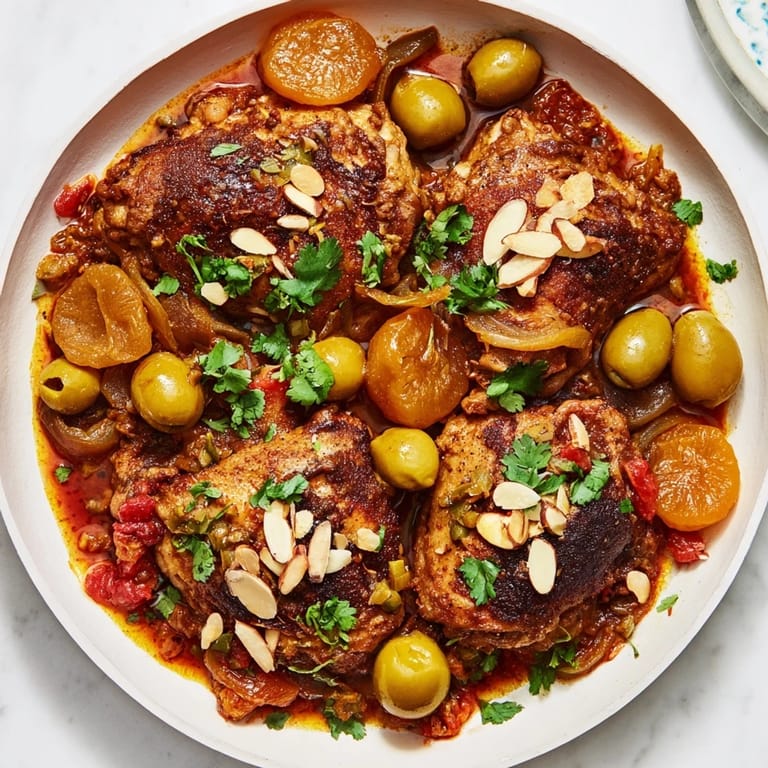
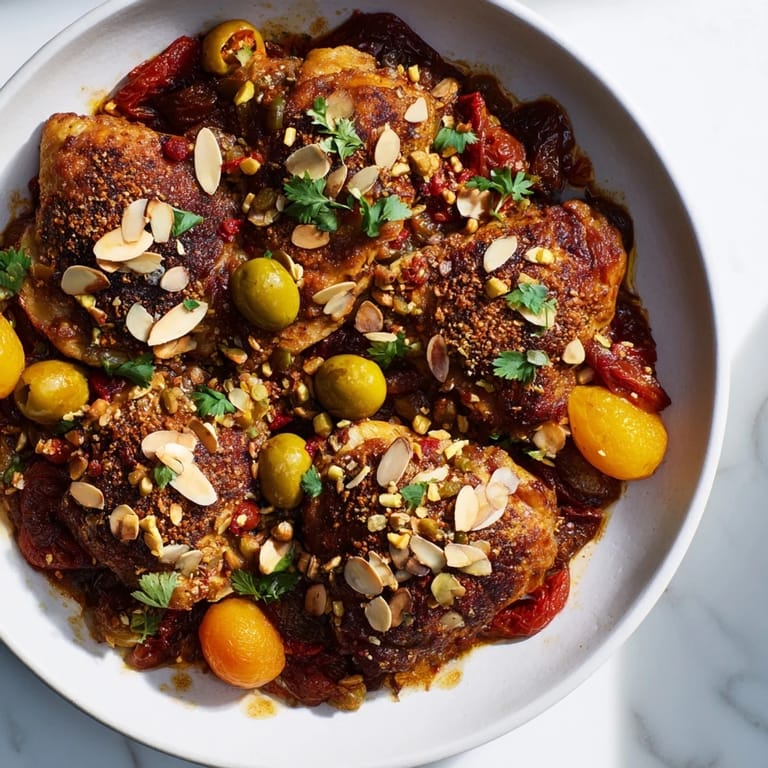
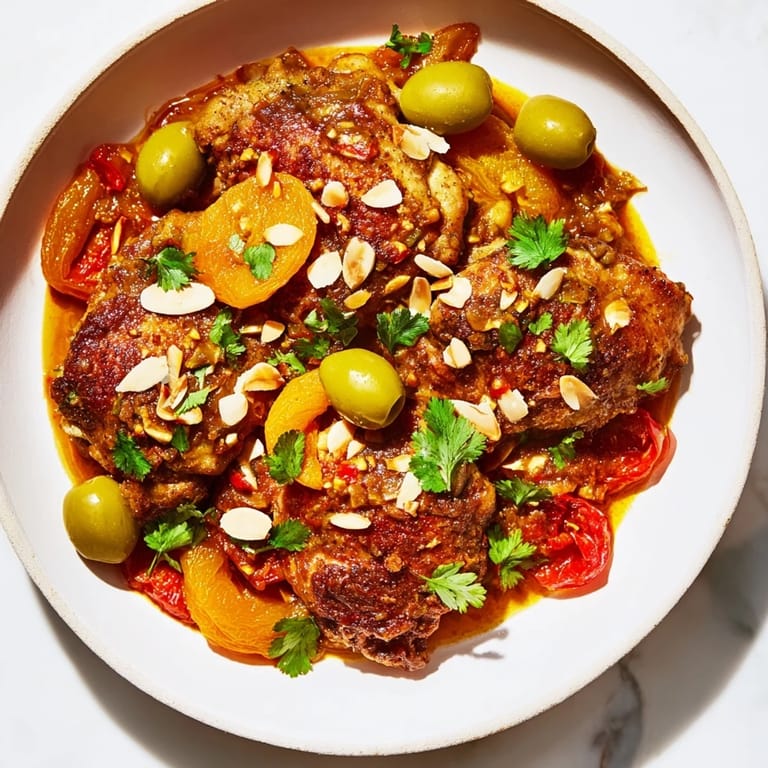
- Scatter cilantro and toasted almonds on top just before serving, and watch people lean in closer to their bowls.
 Save
Save What I love most about making this dish is how it transforms my kitchen into something warm and inviting, like an old friend has decided to stay for dinner. The smell alone—that mix of cinnamon, cumin, and slowly braising chicken—makes whatever day you're having feel a little bit softer.
Pairing and Serving Ideas
Serve this with fluffy couscous, fragrant rice, or warm flatbread—whatever you choose becomes a vehicle for that incredible sauce. I've found that couscous soaks up the flavors the most generously, but rice keeps things lighter if you're already feeling full from the rich spices. The key is having something to cradle the chicken and sauce, because you won't want to waste a single drop.
Making It Your Own
This tagine is forgiving enough to bend to what you have on hand. I've made it with butternut squash instead of carrots on a whim, and it was even better. If you're vegetarian, swap the chicken for chickpeas and add root vegetables—spinach, beets, or sweet potato all work beautifully. The spices are the real star here, so even when you improvise with the main ingredients, the soul of the dish stays intact.
A Note on Spices and Heat
The cayenne pepper I list is optional because some people are sensitive to heat, and this dish shines whether you include it or not. If you want more warmth, add a pinch of harissa paste along with the spices, or increase the cayenne to ¼ teaspoon—it gives you a slow burn rather than a shock. The beauty of this dish is that it's warm and comforting even when it's not spicy.
- Taste as you go and adjust seasoning at the end; you can always add more spice but you can't take it out.
- Toasted almonds scattered on top aren't just decoration—they add a subtle crunch that makes every bite more interesting.
- Fresh cilantro is non-negotiable for balance; it cuts through the richness and reminds your palate that spring exists.
 Save
Save This tagine is the kind of dish that settles into your regular rotation quietly and stays there. It's comforting without being heavy, impressive without requiring you to be a trained chef.
Recipe FAQs
- → What type of chicken is best to use?
Bone-in, skin-on chicken thighs are ideal for tender, flavorful results due to their higher fat content and ability to stay moist during slow cooking.
- → Can I substitute dried apricots?
Dried apricots provide a natural sweetness and texture; dried peaches or figs can be used as alternatives, but taste may vary.
- → How long should I cook the dish?
Simmer covered for about 45 minutes, then uncovered with olives for an additional 10 minutes to thicken the sauce and develop flavors.
- → Is preserved lemon necessary?
Preserved lemon adds authentic tang, but it can be omitted or replaced with fresh lemon zest for a milder citrus note.
- → What sides complement this dish?
Steamed couscous, rice, or warm flatbread are traditional accompaniments that soak up the rich sauce perfectly.
- → Can I make a vegetarian version?
Yes, substitute chicken with chickpeas and root vegetables for a hearty plant-based variation without losing flavor depth.