 Save
Save There's something about the smell of rosemary hitting hot olive oil that makes me drop everything I'm doing. Years ago, I was making roasted chicken for company and tossed some potato wedges on a side sheet, not really thinking much about it—just trying to fill space on the plate. But when those wedges came out of the oven with their edges all golden and crispy, and I dusted them with Parmesan that melted into every crevice, everyone at the table kept reaching for more than the actual main course. That's when I realized these weren't just a side dish; they were the thing people actually wanted.
I made these for my sister's casual weeknight dinner once, and she ate so many she got this guilty look and asked if the recipe was complicated, like she needed to justify the overindulgence. When I told her it was literally just potatoes and seasonings, she laughed and went back for seconds. There's something disarming about food that tastes indulgent but requires almost no fuss—it makes people relax.
Ingredients
- Russet potatoes: Medium ones are key because they're starchy enough to crisp beautifully without getting hollow inside; I've learned the hard way that smaller potatoes can dry out.
- Olive oil: This is what actually creates that crispy exterior, so don't skimp or use a light hand—generously coat every surface.
- Kosher salt: It tastes cleaner than table salt, and the larger crystals give you better seasoning control as you toss.
- Fresh rosemary: If you can get it, use fresh; dried will work but tastes more like perfume, so cut the amount in half if you're unsure.
- Garlic powder: This ties everything together with a subtle savory depth that people often can't quite identify but definitely notice.
- Freshly grated Parmesan: Pre-grated cheese has anti-caking agents that make it harder to melt smoothly; fresh from a wedge gives you that creamy, melted coating.
Tired of Takeout? 🥡
Get 10 meals you can make faster than delivery arrives. Seriously.
One email. No spam. Unsubscribe anytime.
Instructions
- Get your oven ready and prep the potatoes:
- Preheat to 425°F and line your sheet with parchment—this prevents sticking and makes cleanup effortless. While it heats, scrub your potatoes under cold water and cut them into wedges about half an inch thick; consistent sizing means they cook evenly instead of some burning while others stay soft.
- Coat everything in the oil and seasonings:
- Dump your wedges in a large bowl and pour the olive oil over them, then sprinkle in the salt, pepper, rosemary, and garlic powder. Toss until every piece is glistening and coated; you want no bare spots because that's where dryness sneaks in.
- Spread them out for maximum heat exposure:
- Lay the wedges on your prepared sheet in a single layer with the flat cut side down—this is what creates that lacey, crispy bottom. They should touch but not overlap, so give them breathing room.
- Bake and flip halfway through:
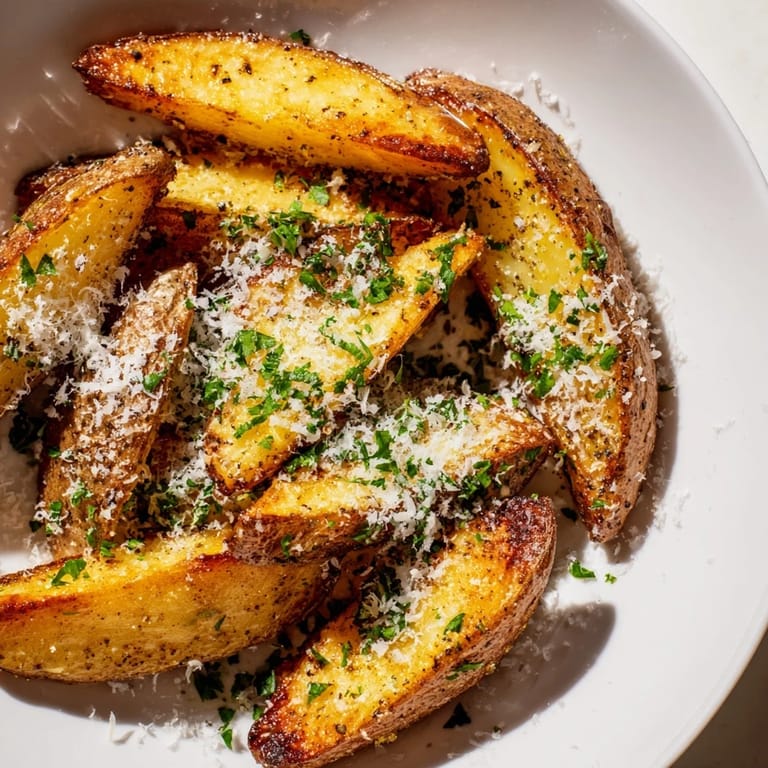
- Slide into the 425°F oven for about 30 to 35 minutes, flipping everything halfway through so both sides get golden and crispy. You'll know they're done when the edges look almost caramelized and a fork slides through the thickest part with no resistance.
- Finish with warm Parmesan:
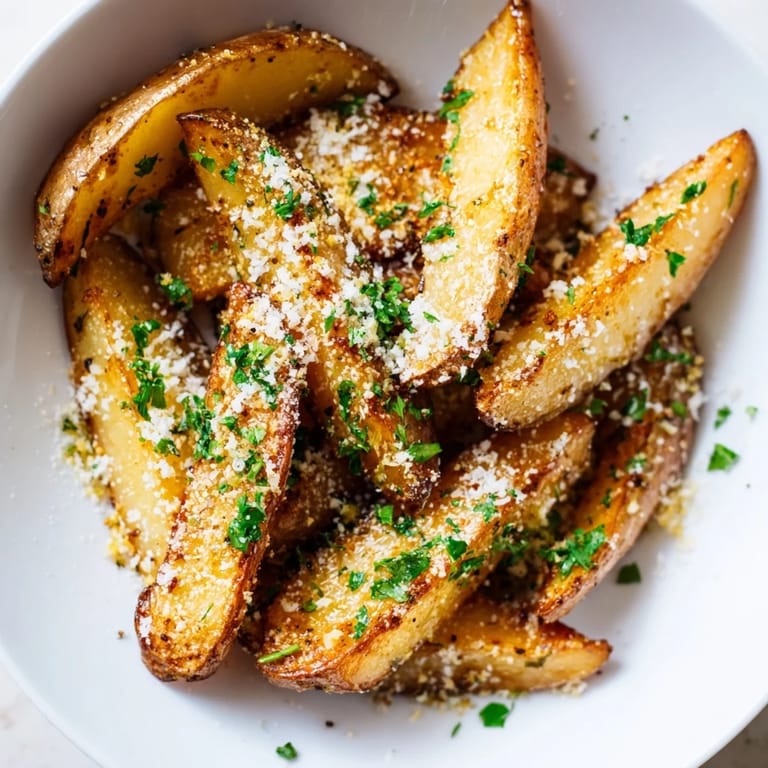
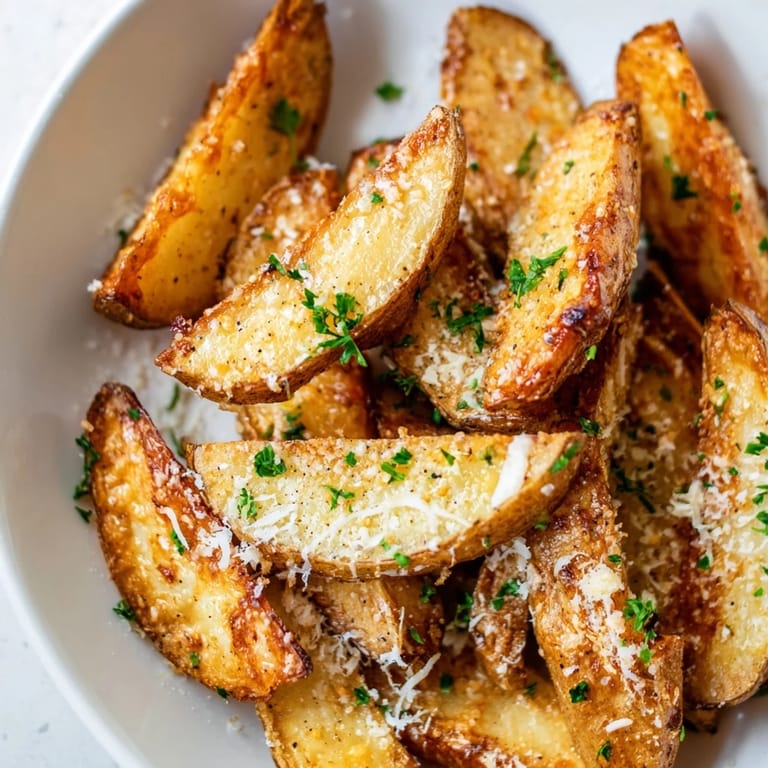
- Pull them out of the oven while they're still steaming, and immediately sprinkle the cheese over top—the heat will soften it into every crack and corner. Give everything a gentle toss so it coats evenly, then scatter fresh parsley if you have it and serve while the cheese is still melting.
 Save
Save There was this one time my nephew came over and refused to eat vegetables, but he demolished these wedges without realizing what he was doing. His mom kept saying, 'That's potato,' and he'd look confused and keep eating. Sometimes the best cooking moment isn't about impressing people who are looking; it's about changing minds without anyone noticing.
The Crispy Edge Secret
I spent way too long trying to figure out why some batches came out soggy before I understood that spacing matters more than anything else. Crowding the pan is the enemy—your wedges need heat from all sides, not steam trapping them together. Now I use two baking sheets if I'm cooking for a crowd, and it completely changes the game.
Why Fresh Rosemary Actually Matters
Dried rosemary tastes almost medicinal if you use the same amount as fresh, but fresh leaves have this bright, almost piney flavor that feels natural on your palate. I keep a small potted rosemary plant on my kitchen windowsill now, and it's one of those small decisions that makes cooking feel less like a chore and more like having a friend there whispering that you're doing it right.
Serving and Pairing Ideas
These wedges are wonderful beside grilled chicken or fish, but they're equally at home as the main event with a simple salad and bread. They reheat surprisingly well in a 350°F oven for about 10 minutes if you have leftovers, though honestly, there's something about eating them immediately, when they're still hot and the cheese is still soft, that you can't quite replicate later.
- Serve with garlic aioli for dipping, or keep it simple with a sprinkle of fleur de sel.
- A dollop of sour cream mixed with fresh dill creates a cool, herby contrast that people love.
- If you want extra flavor, dust with a pinch of smoked paprika or red chili flakes before they go into the oven.
 Save
Save These potato wedges have become my answer to 'what should I bring' because they feel homemade without feeling stressful to pull off. They're the kind of dish that reminds you that the simplest ingredients, treated with a little attention and care, are often the ones people come back for.
Recipe FAQs
- → How do I make the wedges extra crispy?
Soaking the potato wedges in cold water for 30 minutes before baking removes excess starch, which helps achieve a crispier texture. Be sure to pat them dry thoroughly before coating with oil and seasonings.
- → Can I use dried rosemary instead of fresh?
Yes, dried rosemary can be used. Use half the amount of dried rosemary compared to fresh to avoid overpowering the flavors.
- → At what temperature should I bake the potato wedges?
Bake the wedges at 425°F (220°C) for 30–35 minutes, flipping halfway through for even crispiness and golden edges.
- → What can I substitute for Parmesan cheese?
Grated Pecorino Romano or a hard vegan cheese alternative can be used to maintain a cheesy, savory finish if you prefer or require a substitution.
- → Are these wedges suitable for gluten-free diets?
Yes, these potato wedges contain no gluten ingredients and are naturally gluten-free, perfect for gluten-sensitive diets.
- → What dipping sauces complement these wedges?
Garlic aioli, ketchup, or spicy chili sauces pair wonderfully with these herbed, cheesy wedges for added flavor contrast.