 Save
Save The first time I held a cleaned sheep's stomach in my hands, I wasn't sure whether to feel brave or slightly unhinged. But my Scottish grandmother had just handed it to me with the kind of matter-of-fact confidence that only comes from generations of tradition, and suddenly the whole enterprise made sense. Haggis isn't just meat and oats stuffed into a casing—it's a conversation between what you'd normally discard and what turns into something genuinely magnificent. That day in her kitchen, with steam rising from the pot and the spice-laden smell filling the air, I understood why this dish has survived centuries.
I served haggis to a table full of Londoners who'd spent their whole lives avoiding it based purely on reputation, and I watched their faces shift from skeptical to surprised to genuinely impressed within moments. One person actually asked for seconds without any irony whatsoever. That's when I realized haggis has an almost secret power—it breaks through preconceptions and proves that tradition exists for a reason.
Ingredients
- Sheep's heart, liver, and lungs (500 g): These organ meats are the soul of haggis, providing deep, complex flavor that no regular mince can replicate; if they feel intimidating to source, quality lamb or beef liver mince works beautifully as a substitute.
- Beef or lamb suet (200 g): This fat binds everything together and keeps the haggis moist during the long simmer; don't skip it or swap it for oil, as the texture completely changes.
- Steel-cut oats (150 g): Toasting them first adds a subtle nuttiness that elevates the whole dish; this small step genuinely transforms the flavor profile.
- Onions (2 medium): They should be finely chopped so they practically disappear into the mixture, adding sweetness and body without any harsh bite.
- Beef stock (250 ml): Use stock with real flavor, not the watered-down kind; it's what brings everything into harmony.
- Spices (black pepper, coriander, nutmeg, allspice): These aren't just flavor—they're the fingerprint that makes haggis feel alive on your tongue; don't measure carelessly here.
- Sheep's stomach or sausage casing: If you can't find a cleaned stomach, a large sausage casing or even an oven-proof pudding basin works just fine; the casing is really just a vehicle for the magic inside.
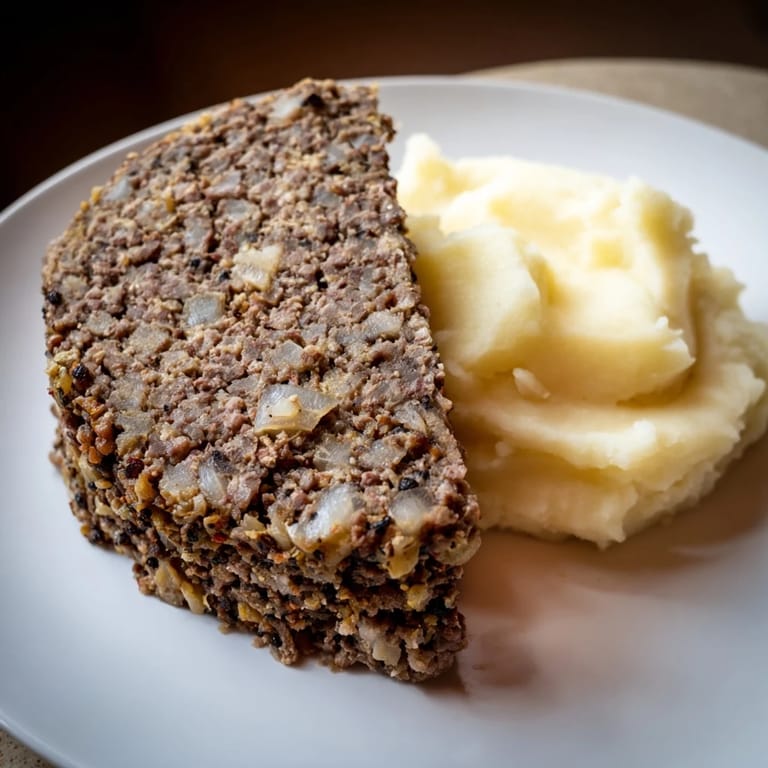
- Potatoes and turnips (500 g each): These are your steadying companions, mild and buttery, balancing the assertive richness of the haggis.
Tired of Takeout? 🥡
Get 10 meals you can make faster than delivery arrives. Seriously.
One email. No spam. Unsubscribe anytime.
Instructions
- Start by honoring the offal:
- Rinse the sheep's heart, liver, and lungs thoroughly under cold water—this removes any remaining blood or grit and shows respect for the ingredient. Place them in a large pot with cold water, bring to a boil, then turn the heat down to a gentle simmer and let them cook for 1 to 2 hours until they're completely tender; the kitchen will smell earthy and rich, and you'll know they're done when a fork passes through without resistance.
- Build the base mixture:
- Once the offal has cooled enough to handle, mince it finely—either with a knife or a food processor—until it has no large chunks. In a large mixing bowl, combine this minced offal with your finely chopped suet, toasted oats, minced onions, and optional lamb or beef mince, stirring until everything is evenly distributed.
- Bring it all together:
- Add the beef stock (and any reserved cooking liquid if you like extra moisture) along with your measured spices and salt, then mix thoroughly until the texture is moist and cohesive but not sloppy. This is the moment to taste and adjust seasonings if your instinct tells you to.
- Fill and prepare for cooking:
- If using a casing, rinse it well and carefully fill it with the mixture, leaving enough room at the top for the haggis to expand slightly during cooking, then tie off the ends with kitchen twine. If using a pudding basin, simply spoon the mixture in and cover the top tightly with foil.
- Cook with patience:
- Place your filled casing or basin in a large pot of gently simmering water, making sure the water comes halfway up the sides but doesn't cover the top. Let it simmer gently for 2 hours, checking the water level every 30 minutes or so and topping up if needed; you want a steady, calm simmer, not a rolling boil.
- Prepare the companions:
- While the haggis cooks, boil your potatoes and turnips separately in salted water until they're fork-tender, which usually takes about 20 to 25 minutes. Drain each thoroughly, then mash with a generous knob of butter and season to taste; the butter should make them creamy and the seasoning should feel balanced and comforting.
- Finish with care:
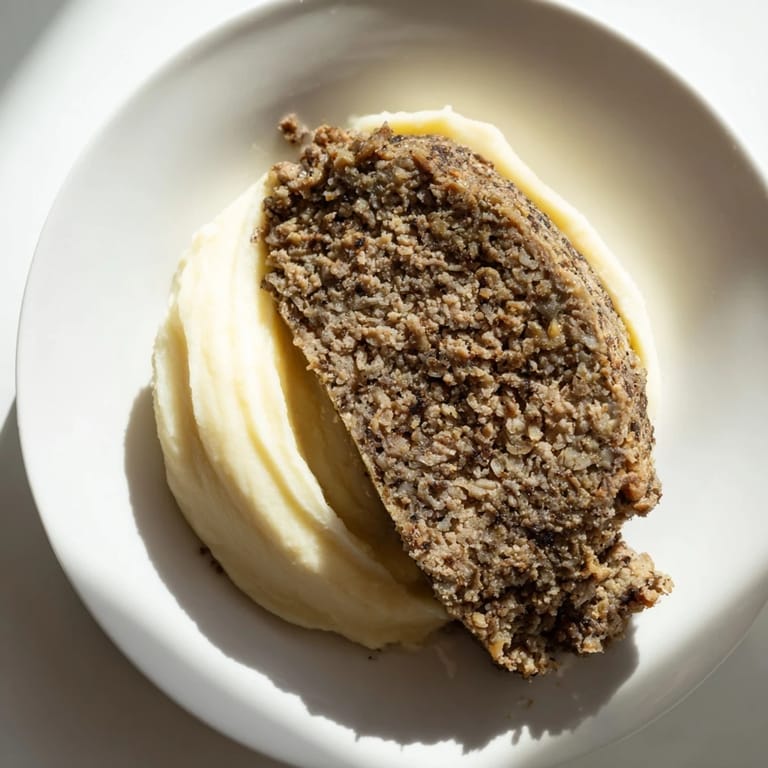
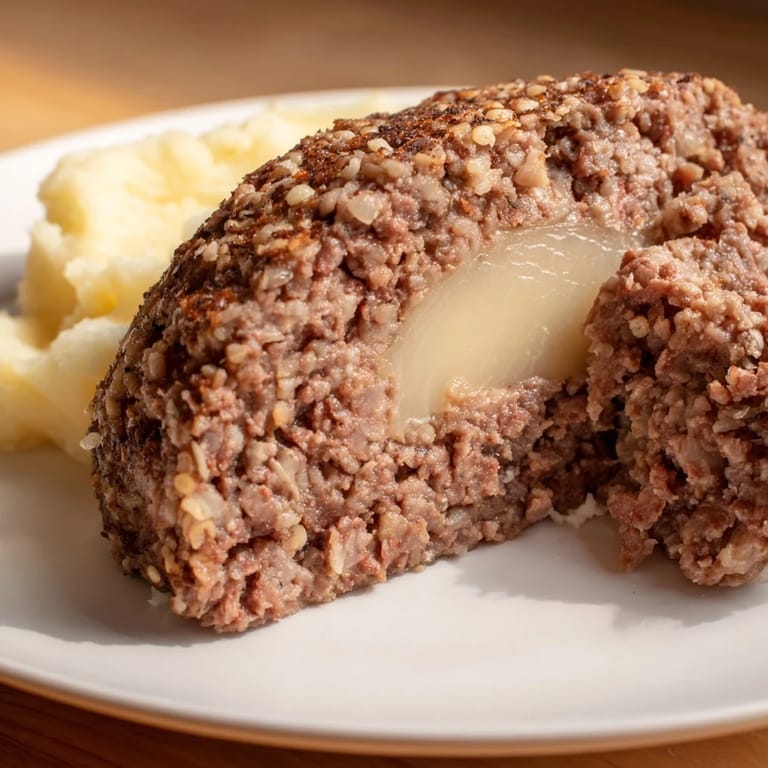
- Carefully remove the haggis from the pot and let it rest for a few minutes before slicing. When you cut into it, the aroma that escapes is almost ceremonial—this is the payoff for all that patience.
 Save
Save There's a moment right when you slice into the haggis and the steam rises up into your face, carrying all those spices and depth with it, when you understand why this dish has meant so much to so many people across so many generations. It stops being about what went into it and becomes about the care and intention baked into every step.
The Story Behind Scotland's Most Misunderstood Dish
Haggis has suffered from a reputation that's almost entirely built on myth and squeamishness. The truth is far more interesting—it was born from practical necessity, from a time when wasting any part of an animal was unthinkable, and from the wisdom of cooks who understood that humble ingredients, treated with respect and skill, could become something genuinely special. What started as thrift became tradition, and what tradition held onto became treasure.
Working with Offal: A Practical Guide
If you've never cooked with organ meats before, this recipe is actually a perfect entry point because everything is minced and mixed into a cohesive whole—there's no moment where you're staring at a liver or questioning your life choices. Start by sourcing from a butcher you trust; they'll be genuinely excited to help you prepare the offal properly. The long simmer before mincing is crucial because it tenderizes the meat fully and allows any residual funk to cook away, leaving only deep, savory flavor behind. Once you've done this once, the intimidation dissolves completely.
Serving and Pairing Haggis Like a Local
Haggis doesn't need much accompaniment beyond the traditional neeps and tatties, but it absolutely welcomes a whisky cream sauce if you want to add another layer of richness. Some people pour a small glass of whisky over the top as they serve—this isn't pretension, it's tradition, and it adds a gentle burn that complements the spices. You can also serve it with a simple green salad to cut through the richness, or alongside crusty bread if anyone wants to soak up every last bit of the filling.
- A whisky cream sauce transforms it into something even more indulgent without overwhelming the original flavors.
- Don't overlook the humble mustard—a sharp Scottish mustard on the side gives people an optional brightness if they want it.
- Haggis is genuinely better when served family-style, where everyone helps themselves and passes dishes around the table.
 Save
Save Haggis is worth making not because it's easy or conventional, but because it proves something important about cooking: that tradition exists because it works, and that the dishes we're sometimes afraid to try often become the ones we remember forever. Make it once, and I promise you'll understand.
Recipe FAQs
- → What is the traditional casing used for haggis?
The traditional casing is a cleaned sheep's stomach, though an oven-proof pudding basin with foil can be used as an alternative.
- → How long should haggis be cooked?
It is typically simmered gently for about 2 hours to ensure the filling is cooked through and flavors meld.
- → What sides are commonly served with haggis?
Haggis is traditionally accompanied by neeps (turnips) and tatties (potatoes), both usually boiled and mashed with butter and seasoning.
- → Can the offal be substituted in this dish?
Yes, for a milder texture, offal can be replaced with a mix of beef and lamb mince, maintaining the dish's character.
- → What seasonings enhance the flavor of haggis?
A blend of ground black pepper, coriander, nutmeg, allspice, and salt is used to bring out the rich, savory notes.
- → Is there a popular sauce to accompany this dish?
Whisky cream sauce is a favored accompaniment, adding a smooth and slightly sweet contrast to the hearty pudding.