 Save
Save My friend texted me at midnight asking if I could bake something special for her graduation and birthday bash happening the next afternoon. She mentioned she was a Taurus, loved flowers, and wanted something that felt both celebratory and elegant. I found myself standing in the kitchen at 6 AM, butter softening on the counter, thinking about how a simple vanilla cake could become a canvas for something truly memorable. This layered beauty with its delicate floral buttercream turned out to be exactly what the moment needed.
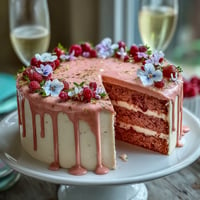
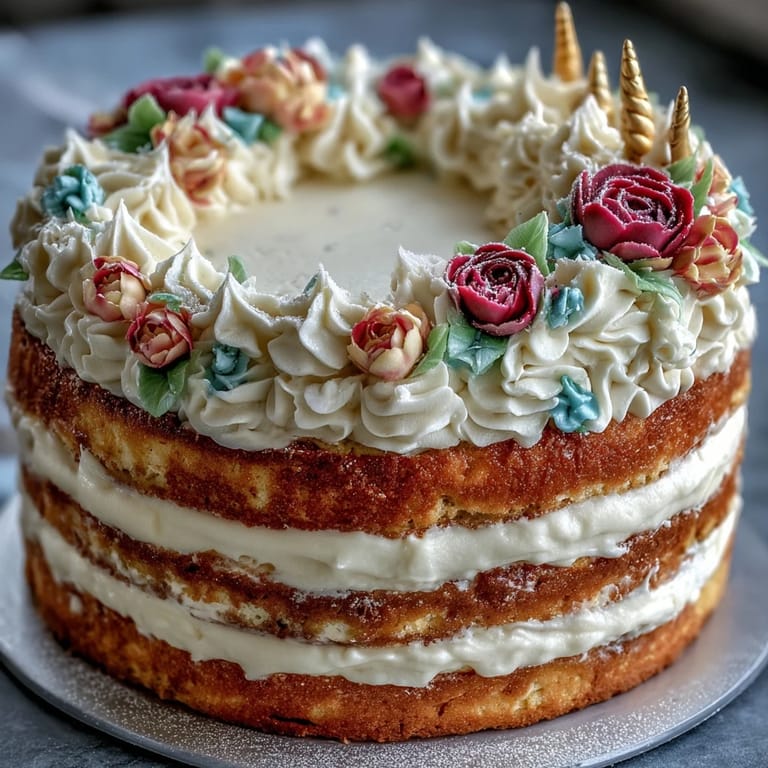
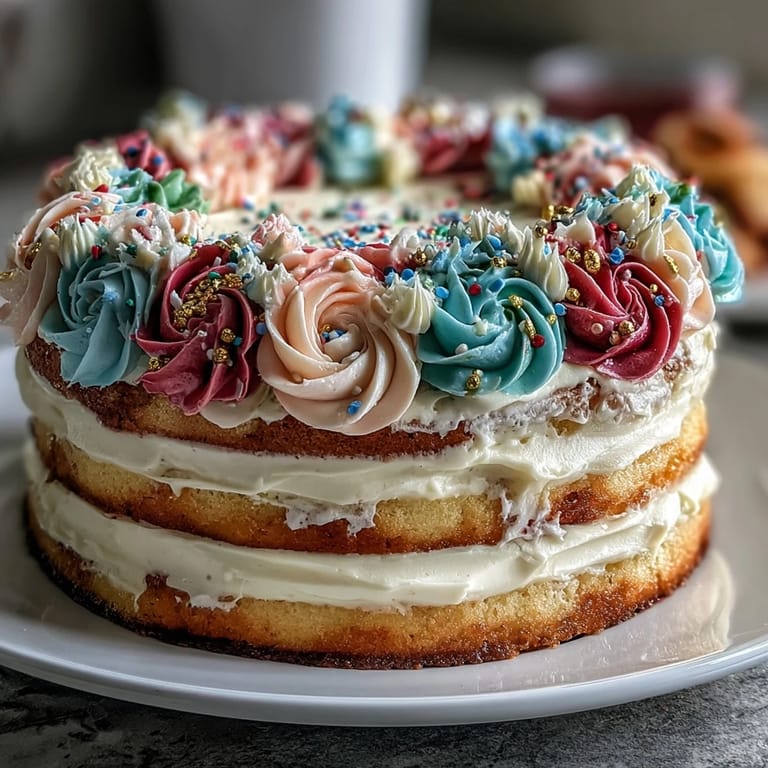
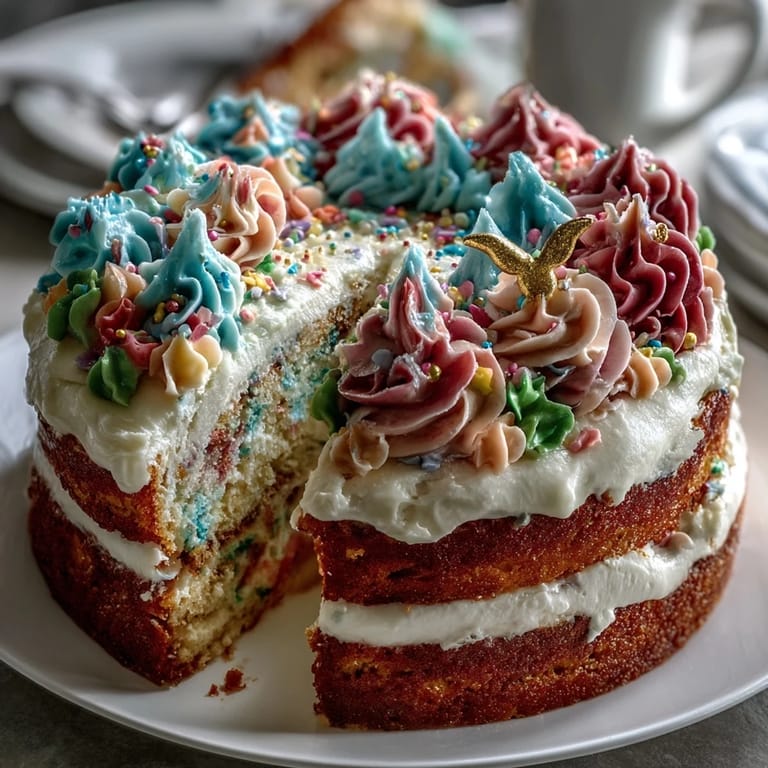
Watching my friend's face when she walked into that kitchen and saw the three-layer cake covered in piped pink peonies, purple daisies, and green leaves was worth every minute spent hunched over with a piping bag. Her mom gasped, the graduating cousin asked for the recipe before even tasting it, and I realized that sometimes the best gifts are the ones that took time and genuine care. The gold leaf I added as a subtle Taurus nod became the detail everyone kept pointing out.
Ingredients
- All-purpose flour (2 1/2 cups): The foundation of this cake, giving it structure without being too dense or heavy.
- Baking powder (2 1/2 tsp): This lifts the cake gently, creating those tender crumbs that make people ask for seconds.
- Salt (1/2 tsp): A pinch that balances sweetness and amplifies the vanilla without anyone knowing why it tastes so good.
- Unsalted butter for cake (1 cup): Room temperature butter creams properly with sugar, trapping air that keeps the cake light.
- Granulated sugar (2 cups): Beyond sweetness, sugar helps the batter emulsify and contributes to that golden, tender crumb.
- Large eggs (4), room temperature: Cold eggs won't incorporate smoothly, so let them sit out while you prep everything else.
- Pure vanilla extract (1 tbsp): The real stuff makes a difference that everyone will taste but few will identify.
- Whole milk, room temperature (1 cup): Alternating wet and dry ingredients prevents overworking the batter, which keeps the cake tender.
- Unsalted butter for frosting (1 1/2 cups): Use fresh butter here, as it sits on the cake uncooked and must taste pristine.
- Powdered sugar, sifted (5 cups): Sifting removes lumps that would otherwise show in your smooth frosting coat.
- Vanilla extract for frosting (2 tsp): This deepens the buttercream flavor beyond plain sweetness.
- Heavy cream or milk (2-4 tbsp): Cream creates silkier frosting than milk alone, but milk works when you're out of cream.
- Gel food coloring in floral shades: Gel colors don't thin out frosting like liquid colors do, keeping your buttercream piping-ready.
- Edible gold leaf or gold sprinkles: These optional accents add luxury and tie back to the Taurus celebration.
Tired of Takeout? 🥡
Get 10 meals you can make faster than delivery arrives. Seriously.
One email. No spam. Unsubscribe anytime.
Instructions
- Set the stage:
- Preheat your oven to 350°F (175°C) and grease three 8-inch round pans, lining them with parchment paper so your cake layers release cleanly. Having everything ready before you start mixing means you won't panic when batter is waiting to go into the oven.
- Combine dry ingredients:
- Whisk together flour, baking powder, and salt in a bowl, breaking up any clumps so the batter rises evenly. This simple step prevents lumps from hiding in finished cake.
- Cream butter and sugar:
- Beat softened butter and sugar together for 3-4 minutes until the mixture is pale, fluffy, and noticeably lighter in color. You're essentially whipping air into the butter, which is what makes the cake tender later.
- Add eggs one by one:
- Drop each egg in individually and beat well before adding the next one, then mix in your vanilla. This gradual approach helps the eggs emulsify properly with the butter.
- Alternate wet and dry:
- Add flour mixture and milk in three batches, starting and ending with flour, mixing just until combined each time. Overmixing develops gluten and toughens your cake, so stop as soon as you don't see streaks of flour.
- Bake the layers:
- Divide batter evenly among pans and bake for 28-35 minutes until a toothpick comes out clean. The cake will smell buttery and vanilla-rich when it's ready to come out.
- Cool properly:
- Let cakes rest in pans for 10 minutes, then turn them out onto wire racks to cool completely, which usually takes an hour. Frosting warm cake is a quick way to end up with a sliding mess.
- Make the frosting magic:
- Beat softened butter until creamy, then gradually add sifted powdered sugar while beating, taking about 3-4 minutes total. Gradually add vanilla and cream, beating until fluffy and spreadable.
- Tint for flowers:
- Divide buttercream into bowls and add gel coloring a drop at a time until you reach soft, natural shades that look like real petals. Gel colors are forgiving and won't thin out your frosting like liquid food coloring.
- Level and layer:
- If cake tops are domed, level them with a serrated knife, then place the first layer on your serving plate and spread buttercream between each layer. A cake turntable makes this easier, but you can rotate a plate on your countertop too.
- Crumb coat first:
- Apply a thin layer of frosting all over the cake and chill for 20 minutes so loose crumbs don't get mixed into your final coat. This single step is the secret to a bakery-looking finish.
- Smooth final coat:
- Apply your main frosting layer and smooth it with an offset spatula dipped in warm water. This base is your canvas for the flower work.
- Pipe your florals:
- Using colored buttercream and petal tips, pipe flowers around the cake in whatever style feels right to you, then add leaves and vines with a leaf tip. Don't overthink it; flowers in nature are beautifully imperfect.
- Add the finishing touch:
- Place gold leaf or sprinkles strategically as a Taurus symbol or graduation cap accent if desired. A little shimmer goes a long way.
- Chill and serve:
- Chill the finished cake until party time, then bring it to room temperature for 15-20 minutes before slicing so the frosting isn't too firm. A slightly warm cake cuts much cleaner than one straight from the fridge.
 Save
Save The moment her younger brother asked if he could have the slice with the biggest peony made me understand why people bake celebration cakes. It's not really about the sugar or the technique; it's about taking two milestones and turning them into something beautiful that gets eaten and remembered. That cake disappeared in less than an hour, and I'm pretty sure the memory lasted a lot longer.
The Vanilla Cake Secret
A really good vanilla cake doesn't need fancy flavors or complicated techniques to be memorable. The magic lives in the balance between butter, sugar, and careful mixing. I learned this the hard way after years of trying to make vanilla sound exciting by adding extract after extract, when what people actually want is that clean, buttery flavor that tastes like someone who cares spent time on it. The beauty of this particular recipe is that the vanilla tastes like itself, bright and genuine, because nothing is fighting for attention.
Decorating Without the Stress
The floral buttercream decoration might look intimidating, but it's actually one of the most forgiving decorating styles because flowers don't have to be perfect. You can practice piping on parchment paper beforehand, chill the piped flowers, and transfer them to the cake if you want a more intricate look, or you can pipe directly onto the frosting and let the natural imperfections add charm. I've found that the best-looking cakes are the ones where the baker stopped worrying about precision and started having fun with color and placement.
Personalization Ideas for Celebrations
This cake framework is genuinely flexible, which is why it works so well for dual celebrations. You can match the flower colors to the graduate's school colors or their favorite shades, work in symbols meaningful to their Taurus personality, or even pipe a subtle congratulations message on the back if you're feeling confident. The gold accents can be minimal or lavish depending on the vibe you're going for, and you can always add edible flowers or fresh herbs like mint or lavender for extra sophistication.
- Try adding 1 tsp almond extract to the cake batter for a subtle flavor depth that pairs beautifully with vanilla.
- Fresh flowers from a local florist can rest on top of the cake as a final garnish if they're food-safe and pesticide-free.
- Pair slices with sparkling wine, floral tea, or even a light dessert wine that echoes the flower theme.
 Save
Save Baking a cake for someone matters, even when they'll never know how many times you checked the oven or how long you stood there piping flowers. This one turned a double celebration into something edible, beautiful, and genuinely personal. Make it with care, and it'll taste like it was made with love.
Recipe FAQs
- → What makes this cake distinctively floral?
Colored buttercream is tinted with gel food colors and piped into petal, leaf, and vine shapes, creating a vibrant floral appearance.
- → Can the cake be personalized for occasions?
Yes, you can tailor decorations by matching buttercream flower colors to birth month or school colors, and add accents like gold leaf for special themes.
- → What is the best way to achieve smooth buttercream layers?
Apply a thin crumb coat first to seal crumbs, chill the cake, then spread a final smooth buttercream layer before decorating.
- → Are there any tips for an even bake?
Use three greased and parchment-lined 8-inch pans and bake until a toothpick tests clean, around 28-35 minutes at 350°F.
- → How can I enhance the cake batter’s flavor?
Adding a teaspoon of almond extract to the batter adds a subtle nutty aroma complementing the vanilla base.