 Save
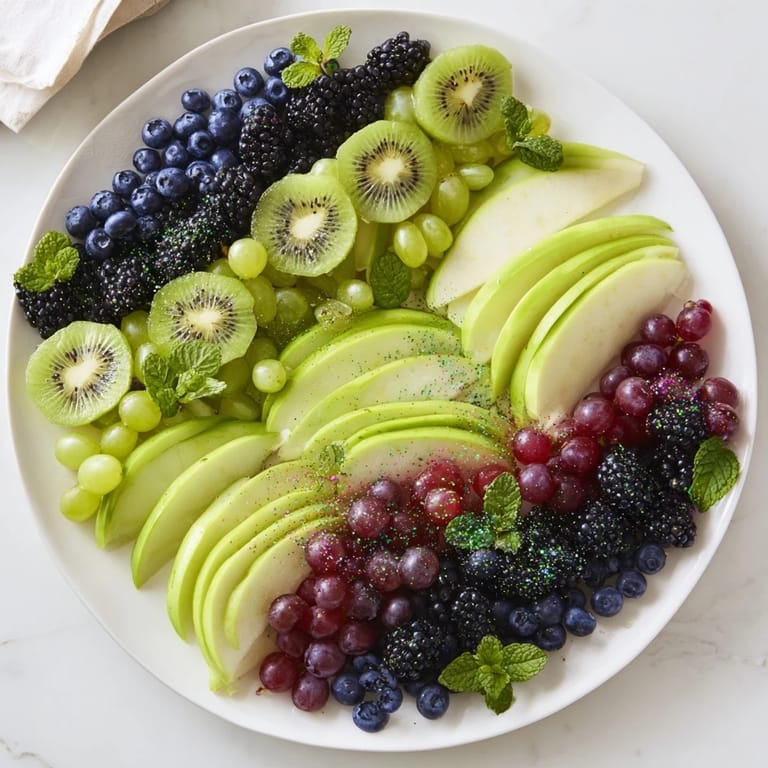
Save My sister called me at midnight asking if I could help with her art gallery opening the next morning. She wanted something that would catch people's eyes while they sipped wine and mingled, something that felt more like an installation than food. I hung up and immediately thought of the Northern Lights I'd seen once in Iceland—that impossible layering of color, that sense of movement frozen in place. By the time I fell asleep, I knew exactly what to build: a fruit platter that would shimmer and flow across a board like waves of aurora borealis.
Standing in my sister's gallery that morning, watching her face light up when she saw the platter, I realized it wasn't the gold leaf or the edible glitter that made it work. It was the deliberate way the colors talked to each other—greens reaching toward purples, berries nestled in the curves of kiwi slices. Someone asked if it was edible. She laughed and said, "Everything here is." By the end of the opening, the platter was half-gone, with people still circling back to fill their plates.
Ingredients
- Seedless green grapes, halved: These are your foundation, sturdy enough to hold their shape and bright enough to pop against darker berries. Halving them gives you twice as many pieces to work with for flowing lines.
- Kiwis, peeled and sliced: Their natural greenness is almost neon, and the seeds create texture. Slice them thick enough that they don't get lost in the arrangement.
- Green apple, thinly sliced: Adds a crisp contrast and mild tartness, though it's optional if you want to keep things simple and purely sweet.
- Blackberries: Deep purple-black jewels that anchor your design and feel almost luxurious on a platter, though they bruise easily so handle them gently.
- Red or black grapes, halved: These bridge the gap between green and deep purple, creating smooth color transitions that make the aurora effect work.
- Blueberries: Their matte finish contrasts beautifully with the glossy berries around them, adding another layer of visual depth.
- Fresh mint leaves: Fill gaps and add a whisper of green you didn't know you needed, plus they smell incredible.
- Edible glitter or gold leaf: These feel optional but they're secretly essential—they catch the light and remind people this is special.
Tired of Takeout? 🥡
Get 10 meals you can make faster than delivery arrives. Seriously.
One email. No spam. Unsubscribe anytime.
Instructions
- Wash and dry everything:
- Pat the fruit completely dry so nothing slips around as you arrange it. Wet fruit is a frustration waiting to happen.
- Create your first ribbon:
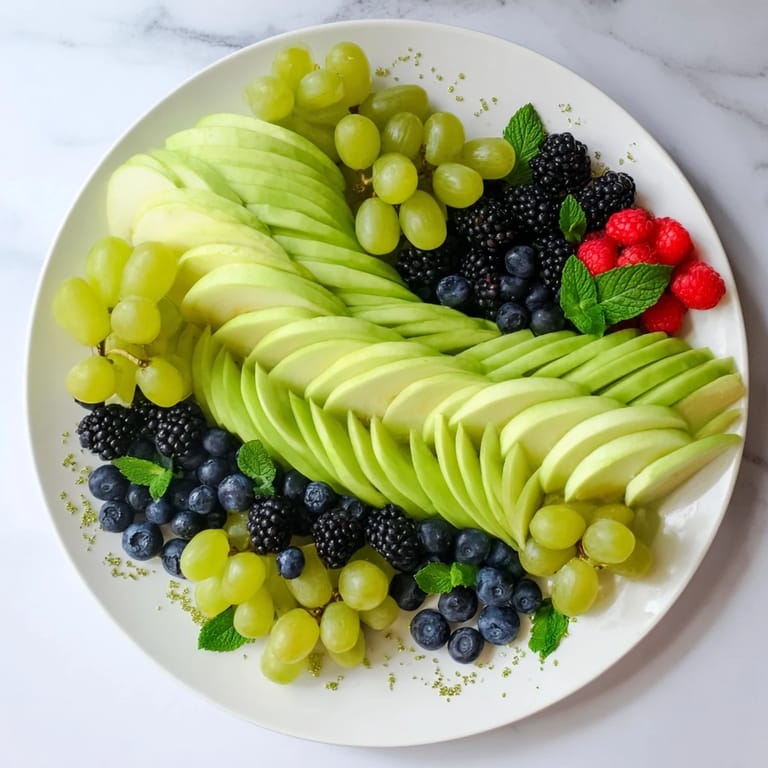
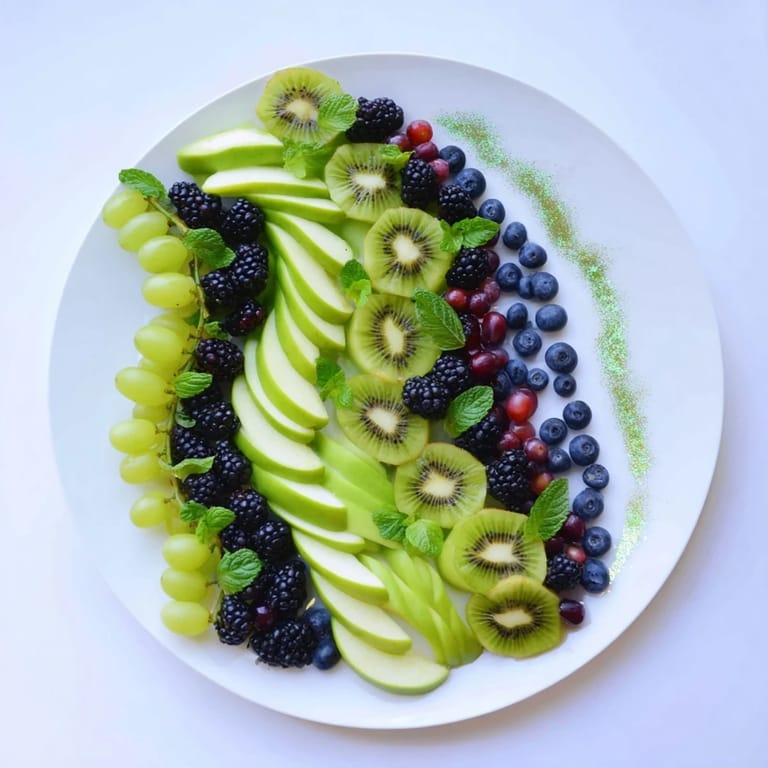
- Start with the green fruits—grapes, kiwi slices, apple slices if using—and arrange them in a gentle, meandering line across your platter, like a river flowing in slow curves. Let them overlap slightly so they feel intentional, not scattered.
- Weave in the purple:
- Next comes blackberries, halved red or black grapes, and blueberries, following the same wavy pattern but running parallel to (and sometimes intertwining with) your green line. The idea is movement, like water flowing beside water.
- Fill and balance:
- Step back and look at your work—are there gaps? Fill them with extra fruit or a few mint leaves. The platter should feel abundant and lush, not sparse.
- Add the shimmer:
- If you're using edible glitter or gold leaf, sprinkle or place small flecks across the platter where they'll catch light. Less is more here—you want sparkle, not a disco ball.
- Serve or chill:
- This is best served immediately while the fruit is at its firmest and the colors are most vivid, though you can cover it and refrigerate for a few hours if you need to prep ahead.
 Save
Save That night, after the gallery cleared out, my sister and I sat in the empty space with the last few pieces of fruit on the platter. She told me that watching people pause mid-conversation to admire something she thought was just food meant more to her than any piece of art on the walls. Food that makes you stop and look—that's its own kind of beauty.
Choosing Your Fruit Wisely
The magic of this platter lives in color contrast, so think about what you have access to and what's in season. If you can find dragon fruit with its hot pink flesh, or golden kiwis, these become your secret weapons for adding unexpected layers. Starfruit sliced thin creates geometric shapes that break up the organic flow of berries in the best way. Don't feel bound by what the recipe says—this is more about understanding warm and cool tones, light and dark, and letting those principles guide your choices.
The Dark Platter Makes All the Difference
I learned this the hard way at a dinner party where I used a white plate because it was the only one clean. The fruit looked pretty, sure, but almost washed out. A month later, using a black marble board, the same fruits looked like they were glowing. A dark background—whether it's black, charcoal, deep blue, or even dark wood—forces the colors to vibrate. The greens get greener, the purples go deeper, and suddenly you understand why galleries paint their walls dark behind paintings.
Making It Your Own
The beauty of a fruit platter is that it's endlessly customizable without losing its soul. You can theme it to seasons—winter berries and pomegranate seeds, spring pastels with pink grapefruit and light green grapes, fall oranges and deep reds, summer citrus and bright berries. You can make it whimsical or elegant depending on your garnish choices. The core idea—flowing lines of color that suggest movement and light—works across every variation.
- If you're feeling fancy, serve it with a honey-lime yogurt dip on the side for people who want something creamy alongside the fruit.
- Edible flowers like pansies or calendula petals add another layer of unexpected beauty if you can find them.
- Arrange everything no more than a few hours before serving to keep the fruit at peak crispness and prevent berries from weeping.
 Save
Save What started as a midnight phone call about needing something beautiful became my favorite kind of cooking—the kind where you're not feeding hunger but feeding someone's soul. That's what this platter does, every time.
Recipe FAQs
- → What fruits are used in the platter?
Green grapes, kiwi, green apple, blackberries, red or black grapes, and blueberries form the color ribbons in this arrangement.
- → How is the aurora effect achieved in the arrangement?
Fruits are arranged in flowing, wavy lines alternating green and purple shades to mimic the Northern Lights' movement.
- → Can the platter be prepared in advance?
It can be covered and chilled briefly before serving to maintain freshness, though serving immediately is best for appearance.
- → Are there options for enhancing the visual appeal?
Adding edible glitter or small flecks of gold leaf creates sparkle, while placing the fruits on a dark platter boosts contrast.
- → Is this platter suitable for special diets?
The selection is vegan and gluten-free, making it suitable for many dietary preferences.