 Save
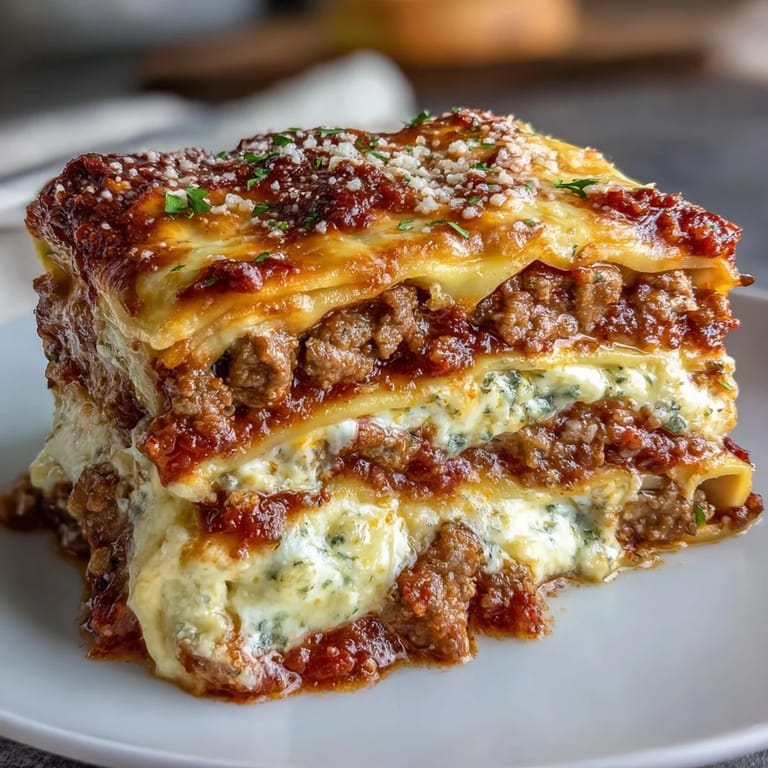
Save My neighbor Maria showed up one Sunday with a glass dish still warm from her oven, wrapped in a faded floral towel. She didn't say much, just smiled and handed it over before heading back across the driveway. That first bite of her lasagna—layers of pasta, meat, and cheese melting together—made me realize I'd been eating casseroles my whole life, not real lasagna. I asked for the recipe the next day, and she laughed, saying it wasn't a secret, just patience and good ingredients.
I made this lasagna for my brother's birthday dinner last fall, doubling the recipe because his friends always show up hungry. Watching eight people go quiet except for the occasional hum of approval reminded me why I love cooking for others. Someone asked if I'd made the sauce from scratch, and I admitted I hadn't, but the layering and seasoning made all the difference. By the end of the night, both pans were empty, and I had three requests to make it again.
Ingredients
- Lasagna noodles: Uncooked noodles work beautifully here because they absorb the sauce as they bake, creating tender layers without the hassle of boiling and draining.
- Ricotta cheese: This is the creamy heart of the lasagna, and mixing it with an egg helps it set so it doesn't ooze everywhere when you slice.
- Mozzarella cheese: Shred it yourself if you can, because pre-shredded cheese has coatings that prevent it from melting as smoothly.
- Parmesan cheese: Freshly grated Parmesan adds a sharp, nutty finish that balances the richness of the other cheeses.
- Ground beef: Lean beef keeps the sauce from becoming greasy, but a little fat adds flavor, so don't go too lean.
- Italian sausage: This brings warmth and a hint of fennel or spice depending on what you choose, and removing the casing lets it blend into the sauce.
- Marinara sauce: A good jarred sauce saves time, but if you have homemade, even better—just make sure it's thick enough to cling to the noodles.
- Garlic: Fresh minced garlic blooms in the oil and perfumes the whole dish, so don't skip this step.
- Olive oil: It coats the pan and carries the garlic flavor into the meat without burning.
- Fresh basil: Chopped basil stirred into the sauce at the end keeps its bright, herbal notes intact.
- Salt and pepper: Season as you go, tasting the sauce before you layer, because once it's assembled, it's hard to fix.
Tired of Takeout? 🥡
Get 10 meals you can make faster than delivery arrives. Seriously.
One email. No spam. Unsubscribe anytime.
Instructions
- Preheat and prep:
- Turn your oven to 375°F so it's ready when you finish assembling. This moderate heat cooks the noodles through without drying out the edges.
- Sauté the garlic:
- Warm the olive oil in a large skillet over medium heat, then add the minced garlic and stir until it smells amazing, about a minute. Don't let it brown or it'll taste bitter.
- Brown the meat:
- Add the ground beef and sausage, breaking it apart with a wooden spoon as it cooks. When no pink remains and the meat has some color, drain off the excess fat so the sauce isn't greasy.
- Simmer the sauce:
- Stir in the marinara, salt, pepper, and basil, then let it bubble gently for 10 minutes. This marries the flavors and thickens the sauce just enough to cling to the noodles.
- Mix the ricotta:
- In a bowl, combine the ricotta and egg until smooth and creamy. The egg helps it hold together during baking.
- Start layering:
- Spread a thin layer of meat sauce across the bottom of your 9x13 inch baking dish to keep the noodles from sticking. Lay down four uncooked noodles, slightly overlapping if needed.
- Build the first layer:
- Spread half the ricotta mixture over the noodles, sprinkle a third of the mozzarella on top, then ladle more meat sauce over everything. Press gently so the layers settle.
- Repeat the layers:
- Add another four noodles, the rest of the ricotta, another third of the mozzarella, and more sauce. Keep the layers even so every slice has balance.
- Finish strong:
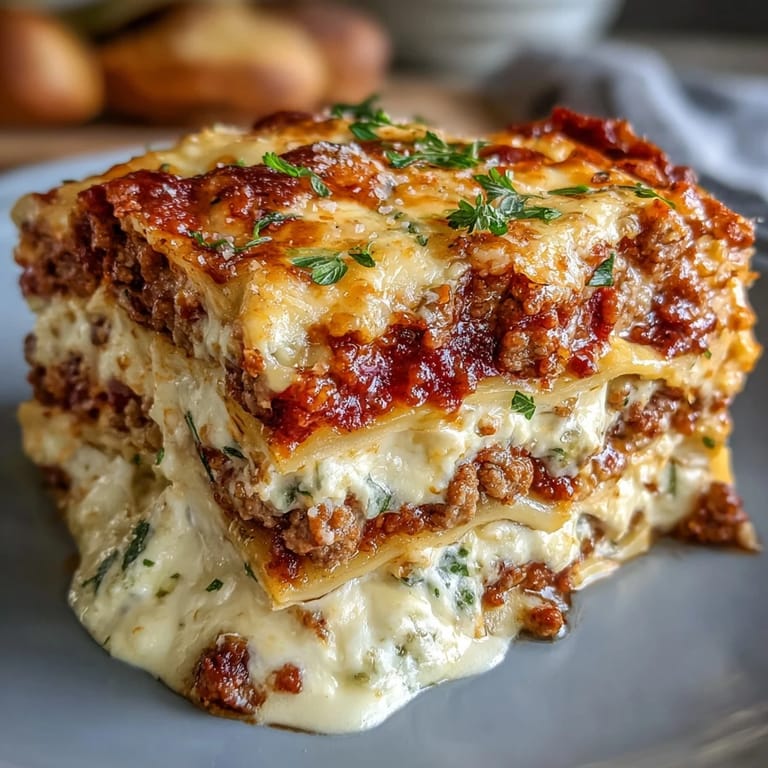
- Top with the last four noodles, the remaining meat sauce, then shower the rest of the mozzarella and all the Parmesan over the top. It should look generous and golden once baked.
- Cover and bake:
- Wrap the dish tightly with foil and bake for 25 minutes. The foil traps steam, which cooks the noodles through without drying them out.
- Uncover and brown:
- Remove the foil and bake another 15 minutes until the cheese bubbles and turns golden in spots. Watch it closely so it doesn't burn.
- Rest before serving:
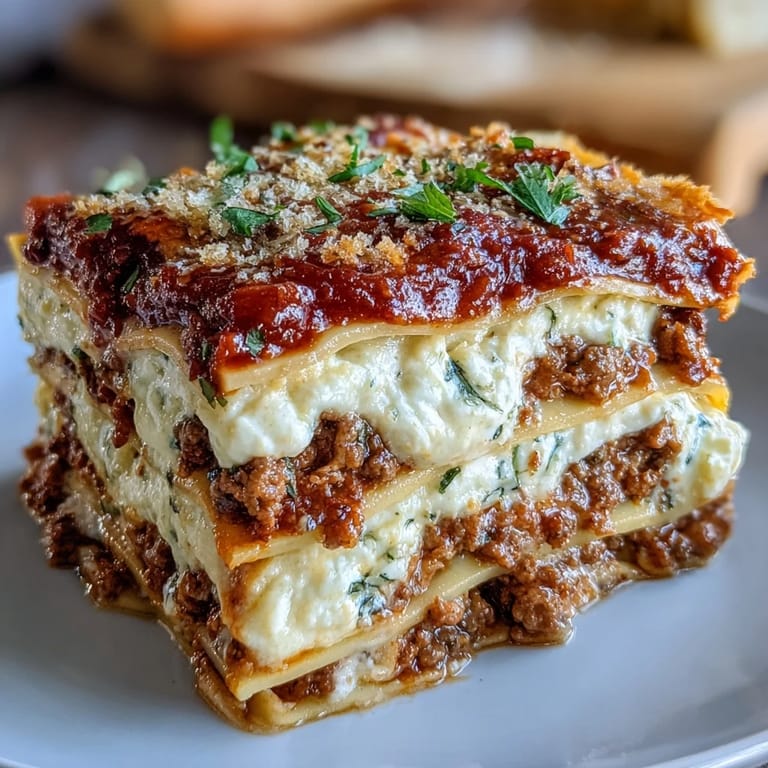
- Let the lasagna sit for at least 15 minutes after you pull it from the oven. This lets the layers firm up so your slices hold together instead of sliding apart.
 Save
Save One winter evening, I pulled this lasagna out of the oven just as snow started falling outside. My kids set the table without being asked, and we ate by candlelight because the power flickered but held. It wasn't a special occasion, just a Tuesday, but that meal felt like the best kind of comfort—warm, filling, and shared without needing a reason.
Make It Your Own
I've tucked sautéed spinach and mushrooms into the ricotta layer when I'm craving vegetables, and it adds an earthy richness without changing the structure. You can swap in part-skim cheeses if you want to lighten it up, or go full-fat if you're after that classic, indulgent texture. Some people add a pinch of nutmeg to the ricotta, and while I was skeptical at first, it does bring a subtle warmth that works.
Pairing and Storing
A glass of Chianti or another robust red wine cuts through the richness and makes the meal feel a little more special. Leftovers reheat beautifully in the oven or microwave, and I've frozen individual slices wrapped in foil for quick lunches. Just thaw overnight in the fridge and warm them up, they taste almost as good as the first night.
Final Touches
If you're serving this for guests, a simple green salad and some crusty bread are all you need on the side. The lasagna is rich enough to stand on its own, so keep everything else light and fresh. Don't stress about perfect layers, even a messy lasagna tastes incredible once it's out of the oven.
- Let the dish cool completely before covering and freezing if you're making it ahead.
- Check the noodles after baking by poking a knife through the center, it should slide in easily.
- Sprinkle extra fresh basil over the top just before serving for a pop of color and flavor.
 Save
Save This lasagna has become my go-to when I want to feed people I care about without overthinking it. It's forgiving, generous, and always disappears faster than I expect.
Recipe FAQs
- → Can I use no-boil lasagna noodles for this dish?
Yes, no-boil noodles work perfectly. Ensure your sauce has enough moisture and consider adding a splash of water to the baking dish before covering with foil.
- → How do I prevent my lasagna from being watery?
Drain excess fat from the meat thoroughly, avoid over-saucing the layers, and let it rest for the full 15 minutes after baking to allow the layers to set properly.
- → Can I make this ahead of time?
Absolutely. Assemble the lasagna completely, cover tightly with plastic wrap and foil, and refrigerate up to 24 hours before baking. Add 10-15 minutes to the covered baking time if starting from cold.
- → What can I substitute for Italian sausage?
Use additional ground beef, ground turkey, or ground pork seasoned with fennel seeds, garlic powder, and Italian herbs to mimic the sausage flavor profile.
- → How should I store and reheat leftovers?
Store covered in the refrigerator for up to 4 days. Reheat individual portions in the microwave for 2-3 minutes or cover with foil and bake at 350°F for 20-25 minutes until heated through.
- → Can I freeze this lasagna?
Yes, either freeze before or after baking. Wrap tightly in plastic wrap and foil. Freeze for up to 2 months. Thaw overnight in the refrigerator before baking or reheating.