 Save
Save I'll never forget the afternoon I spent wandering through a modern art museum, mesmerized by the bold, chaotic brushstrokes of an abstract expressionist painting. The artist had layered colors with such joyful abandon that I found myself thinking about it for days. That evening, I stood in my kitchen wondering how to capture that same sense of creative freedom on a plate, and this salad was born. It became my love letter to that painting—a dish that celebrates color, texture, and the beautiful chaos of unexpected combinations coming together in perfect harmony.
I made this salad for a dinner party where my artistic friend brought her latest abstract paintings to display, and watching everyone's faces light up as they saw the plate was pure magic. Someone said it looked almost too beautiful to eat, and I smiled knowing that was exactly the point. We ended up talking more about the food than the paintings that night, which felt like the highest compliment.
Ingredients
- Cherry tomatoes (red and yellow), halved: These little bursts of sweetness and brightness are the soul of this dish. I learned to halve them rather than leave them whole because it helps them nestle naturally into the composition and releases just enough juice to mingle with the dressing without making things soggy.
- Golden beet, peeled and shaved: The beet brings an earthy sweetness and stunning golden hue that feels sophisticated. A mandoline or vegetable peeler makes quick work of this, and shaving them thinly means they stay tender and absorb the dressing beautifully.
- Cucumber, sliced into ribbons: Use a vegetable peeler to create long, delicate ribbons that add an elegant visual element and refreshing crunch. They're forgiving and almost impossible to mess up.
- Red radishes, thinly sliced: These provide a peppery bite and vibrant color. Slice them paper-thin on a mandoline so they become almost translucent and less harsh than chunky pieces.
- Watermelon, cut into irregular cubes: This is my secret weapon for unexpected sweetness. The irregular shape mimics the abstract expressionist theme and adds surprise to each bite. Cut them into various sizes for visual interest.
- Ripe avocado, cubed: Choose an avocado that yields slightly to pressure. Cube it just before assembly to prevent browning, and don't worry about perfect cubes—organic, irregular shapes feel more artistic and natural.
- Mixed baby greens (arugula, baby spinach, frisée): These form the canvas of your composition. The mix of textures and slight bitterness from the arugula balances all the sweetness in the other ingredients beautifully.
- Fresh mint leaves, torn: Tear them by hand rather than chopping to release their oils and preserve their delicate structure. They add brightness and a cooling sensation that ties everything together.
- Toasted pumpkin seeds: The nuttiness here adds depth and satisfying crunch. I toast my own because the warmth intensifies their flavor, but quality store-bought toasted seeds work too.
- Pomegranate seeds: These jewel-like arils bring tartness, textural contrast, and visual drama. They're worth the effort to extract and add that luxurious touch.
- Crumbled feta cheese: This adds a salty, creamy element that grounds all the colorful chaos. I use quality feta and crumble it by hand for more interesting, irregular pieces.
- Extra-virgin olive oil: Don't skip quality here. Good olive oil tastes like liquid sunshine and transforms the dressing. Use one you actually enjoy eating by the spoonful.
- White balsamic vinegar: This vinegar is lighter and more delicate than traditional balsamic, which means it won't muddy your beautiful colors while still adding that necessary acidity and subtle sweetness.
- Honey: Just a touch to balance the acid in the vinegar and add a gentle sweetness that makes everything sing together.
- Dijon mustard: This is the secret ingredient that emulsifies the dressing and adds a sophisticated depth. It's barely noticeable but makes all the difference.
- Salt and freshly ground black pepper: Always taste as you season, especially with the acidic ingredients already in the dressing. You need just enough to make the flavors pop without overwhelming them.
Tired of Takeout? 🥡
Get 10 meals you can make faster than delivery arrives. Seriously.
One email. No spam. Unsubscribe anytime.
Instructions
- Gather your canvas:
- Start by preparing all your vegetables and fruits, arranging each in its own small bowl. This is meditation, not a rushed chore. As you prepare each element, notice the colors emerging. You're about to create something beautiful, so take a moment to appreciate the raw ingredients and how they'll transform together.
- Create the base:
- Take a large, shallow platter or wide bowl and scatter your mixed greens and torn mint leaves loosely across the surface, like you're laying down the primer on a canvas. Don't create an even layer—leave gaps, create clumps, let it feel natural and organic. This is where your artistic instincts come in.
- Begin your splash:
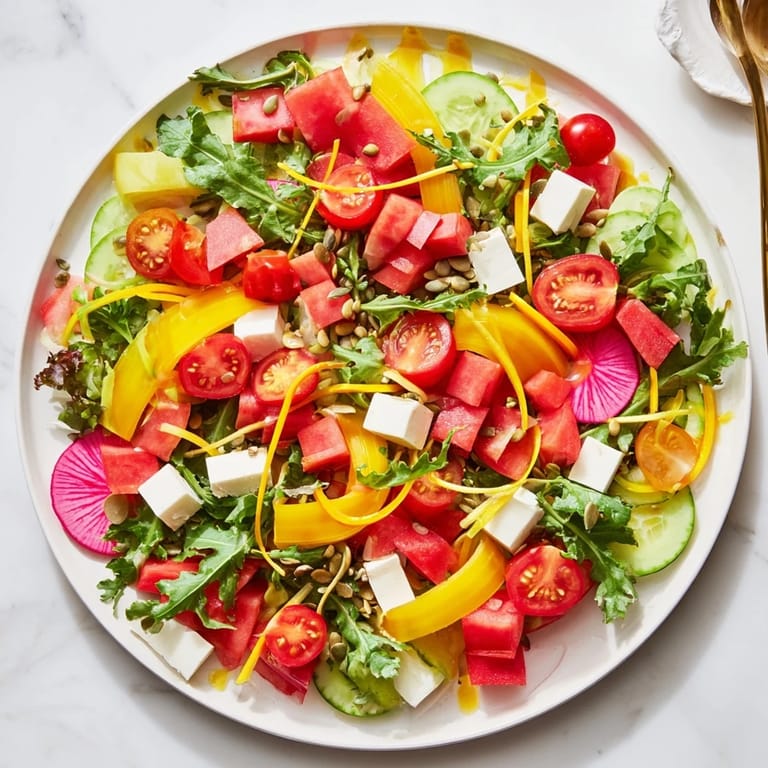
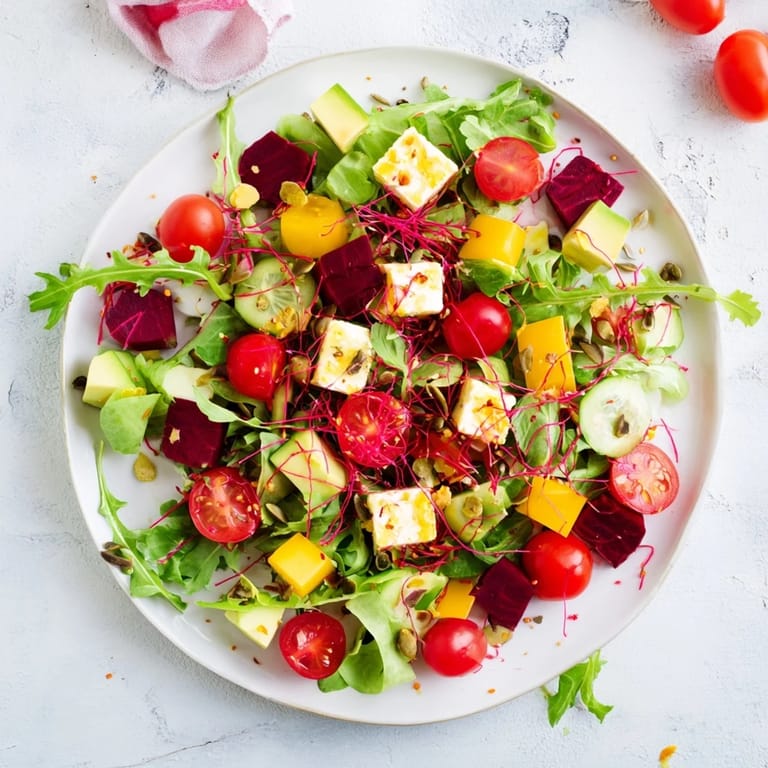
- Now comes the fun part. Start arranging your prepared vegetables and fruits across the greens in an intentionally artistic way. Scatter the tomatoes in one area, let the beet shavings fall where they may, create ribbons of cucumber that flow like brushstrokes. Overlap colors and textures. Let red touch yellow touch purple. There's no right way to do this—trust your eye and follow what feels beautiful.
- Add the finishing touches:
- Sprinkle the toasted pumpkin seeds, pomegranate seeds, and crumbled feta across the entire composition in an irregular pattern. Imagine you're adding flecks of paint to your masterpiece. Some areas will be more densely populated than others, and that's exactly what you're going for.
- Whisk your liquid art:
- In a small bowl, combine your olive oil, white balsamic vinegar, honey, and Dijon mustard. Whisk them together until the mixture becomes creamy and emulsified—you'll see it transform from separated layers to a cohesive, silky dressing. Season with salt and pepper, tasting as you go. This dressing should taste balanced, with no single flavor dominating.
- The final gesture:
- Pour your dressing in artistic zigzags and splatters across the salad, mimicking the bold brushstrokes of an abstract painting. Let it pool in some spots, create lines in others. Some of the salad will be dressed more than other parts, and that's beautiful—it creates variation in flavor intensity and texture.
- Present with intention:
- Serve immediately while everything is fresh and vibrant. Let your guests admire the artistic presentation before they dig in. There's something special about that moment of appreciation before the beautiful chaos gets tossed together.
 Save
Save The most meaningful moment with this salad came when my five-year-old niece helped me arrange the ingredients, completely unselfconsciously creating the most joyful composition imaginable. She didn't care about symmetry or balance—she just trusted her instincts and made choices based on what made her smile. Watching her then serve it to the family with such pride reminded me that the real art isn't about perfection. It's about showing up and creating something with intention and joy.
The Art of Arrangement
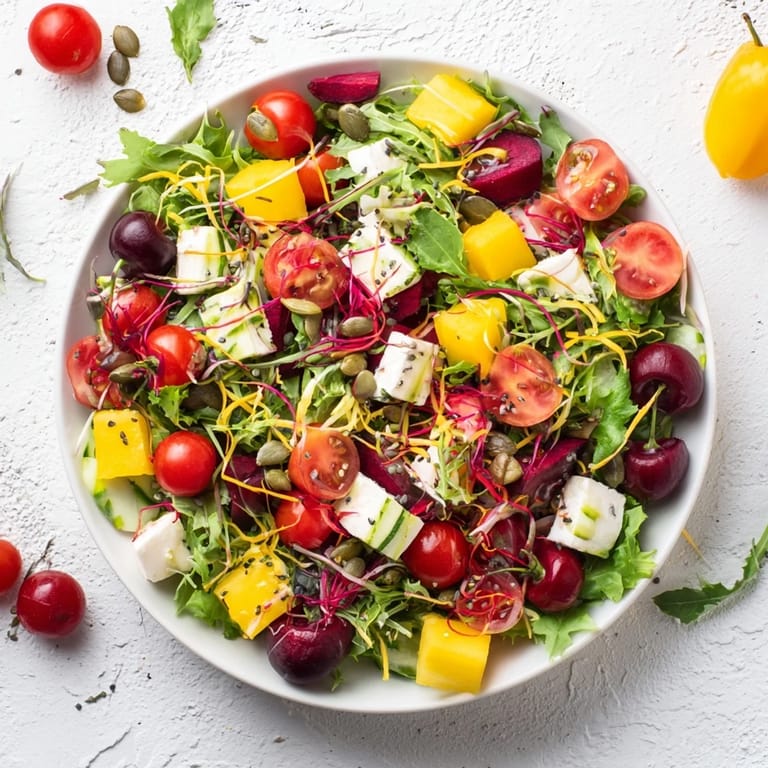
I've learned that the key to this salad is embracing imperfection. Unlike a traditionally composed plate, this salad celebrates chaos in the most beautiful way. Think of yourself less as someone plating food and more as someone creating art. Your eye is the guide, and there's no wrong interpretation. Some days you might lean toward warm colors dominating one side, other days you might create a more balanced rainbow. The fact that it's different each time you make it is part of its charm. The beautiful thing about abstract expressionism is that everyone sees something different, and that's exactly what happens when people eat this salad.
Pairing and Occasions
This is a salad that shows up dressed for special occasions, though honestly, it's easy enough to make anytime you want to feel celebrated. I serve it when I want to impress without stress, or when I'm cooking for friends who appreciate beauty as much as flavor. It pairs wonderfully with a crisp Sauvignon Blanc that echoes the brightness of the greens, or sparkling water with fresh citrus for something non-alcoholic. It's equally at home at a summer dinner party, a lunch with friends, or even as a stunning side dish for grilled fish or chicken.
Variations and Personal Touches
Once you understand the philosophy of this salad, you can play endlessly. I've added edible flowers—pansies and nasturtiums add both beauty and subtle flavor. Roasted purple sweet potatoes bring earthiness and stunning color. Sometimes I swap the feta for vegan cheese when cooking for plant-based friends, and honestly, the salad loses nothing. The core idea is contrast and color, so let your pantry and your imagination guide you. The vegetables you choose should be whatever is freshest and most beautiful at your market that week.
- Add edible flowers like pansies or nasturtiums for an extra layer of visual drama and delicate flavor
- Roasted purple sweet potatoes create surprising sweetness and deepen the color palette beautifully
- Vegan cheese works perfectly if you're cooking for dairy-free friends—the salad remains just as vibrant
 Save
Save This salad taught me that sometimes the most memorable meals aren't about complexity or technique—they're about showing up with intention and creating beauty. Make this when you want to celebrate the ordinary moments and turn them into something special.
Recipe FAQs
- → What types of greens are used in this salad?
A mix of baby greens like arugula, baby spinach, and frisée provides a fresh, peppery base for the salad.
- → How does the dressing complement the salad?
The dressing combines olive oil, white balsamic vinegar, honey, and Dijon mustard for a balanced blend of tangy, sweet, and sharp flavors that enhance the fresh ingredients.
- → Can this salad accommodate dietary restrictions?
Yes, it is vegetarian and gluten-free. For dairy-free options, feta cheese can be replaced with vegan cheese.
- → What adds crunch and texture to the salad?
Toasted pumpkin seeds, pomegranate seeds, and crumbled feta cheese contribute varied crunch and richness to each bite.
- → How is the presentation inspired by abstract expressionism?
Ingredients are scattered and layered in an artistic, irregular pattern mimicking brushstrokes and vivid color contrasts.
- → Are there any suggested pairings with this salad?
This salad pairs well with crisp Sauvignon Blanc or a refreshing sparkling water with citrus notes.