 Save
Save I discovered this dish entirely by accident one spring morning when I was arranging vegetables on a platter and thought, what if I could make something that looked like stained glass? That was the moment The Botanical Lattice came to life—a dish that proves vegetables can be as visually stunning as they are delicious. The weaving felt like meditation, and when the berries nestled into those perfect squares, I realized I'd stumbled onto something special.
The first time I made this for guests, my hands were shaking a little as I tied those chive knots. A friend walked into the kitchen mid-weave and whispered, that looks like edible art, and suddenly I understood why I was so nervous—I'd created something that mattered. Everyone circled around the platter before anyone dared take a piece, phones came out, and for once nobody was scrolling through recipes; they were just present, admiring what was in front of them.
Ingredients
- Asparagus stalks: Choose medium thickness so they're sturdy enough to weave but tender enough to bite through cleanly; thinner stalks can snap during weaving, thicker ones stay tough no matter how you blanch them.
- Fresh chives: The long stems are your edible twine, and they actually soften beautifully with just a kiss of heat, becoming pliable without losing their oniony snap.
- Mixed berries: Each variety brings its own story—blueberries are tart and earthy, raspberries are delicate and jammy, strawberries add sweetness, golden berries bring a subtle tropical note that most people can't quite place.
- Extra virgin olive oil: A good one makes all the difference here since there's nowhere for it to hide; it's the final polish on your edible artwork.
- Flaky sea salt: Regular table salt will make this feel heavy, but flaky salt catches on the berries and asparagus like gentle punctuation marks.
Tired of Takeout? 🥡
Get 10 meals you can make faster than delivery arrives. Seriously.
One email. No spam. Unsubscribe anytime.
Instructions
- Blanch and shock the asparagus:
- Boil your asparagus for just 1-2 minutes until it goes bright, almost neon green, then plunge it immediately into ice water. The shock stops the cooking and locks in that color and slight tenderness you need for weaving without breaking.
- Soften the chives:
- A quick 5-second dip in hot water makes those chives flexible enough to tie without snapping, but don't overdo it or they'll become mushy and lose their structural integrity.
- Build your foundation:
- Lay 8 asparagus stalks parallel on your platter with even spacing, then weave the other 8 perpendicular, over-under-over, creating clean squares. This is the moment where your patience pays off in visual perfection.
- Tie the intersections:
- Take your softened chive stems and gently bind each crossing point where asparagus meets asparagus; think of it like tying tiny bow ties that hold your grid together without crushing anything.
- Fill with jewels:
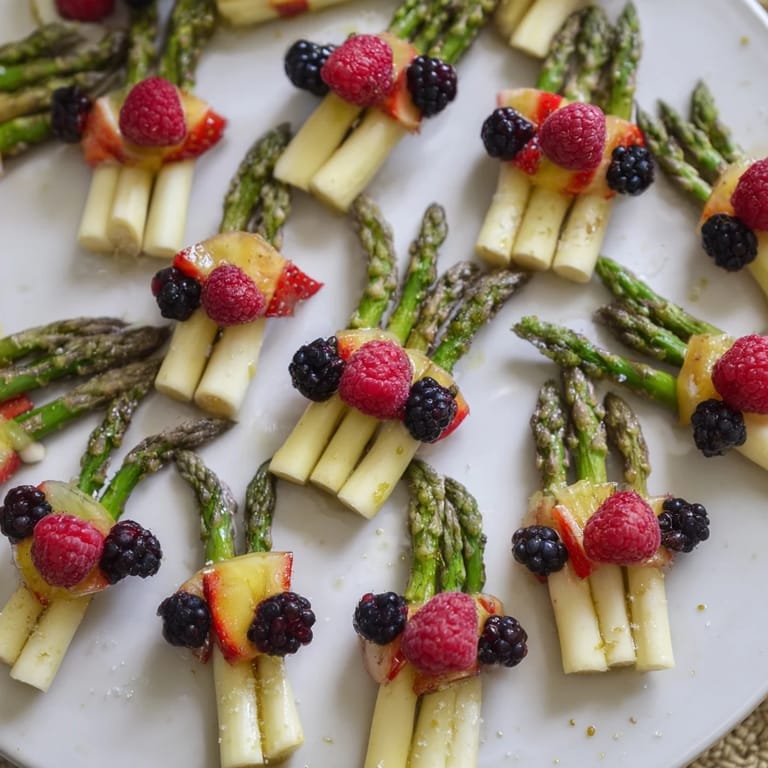
- Distribute berries into each square, mixing varieties so no two squares look identical. This is where intuition matters more than precision; follow what feels balanced and beautiful to your eye.
- Final touch:
- Just before serving, drizzle with olive oil and dust with sea salt and pepper; the timing matters because you want that oil to glisten fresh, not soak into anything.
 Save
Save This dish became my signature when I realized it wasn't about impressing people with complexity—it was about showing them that food could be art without pretension. My grandmother saw it for the first time and asked if she could just look at it a little longer before eating, and that's when I knew I'd made something that touched something deeper than hunger.
Choosing Your Berries Wisely
The berry selection is where you get to be creative and seasonal, and I've learned that the best combinations are the ones that feel right in that moment. Spring berries are delicate and bright, summer berries are bold and jammy, and if you find golden berries, grab them because they add an unexpected tropical undertone that makes people pause mid-bite. The contrast between tart and sweet matters more than perfection, so don't be afraid to substitute based on what's at peak ripeness in your market.
Creating the Perfect Weave
The lattice is easier than it looks once you stop overthinking it—the key is consistent spacing from the start so your grid looks intentional rather than accidental. I usually measure with my fingers, which sounds imprecise but somehow always works, and I've found that working on a cool platter helps the asparagus stay firmer while you're arranging. The rhythm of the weaving becomes meditative if you let it, and by the end, you'll have developed a tiny skill that feels almost magical to watch come together.
Flavor Pairing Possibilities
While this dish shines on its own, I've discovered that small additions transform it into something entirely new depending on your mood and the occasion. A whisper of fresh mint leaves adds a garden-fresh brightness, a thin drizzle of aged balsamic brings sophistication and depth, and a sprinkle of edible flowers like pansies or violas makes it feel like you've stepped into a dreamy countryside scene. The beauty is that the lattice structure is sturdy enough to support extras without falling apart, so treat it as your canvas and let your instincts guide you.
- Balsamic glaze adds a sophisticated sweetness that plays beautifully with berry tartness.
- Fresh mint leaves scattered across the lattice feel refreshing and unexpected in the best way.
- Edible flowers like pansies transform this from appetizer to garden-inspired art piece.
 Save
Save This recipe taught me that sometimes the most memorable meals aren't complicated—they're the ones where someone sees your effort and care visible on the plate. Serve it chilled, watch people's faces light up, and remember that you created something that's both nourishment and art.
Recipe FAQs
- → How do you soften the chives for weaving?
Dip the chive stems briefly in hot water for about 5 seconds, then cool them in an ice bath to make them pliable for tying.
- → What is the best way to prepare the asparagus?
Blanch the asparagus in boiling salted water for 1-2 minutes until tender and bright green, then cool immediately in ice water to retain texture.
- → Can other fruits be used in the lattice filling?
Yes, small firm fruits like blackberries, red currants, or pomegranate seeds can be substituted for variety or preference.
- → How should this dish be served for best flavor?
Serve chilled to maintain the crispness of asparagus and freshness of fruits, making it ideal for spring gatherings or brunch.
- → What seasonings enhance the assembled lattice?
A light drizzle of extra virgin olive oil with a sprinkle of flaky sea salt and freshly ground black pepper adds subtle flavor without overpowering the ingredients.