 Save
Save My first proper fish and chips came from a small chippy near the harbor, and I remember the newsprint-wrapped parcel warming my hands through a cold English afternoon. The batter crackled between my teeth, and I understood immediately why this dish has survived centuries of culinary trends without apology. There's something honest about it—no pretense, just technique meeting the finest ingredients done right. I've spent years chasing that same golden crispness in my own kitchen, learning that the magic lies in cold water, two fries, and knowing exactly when to lower the fish into the oil.
I cooked this for my dad on a rainy Saturday, and he went quiet after the first bite in a way that made me nervous until he looked up and asked if I'd steal his recipe. The chips steamed when I opened the paper, and he dipped them straight into the vinegar without thinking—muscle memory from decades of Friday nights at the pub near his old office. That's when I realized fish and chips isn't really about the recipe; it's about the moment you create for someone else.
Ingredients
- White fish fillets (cod or haddock): These mild, flaky fish hold up beautifully to the batter and frying process without becoming mushy—haddock has slightly more delicate flavor if you can find it.
- All-purpose flour: Use a standard variety, nothing fancy; the cornstarch and baking powder do the heavy lifting for texture.
- Cornstarch: This is the secret to that incredible lightness—it creates steam pockets in the batter that fry up into crispy air.
- Baking powder: Don't skip this; it's responsible for the batter's airiness and that distinctive crunch.
- Cold sparkling water: The temperature and carbonation matter; cold keeps the batter from absorbing oil, and the bubbles create texture.
- Russet or Maris Piper potatoes: Starchy potatoes break down slightly during cooking, creating that fluffy interior—waxy potatoes won't give you the same result.
- Sunflower or vegetable oil: Choose an oil with a high smoke point; groundnut oil works beautifully too.
- Malt vinegar: It's not just seasoning—the acidity cuts through the richness and is absolutely non-negotiable for authenticity.
Tired of Takeout? 🥡
Get 10 meals you can make faster than delivery arrives. Seriously.
One email. No spam. Unsubscribe anytime.
Instructions
- Soak your chips:
- Cut your potatoes into thick fries and submerge them in cold water for at least 15 minutes—this removes excess starch and prevents them from sticking together. Pat them completely dry before frying; any water left on them will cause the oil to splatter.
- First fry at low temperature:
- Heat your oil to 150°C (300°F) and fry the chips in batches for 4–5 minutes until they're tender but still pale. This preliminary cook cooks the inside through without coloring the outside, and it's the reason you'll get that contrast between fluffy and crispy.
- Mix your batter:
- Whisk flour, cornstarch, baking powder, salt, and pepper together, then add cold sparkling water gradually, whisking until you have a thick consistency that coats the back of a spoon. If you use beer, choose a light lager for the clearest flavor; the bubbles in beer or sparkling water are crucial to the texture.
- Second fry for crispness:
- Increase your oil temperature to 190°C (375°F) and fry the parboiled chips again in batches for 2–3 minutes until they're golden and crisp. Drain on paper towels and season immediately with sea salt while they're still hot and absorbent.
- Prepare your fish:
- Pat your fillets dry with paper towels—any moisture on the surface will prevent the batter from adhering properly and create steam that makes it soggy. Dust very lightly with flour, which helps the batter grip the fish.
- Batter and fry:
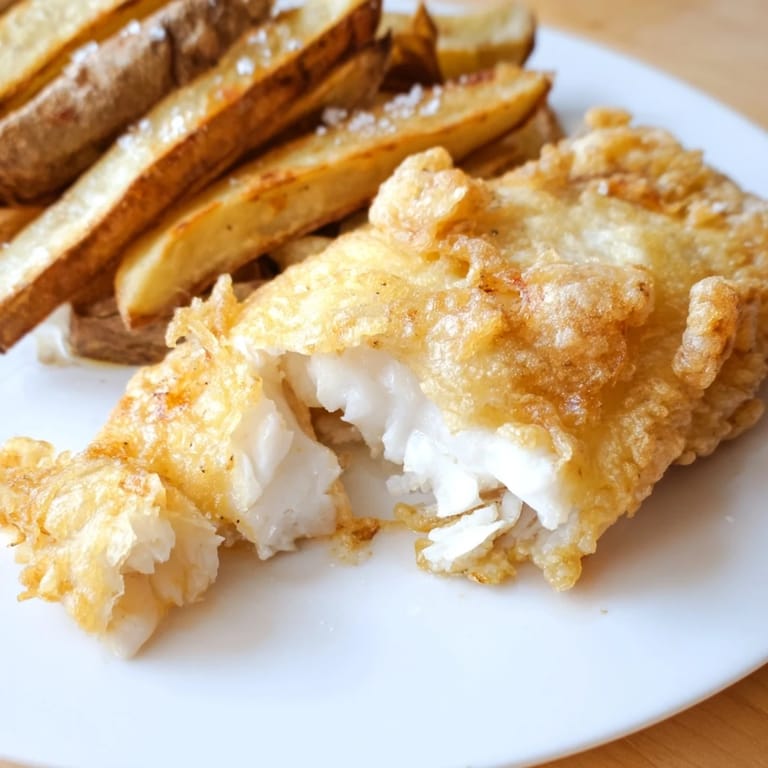
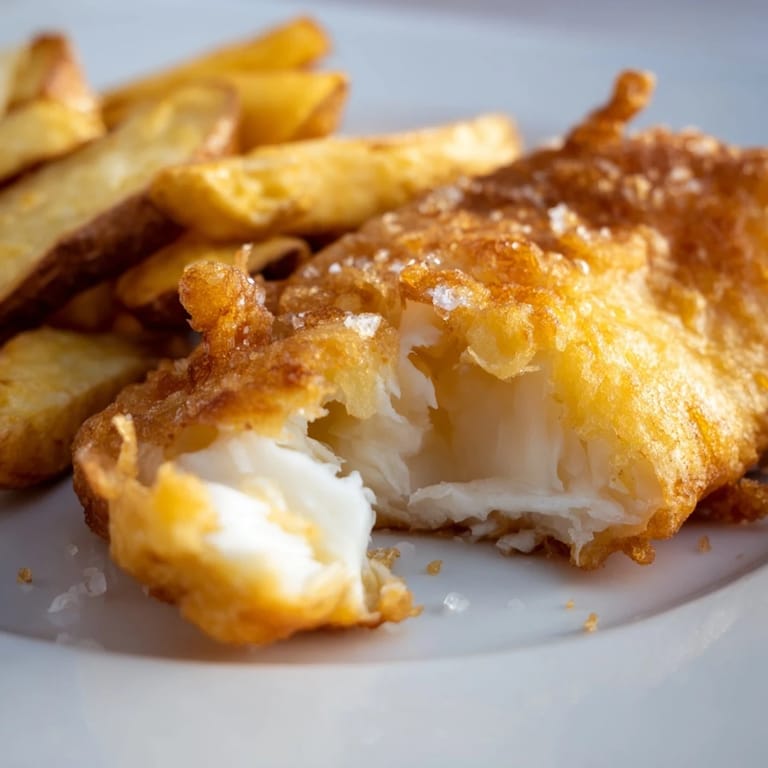
- Dip each floured fillet into the batter, letting the excess drip off for a few seconds, then carefully lower it into the hot oil. You'll hear it sizzle immediately; fry for 5–7 minutes, turning once halfway through, until the batter is deep golden brown and the fish flakes easily inside. Work in batches so the temperature doesn't drop.
- Drain and serve immediately:
- Transfer the fish to a wire rack or paper towels to drain excess oil. Serve everything while it's still steaming—the whole point is the contrast between the crispy exterior and the tender interior, which only lasts minutes.
 Save
Save There's a moment when you lift the battered fish from the oil and it's still crackling, the sound almost musical, and you know you've done it right. That's when it stops being a recipe and becomes something you made with your own hands, something worthy of sharing.
The Two-Fry Method Explained
The reason restaurants and proper chippies use two temperatures is because frying is really two separate tasks: cooking through and creating texture. The first fry at the lower temperature gently cooks the potato all the way to the center without browning the outside, then the second fry at higher heat creates the golden crust everyone craves. Most home cooks skip the first fry and end up with chips that are either burned outside and raw inside, or pale and greasy. Once you understand that these are two different jobs requiring two different temperatures, everything changes.
Why Cold Water Matters
The batter's texture depends entirely on the temperature of the liquid you mix into it—cold water or cold beer keeps the flour from hydrating too quickly and becoming tough, while the bubbles in carbonated liquid create tiny air pockets that expand in the hot oil and fry up into the crackle you're after. Warm water will give you a dense, heavy batter that absorbs oil like a sponge instead of frying up light and crispy. This is why restaurant batters are so noticeably different from homemade attempts; they're usually mixed to order with ice-cold liquid and used immediately, before the flour has time to fully hydrate.
Timing, Vinegar, and the Complete Experience
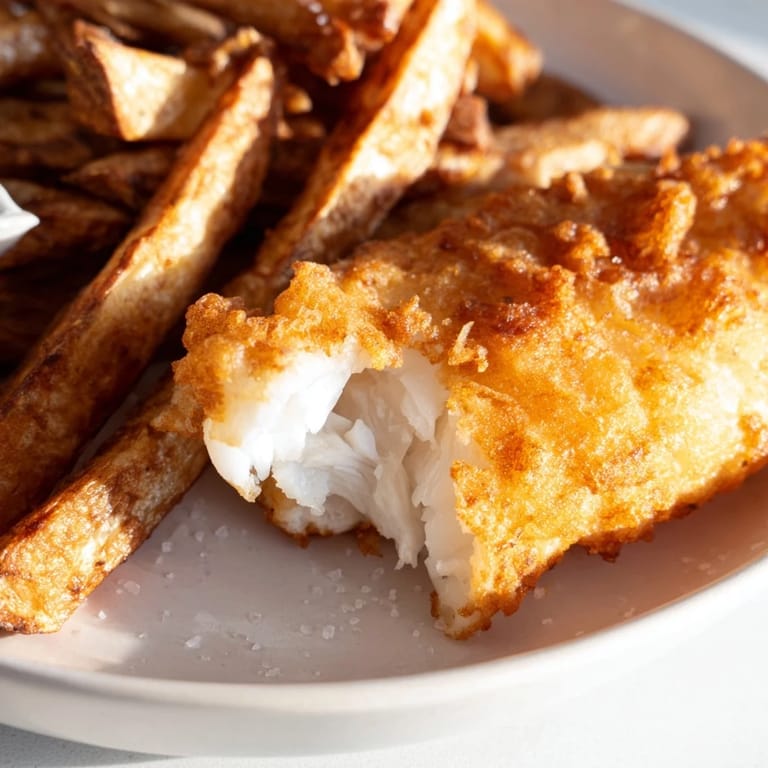
Fish and chips is only as good as its moment—serve it more than five minutes after cooking and you've lost the textural magic that makes it special. The malt vinegar isn't just seasoning; it's part of the architecture of the dish, cutting through the richness and making the whole thing feel bright instead of heavy. Wrap it in paper if you can, eat it standing up or at a table you don't mind getting salt on, and drink something cold alongside it.
- If you can't find malt vinegar, cider vinegar is your next best option, though the flavor profile shifts slightly.
- Lemon wedges are the modern alternative, but malt vinegar is the traditional choice for a reason.
- Serve the chips and fish on separate papers if possible so the chips don't steam themselves into softness.
 Save
Save This recipe is worth mastering because once you do, you'll never pay for mediocre fish and chips again. More importantly, you'll have something genuinely good to feed the people you care about.
Recipe FAQs
- → What type of fish is best for this dish?
White fish such as cod or haddock works best due to their flaky texture and mild flavor.
- → Why is the batter made with sparkling water or beer?
Sparking water or beer adds lightness and creates a crisp, airy batter when fried.
- → How do you achieve crispy yet fluffy chips?
Double frying the potatoes—first at a lower temperature to cook through, then at a higher heat to crisp—ensures fluffy interiors with crispy exteriors.
- → Can different oils be used for frying?
Vegetable or sunflower oil with a high smoke point are ideal for deep frying to maintain crispiness and avoid burning.
- → What are popular accompaniments for the dish?
Malt vinegar or lemon wedges add acidity, while tartar sauce and mushy peas provide complementary flavors.