 Save
Save I used to think coconut curry was something only restaurants could get right, until one rainy Tuesday when I opened my fridge to find a random assortment of half-used vegetables and a forgotten can of coconut milk. What started as a clean-out-the-crisper experiment turned into the dish I now crave on loop. The kitchen smelled like a tiny Bangkok street stall within minutes, and I realized I had been overthinking curry for years. Sometimes the best recipes come from necessity, not precision.
The first time I made this for friends, I panicked halfway through because I thought I added too much curry paste. But when everyone went quiet after the first bite, then immediately asked for seconds, I knew I had stumbled onto something good. One friend even texted me the next day asking for the recipe, which is the highest compliment in my book. Now it is my go-to when I want to feed people something warm and vibrant without spending the whole evening in the kitchen.
Ingredients
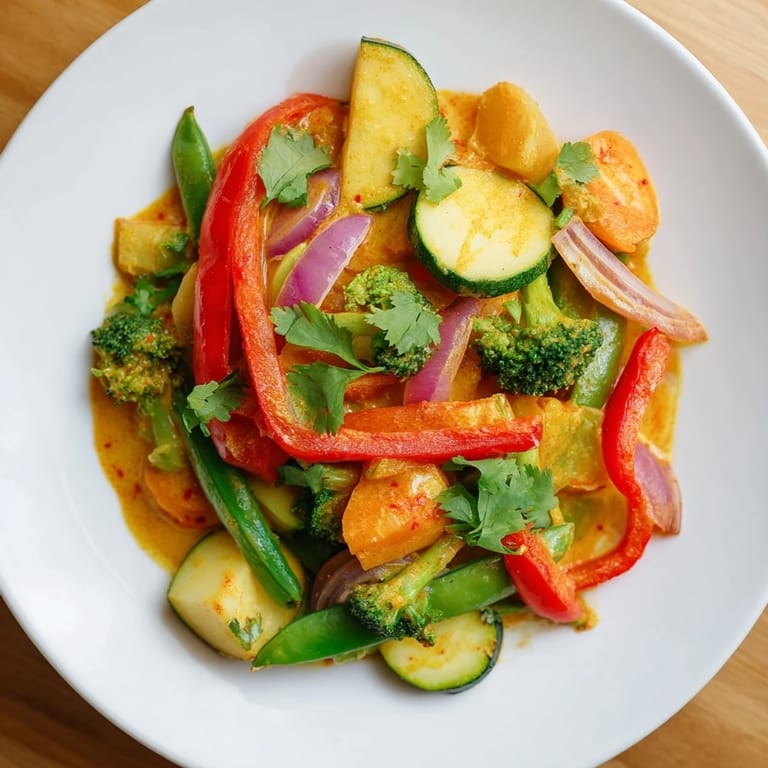
- Red bell pepper: Adds a subtle sweetness that balances the heat, and it holds its shape beautifully in the curry.
- Carrot: Provides earthy depth and a slight crunch if you do not overcook it, which I learned the hard way.
- Zucchini: Soaks up the coconut sauce like a sponge, making every bite creamy and satisfying.
- Broccoli: Brings a mild bitterness that cuts through the richness, and the florets catch little pockets of sauce.
- Snap peas: These stay crisp and sweet even after simmering, adding a nice textural contrast.
- Red onion: I prefer red onion here because it softens without disappearing, and it adds a hint of color.
- Coconut oil: It amplifies the coconut flavor in a way that feels intentional, not accidental.
- Garlic and ginger: The foundation of the aroma, and freshly grated ginger makes all the difference.
- Red curry paste: This is where the magic lives, so do not skimp, and check the label if you need it vegan.
- Turmeric, cumin, coriander: These spices deepen the flavor and make the sauce taste like it has been developing for hours.
- Coconut milk: Always use full fat, the richness is non-negotiable and it creates that silky texture.
- Vegetable broth: Thins the sauce just enough so it coats without being cloying.
- Soy sauce or tamari: Adds umami and a salty backbone that ties everything together.
- Lime juice: A squeeze at the end brightens the whole dish and wakes up your taste buds.
- Fresh cilantro: I know it is divisive, but it adds a fresh, herbal note that feels essential to me.
Tired of Takeout? 🥡
Get 10 meals you can make faster than delivery arrives. Seriously.
One email. No spam. Unsubscribe anytime.
Instructions
- Start with the aromatics:
- Heat the coconut oil until it shimmers, then add the red onion and let it soften until it smells sweet and looks translucent. This takes a few minutes, and it sets the tone for everything that follows.
- Build the fragrance:
- Toss in the garlic and ginger, stirring constantly so they do not burn, and let that intoxicating smell fill your kitchen. You will know it is ready when you cannot help but lean over the pan and inhale.
- Bloom the spices:
- Add the curry paste and ground spices, stirring them into the oil for about a minute. This step releases their oils and makes the flavors exponentially more vibrant.
- Add the heartier vegetables:
- Toss in the bell pepper, carrot, zucchini, and broccoli, stirring them through the spiced oil. Let them sauté for a few minutes so they start to soften and pick up color.
- Pour in the liquid:
- Add the coconut milk and vegetable broth, stirring to combine, and bring it to a gentle simmer. The sauce will start to thicken slightly and coat the back of your spoon.
- Finish with snap peas:
- Stir in the snap peas and soy sauce, then cover and let everything simmer until the vegetables are tender but still have a little bite. Do not rush this, the flavors need time to meld.
- Brighten and adjust:
- Remove from heat, squeeze in the lime juice, and taste for salt and pepper. The lime will make everything pop, so do not skip it.
- Serve with love:
- Ladle into bowls, scatter cilantro and lime wedges on top, and serve it with rice or quinoa. Watch people go quiet as they take their first bite.
 Save
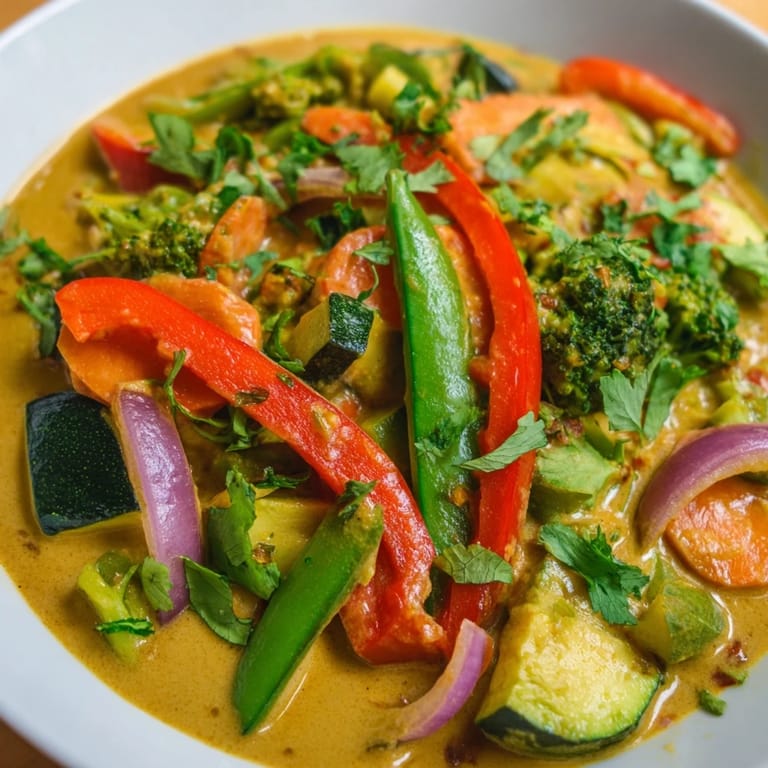
Save There was a night last winter when I made this after a long, frustrating day, and the act of chopping vegetables and stirring the pot became oddly meditative. By the time I sat down to eat, I felt calmer, and the curry tasted even better because of it. Food has a way of doing that, turning a rough day into something manageable, one warm bite at a time.
How to Customize It
I have swapped in cauliflower, green beans, and mushrooms depending on what I had, and they all worked beautifully. If you want protein, stir in chickpeas or crispy tofu during the simmering step, and they will soak up the sauce like little flavor bombs. You can also dial the heat up or down by adjusting the curry paste, I have made mild versions for my niece and fiery ones for my spice-loving friends, and both were devoured.
What to Serve It With
I almost always serve this over jasmine rice because the fluffy grains soak up the sauce perfectly, but quinoa works great if you want something a bit nuttier. On nights when I am feeling indulgent, I will warm up some naan and use it to scoop up every last bit of curry from the bowl. Honestly, this dish is forgiving, it pairs well with almost any grain or flatbread you have on hand.
Storage and Leftovers
Leftovers actually taste better the next day because the vegetables have had more time to absorb the sauce, and the flavors deepen overnight. I store it in an airtight container in the fridge for up to four days, and I reheat it gently on the stove with a splash of broth to loosen it up. Sometimes I will toss in fresh greens like spinach when reheating, and they wilt right into the curry for an extra boost of color and nutrition.
- Let the curry cool completely before refrigerating to avoid condensation and sogginess.
- You can freeze it for up to two months, just thaw it in the fridge overnight before reheating.
- Add a fresh squeeze of lime after reheating to bring back that bright, lively flavor.
 Save
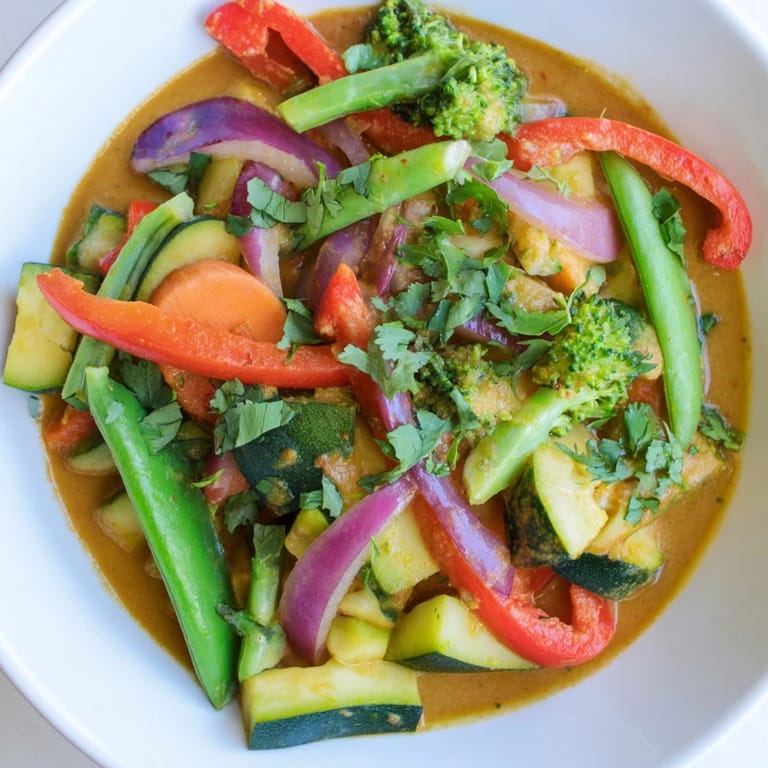
Save This curry has become my comfort food, my impress-your-friends food, and my everything-is-going-to-be-okay food all rolled into one pot. I hope it brings you as much warmth and satisfaction as it has brought me.
Recipe FAQs
- → Can I substitute the vegetables in this dish?
Yes, cauliflower, green beans, mushrooms, or any preferred vegetables can be added or substituted to suit your taste.
- → How can I adjust the spice level?
Modify the amount of red curry paste to make the dish milder or spicier according to preference.
- → What protein options work well with this preparation?
Chickpeas or tofu can be added during cooking for extra protein and texture.
- → Is there a soy-free alternative for the soy sauce?
Coconut aminos make a great soy-free substitute without compromising flavor.
- → What dishes pair well with this coconut curry style preparation?
Steamed jasmine rice, quinoa, or naan bread complement the rich and spiced sauce beautifully.