 Save
Save I still remember the moment I first saw a deconstructed dish laid out like a modern art installation on a white plate at a tiny gallery café in Brooklyn. The chef had arranged colorful vegetables into geometric shapes, and I was mesmerized—not just by how beautiful it looked, but by the realization that food could be both an experience for the eyes and the palate. That moment planted a seed, and years later, I found myself recreating that magic in my own kitchen, transforming simple vegetables into an edible art piece that made even my most skeptical friends pause and appreciate the meal before diving in.
I made this for my sister's birthday dinner last spring, and watching her face light up when she saw the platter arranged on the table was worth every minute I spent carefully cutting those geometric shapes. She's always been the artistic one in the family, and this dish felt like the perfect bridge between her world and mine—a plate that was as much about what you saw as what you tasted.
Ingredients
- 1 small cucumber, peeled: The watery, crisp base that keeps things fresh and light. I learned to peel mine thin enough to let the flesh show, but not so thin that it becomes fragile
- 1 medium golden beet, cooked and peeled: Sweet and earthy, it brings unexpected depth. Cook it beforehand so you're not scrambling at the last minute, and let it cool completely before cutting
- 1 medium watermelon radish, peeled: This is where the visual magic happens. The pink and white interior is stunning and makes people do a double-take
- 1 ripe avocado: Creamy and buttery, it's your secret weapon for richness. Cut it just before assembly so it doesn't brown
- 100 g feta cheese, block not crumbled: You need a proper block here so you can cut geometric shapes that hold their form. Crumbled feta will fall apart and ruin the presentation
- 1 ripe mango, peeled: Sweet and tropical, it rounds out the earthy vegetables with bright, sunny flavor
- 2 tbsp extra virgin olive oil: Use the good stuff. This isn't the time to cut corners on oil since it's right there on the plate doing all the visual and flavor work
- 1 tbsp lemon juice: The acid that keeps everything tasting fresh and prevents the avocado from browning too quickly
- Flaky sea salt and fresh cracked black pepper: These finish the dish and make every bite feel intentional. Don't skip this step
- Microgreens or fresh herbs like basil or cilantro: The final flourish that adds color and a fresh herb note that ties everything together
Tired of Takeout? 🥡
Get 10 meals you can make faster than delivery arrives. Seriously.
One email. No spam. Unsubscribe anytime.
Instructions
- Prep your vegetables and fruits:
- Get everything peeled and ready to go. If you're using a beet, make sure it's completely cooled. Have everything organized before you start cutting—this helps you stay in the flow and keeps the assembly moving smoothly
- Cut into geometric shapes:
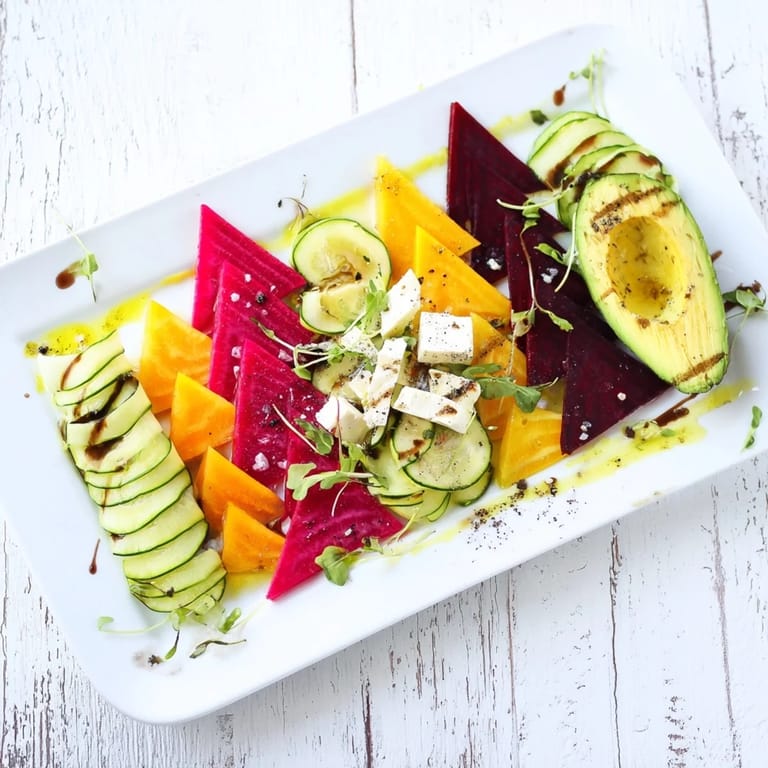
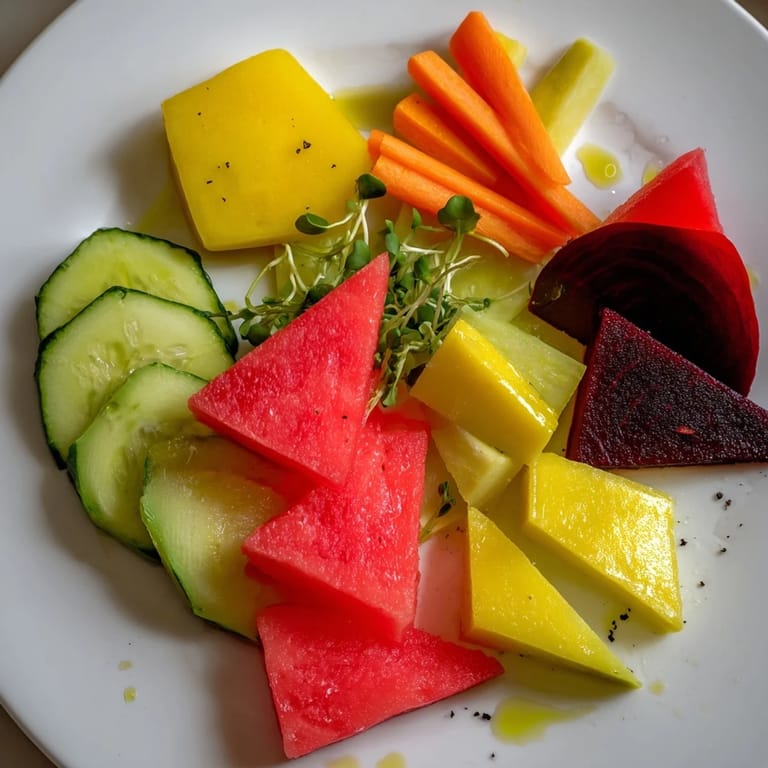
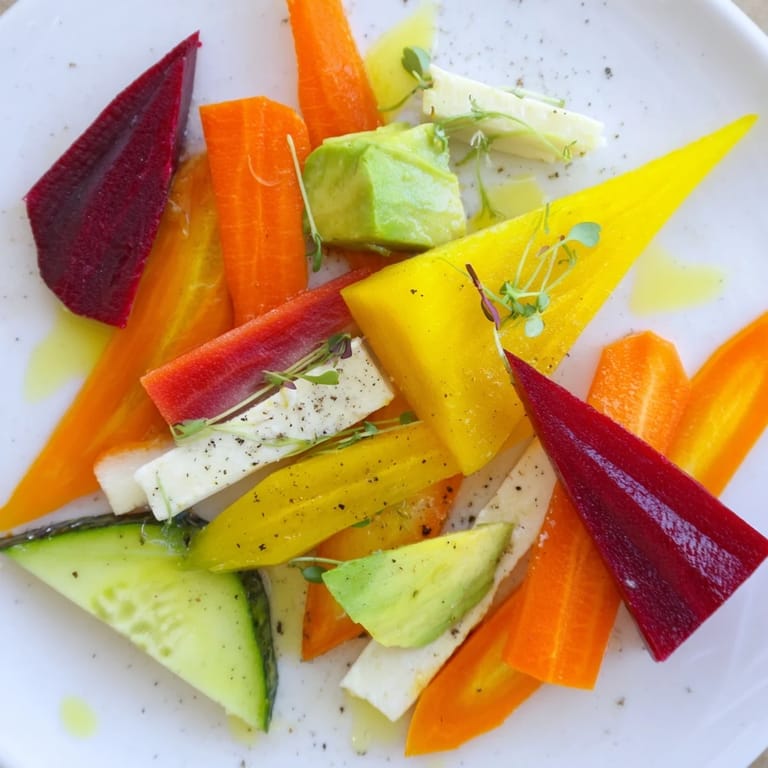
- This is where the fun—and the slight challenge—comes in. Using a sharp chef's knife, slice your cucumber, radish, avocado, and mango into triangles, parallelograms, hexagons, or whatever irregular shapes feel right. Don't stress about perfection. The beauty is in the intention, not flawless geometry. Each piece should be roughly 1 cm thick so it's substantial enough to pick up with a cocktail pick. If you have small cookie cutters, they're brilliant for keeping shapes consistent
- Cut the feta into cubes or prisms:
- Match the geometric theme with your cheese. This is easier if your feta is cold and firm. A sharp knife helps tremendously here—a dull one will crumble the cheese instead of cutting it cleanly
- Arrange on your platter:
- This is the moment where you become the artist. Use a large, flat serving platter—white or neutral colored ones really let the food colors sing. Arrange each piece close together in a mosaic pattern, creating visual flow. Think of it like a puzzle where each color and shape plays a role. Step back and look at it from above. Does it feel balanced? Does the eye have somewhere satisfying to land?
- Dress the plate:
- Drizzle the olive oil evenly across the arrangement in a gentle, intentional pattern. The oil should glisten but not pool. Follow with the lemon juice, letting it fall in small drops across the plate
- Season and garnish:
- Sprinkle your flaky sea salt across the arrangement—the larger crystals matter here because you can actually see them. Crack fresh black pepper over everything. Finally, scatter your microgreens or herbs as the last detail. This is what makes people go 'oh' when they see it
- Serve immediately:
- The magic of this dish is in the presentation. Serve it right away while the lines are clean and the colors are vibrant. If you let it sit too long, the juices will start to weep and soften the visual impact
 Save
Save There's something magical about serving food that makes people pause before they eat it. At that birthday dinner, my sister sat with her hands folded, just looking at the platter for a moment, and I realized that cooking isn't always about flavor first—sometimes it's about creating a moment where people feel like you made something just for them, something that says 'I took time to think about how this makes you feel.'
The Art of the Geometric Cut
The cutting is honestly the soul of this dish, and it's more forgiving than you might think. You don't need to be a trained pastry chef with perfect precision. The beauty is that slight irregularities actually add to the handmade, intentional feeling. What matters is that each piece is roughly the same thickness—about 1 cm—so they look purposeful rather than random. If you have a steady hand and a sharp knife, you're already halfway there. The cookie cutters are lovely if you want more geometric precision, but a clean knife cut with confident, deliberate strokes looks just as beautiful.
Choosing Your Color Palette
Part of what makes this dish work is the visual contrast between the colors. The golden beet brings warmth, the watermelon radish adds jewel tones, the mango brings brightness, and the cucumber and feta provide neutral balance. If you want to swap things around, think in terms of color families. Purple carrots, yellow bell peppers, roasted red peppers, or even thin-sliced fennel can all work beautifully. The key is making sure you have enough contrast so the arrangement doesn't look monochromatic. When you're planning your cuts, arrange them on the platter first before adding the dressing—this gives you a chance to adjust the color flow and make sure it feels balanced.
Wine Pairing and Serving Suggestions
This is a dish that loves company and good conversation. The bright, fresh flavors pair beautifully with a crisp white wine like Sauvignon Blanc, which echoes the acidity of the lemon and keeps your palate fresh between bites. If you want to make this even easier for guests, set out small cocktail picks so people can grab individual pieces without their hands touching the platter. Serve it as the opening act of a dinner party, or as a light lunch with some crusty bread on the side. The fact that there's no cooking involved means you can make this literally minutes before serving, which is perfect for when you're already busy with other dishes.
- Pro tip: Make extra feta cubes because people always eat more cheese than you expect
- If you're doubling the recipe for a larger crowd, use a bigger platter and give yourself more space to work with—the arrangement becomes easier with room to breathe
- Leftover cut vegetables can be tossed into a quick salad later, so nothing goes to waste
 Save
Save Every time I make this dish, I'm reminded that cooking is about more than just feeding people—it's about creating moments where food becomes art and memory. This one always delivers.