 Save
Save The first time I tasted koshari, I was standing at a corner cart in Cairo at dusk, watching a vendor layer rice, lentils, and pasta with the precision of someone who'd done it ten thousand times. The aroma of cumin and fried onions hit me before I even took a bite, and I realized this wasn't just street food—it was edible comfort, built in layers like memories. Now, whenever I make it at home, that same magic happens: the kitchen fills with warmth, the kind that makes everyone who walks by suddenly hungry.
I made this for my roommate after a long day of finals, and watching her face light up at that first spoonful reminded me why cooking matters. She asked for the recipe before finishing the bowl, which is the highest compliment anyone's ever paid me. That bowl became our tradition—whenever one of us needed grounding, koshari appeared on the stove.
Ingredients
- Medium-grain rice (1 cup): The texture matters here; medium grains hold their shape without getting mushy, creating that satisfying bite against the softer lentils.
- Brown or green lentils (1 cup): These stay firm during cooking, which is exactly what you want—they shouldn't turn to mush and disappear into the rice.
- Small pasta like elbow macaroni or ditalini (1 cup): The smaller shapes nestle between the grains and lentils, catching sauce in every crevice.
- Olive oil (2 tablespoons): Use good quality here; it's the foundation of the sauce's warmth.
- Onion and garlic: The holy pairing that makes everything smell like home.
- Crushed tomatoes (15 oz can) and tomato paste: Together they create depth; the paste concentrates flavor while the crushed tomatoes keep things bright.
- Ground cumin and coriander: These spices are the soul of the dish—they whisper rather than shout, tying everything together.
- Chili flakes: Optional, but they add a gentle heat that makes your palate wake up.
- Vegetable oil for frying: This is separate from the olive oil and crucial for making those onions crackle.
- Vinegar and minced garlic for the condiment: This tangy companion cuts through the richness beautifully and deserves to be drizzled with purpose.
Tired of Takeout? 🥡
Get 10 meals you can make faster than delivery arrives. Seriously.
One email. No spam. Unsubscribe anytime.
Instructions
- Set your proteins cooking:
- Start the lentils first since they need the longest time. Let them boil gently, then simmer until they're tender enough to crush between your fingers but still holding their shape. While they're working, get the rice going in a separate pot with salted water.
- Bring the pasta to life:
- Wait until the lentils and rice are nearly done before cooking pasta in a large pot of salted water, aiming for that al dente moment when it still has a whisper of resistance. This timing means everything hits the bowl warm and together.
- Build the sauce with patience:
- Sauté your onion slowly until it turns translucent and sweet, then add garlic just before it burns. The crushed tomatoes, paste, and spices go in next, and here's where you let time do its work—simmer it uncovered for 15 to 20 minutes, stirring now and then, until the sauce darkens and thickens into something complex and cling-worthy.
- Make those onions crackle:
- Coat sliced onions in flour and salt, then fry them in batches in hot vegetable oil until they're golden and crispy, not burnt. This is where texture lives in this dish, so stay close and listen for that sizzle to deepen in tone.
- Mix the garlic vinegar (if you're going there):
- Combine vinegar, minced garlic, and chili flakes in a small bowl and let them become friends for ten minutes. This sharp, bright condiment is the final note that makes everything sing.
- Layer like you mean it:
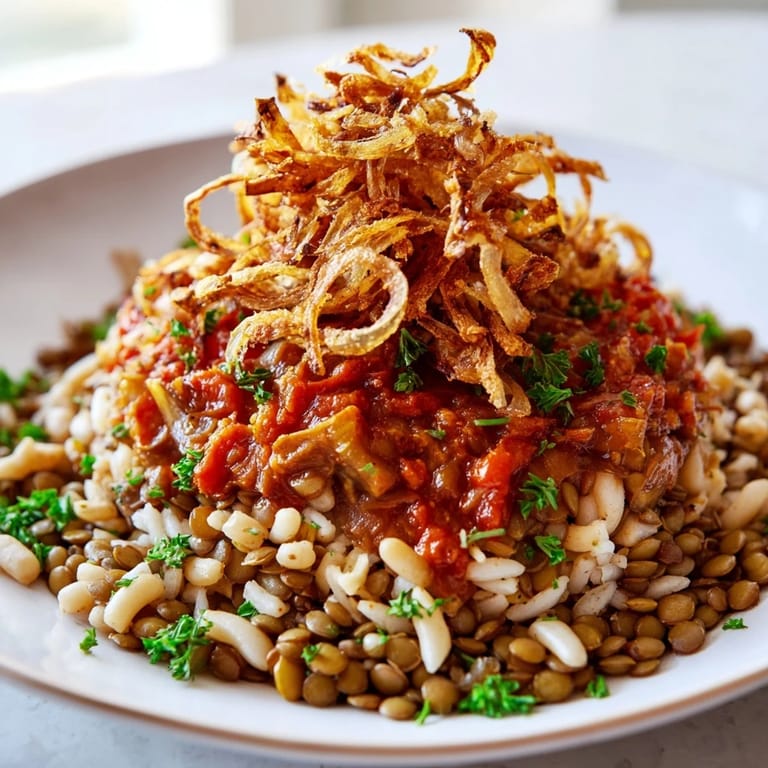
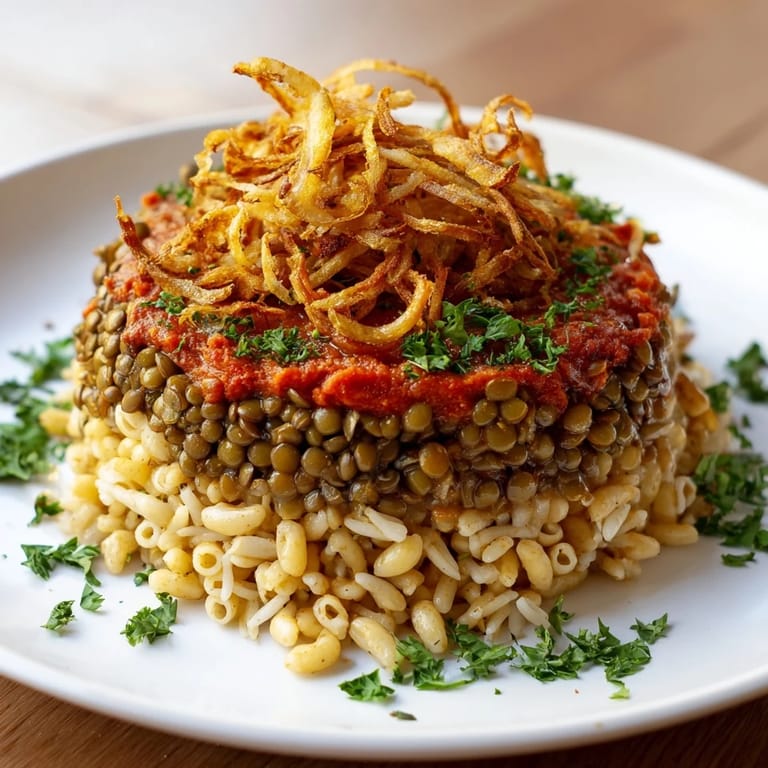
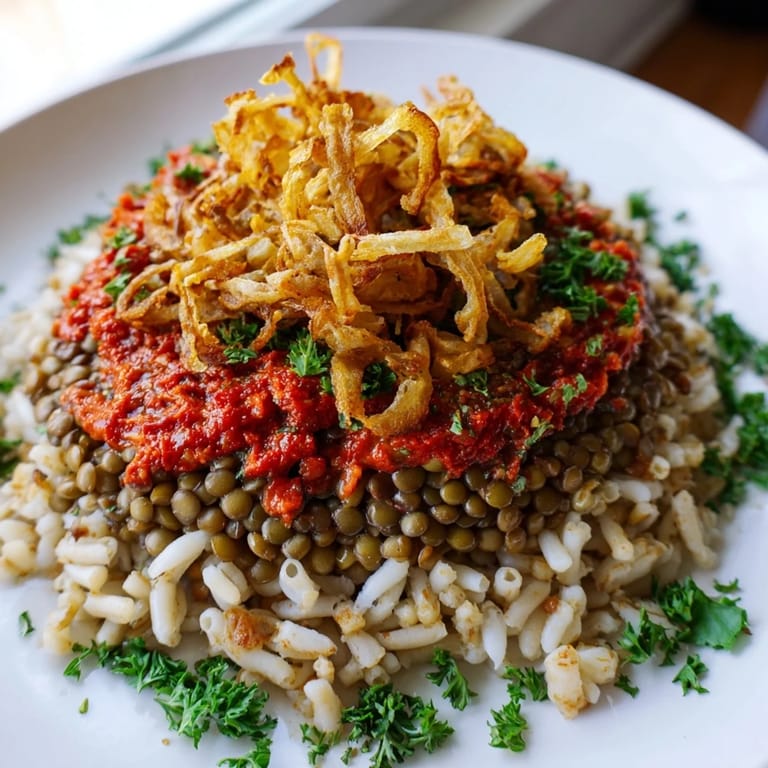
- In bowls or on a platter, start with rice as your base, then lentils, then pasta. The order matters because it creates little pockets of different textures. Top generously with sauce, scatter crispy onions like golden confetti, drizzle with garlic vinegar if you've made it, and finish with fresh parsley if the mood strikes.
 Save
Save There's a moment when you pour that thickened sauce over the layers and watch it cascade between the rice and lentils—something shifts in the kitchen, and suddenly you're not just cooking anymore, you're creating something people will want to come back for. That's when I know I've gotten it right.
The Soul of the Spice Blend
The magic here isn't in any single ingredient but in how cumin and coriander play together. They're warm and slightly floral, grounding without ever becoming heavy. I learned this by accident years ago when I added too much cumin to another dish and expected it to be overpowering—instead, it just deepened everything around it. In koshari, they bloom when they hit the hot oil and tomatoes, releasing oils that coat your palate gently.
Why Layering Matters
Every spoonful should hold all the textures and flavors at once. When you eat from a bowl, you're getting rice, lentils, and pasta in the same bite, all held together by sauce and topped with that essential crunch. It's intentional, not random, which is why assembly matters more than most recipes admit.
Variations and Small Tweaks
This recipe is sturdy enough to handle your preferences. Swap orzo or vermicelli for the macaroni if you want thinner, more delicate pasta strands. Use vegetable broth instead of water for deeper flavor. Adjust the chili flakes or skip them entirely if heat isn't your thing. The foundation stays strong no matter what you change.
- If you're making this ahead, keep the crispy onions separate and add them just before serving so they stay crunchy.
- Leftovers reheat beautifully in a skillet with a splash of water, and the flavors actually deepen the next day.
- Don't skip the garlic vinegar condiment on the side—people will use more of it than you'd expect.
 Save
Save Koshari is street food that became dinner at my table, and now it's become something more—it's the meal I make when I want to remind people that simple, honest cooking done with care is its own kind of luxury. Make it, share it, watch what happens.
Recipe FAQs
- → What type of lentils work best for this dish?
Brown or green lentils are ideal as they hold their shape well and offer a mild, earthy flavor that complements the other ingredients.
- → Can I use a different pasta than elbow macaroni?
Yes, small shapes like ditalini, orzo, or vermicelli can be used as substitutes to maintain the dish’s texture and appearance.
- → How do I achieve crispy fried onions without burning them?
Coat thinly sliced onions lightly in flour and fry over medium-high heat in batches, stirring gently until golden brown, then drain on paper towels.
- → Is it possible to add more heat to the sauce?
Absolutely, increase the chili flakes in the tomato sauce and optional garlic vinegar to suit your preferred spice level.
- → What are good alternatives to water for cooking grains and lentils?
Using vegetable broth enhances the depth of flavor by adding subtle savory notes to the rice and lentils during cooking.