 Save
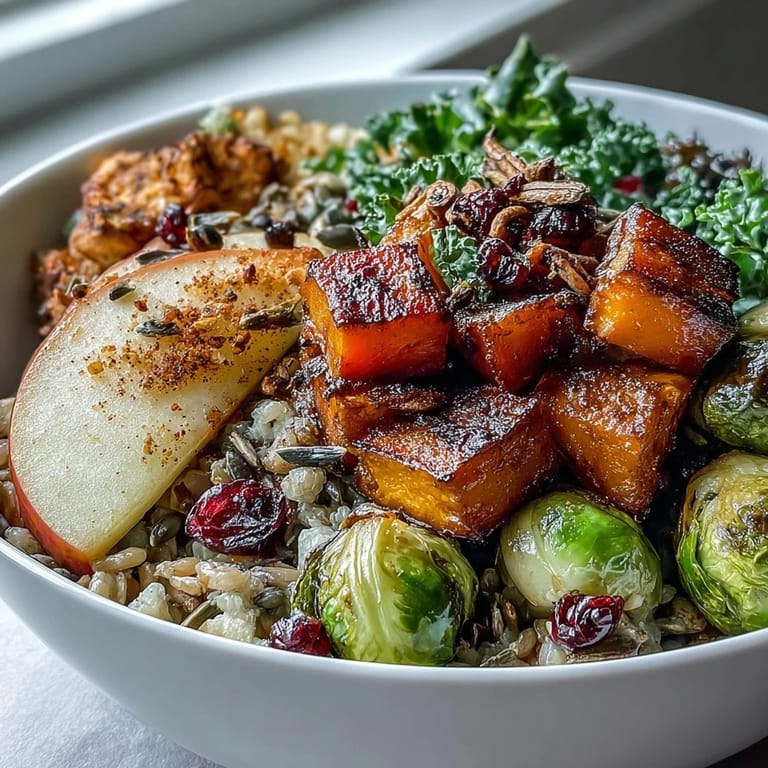
Save Last October, I found myself staring into my nearly empty fridge on a Tuesday evening, wondering what to do with a pile of farmers market produce before it wilted. Something about the golden squash and those impossibly green Brussels sprouts sparked an idea, and within an hour, I'd assembled this bowl that tasted like autumn in the best way possible. My roommate wandered in halfway through roasting, drawn by the smell of caramelizing vegetables and cinnamon, and didn't leave until the bowl was finished. That one meal became something I made almost every week that season, each time discovering a new reason why it worked so perfectly.
I made this for a dinner party when three friends suddenly became five, and instead of panicking, I just doubled the recipe and felt like a genius. Someone asked for seconds before finishing their first bowl, and another friend asked if I'd learned to cook professionally over the summer. Nothing quite hits like watching people genuinely enjoy something you threw together with seasonal vegetables and good intentions.
Ingredients
- Butternut squash, peeled and cubed (2 cups): The star that turns sweet and tender when roasted; buy pre-cut if you're short on time, though there's something satisfying about wielding a sharp knife and peeling it yourself.
- Brussels sprouts, trimmed and halved (2 cups): These become crispy and almost nutty at high heat; don't skip the single-layer spreading or they'll steam instead of roast.
- Kale, stems removed and leaves chopped (2 cups): The texture matters here, so massage it gently or wilt it briefly to make it tender and less aggressively bitter.
- Apple, cored and sliced (1 large): Adds brightness and a touch of natural sweetness; Honeycrisp or Granny Smith work beautifully depending on whether you want sweeter or tart.
- Farro, rinsed (1 cup): A chewy grain that holds up beautifully in a bowl; if you need gluten-free, quinoa cooks faster and brown rice is equally forgiving.
- Vegetable broth or water (2 cups): The liquid foundation for your grains; homemade broth makes a difference but store-bought is perfectly fine.
- Olive oil (3 tbsp): Divided between the vegetables and apples to create that golden, roasted exterior you're really after.
- Sea salt (1 tsp), black pepper (1/2 tsp), smoked paprika (1/2 tsp), ground cinnamon (1/2 tsp): These seasonings work together to build a warm, complex flavor that feels intentional without being complicated.
- Toasted pumpkin seeds (1/4 cup), dried cranberries (2 tbsp), crumbled feta or vegan cheese (2 tbsp, optional): The toppings that make this feel complete; toast your own seeds if you have time, or buy them already done when you don't.
Tired of Takeout? 🥡
Get 10 meals you can make faster than delivery arrives. Seriously.
One email. No spam. Unsubscribe anytime.
Instructions
- Set up and preheat:
- Heat your oven to 425°F and line two baking sheets with parchment paper so nothing sticks and cleanup is actually painless. This high heat is non-negotiable because you want those vegetables to caramelize, not just soften.
- Season and arrange the squash and Brussels sprouts:
- Toss your cubed squash and halved Brussels sprouts with two tablespoons of olive oil, salt, pepper, and smoked paprika, then spread them in a single layer on the first baking sheet. The key here is single layer, not overcrowded, because they need room to develop that golden exterior.
- Prepare the apples:
- Place your apple slices on the second baking sheet, drizzle with the remaining tablespoon of oil, and sprinkle with cinnamon. This separate sheet matters because apples roast faster and more gently than the vegetables.
- Roast everything:
- Put both sheets in the oven at the same time, stirring the squash and Brussels sprouts once halfway through. The vegetables need 25 to 30 minutes until golden and tender, while the apples finish in about 15 minutes when they're just soft and starting to caramelize at the edges.
- Cook the grains:
- While things roast, rinse your farro under cool water, then bring the vegetable broth to a boil in a medium saucepan. Add the farro, reduce heat to low, cover, and let it simmer gently for 20 to 25 minutes until it's tender and chewy. You'll know it's done when there's barely any liquid left and each grain feels like it has a little bite to it.
- Wilt the kale:
- In a skillet over medium heat, add your chopped kale with just a splash of water and stir constantly for 2 to 3 minutes until it softens and turns a deeper green. This takes less time than you think, so stay right there and watch it.
- Assemble your bowls:
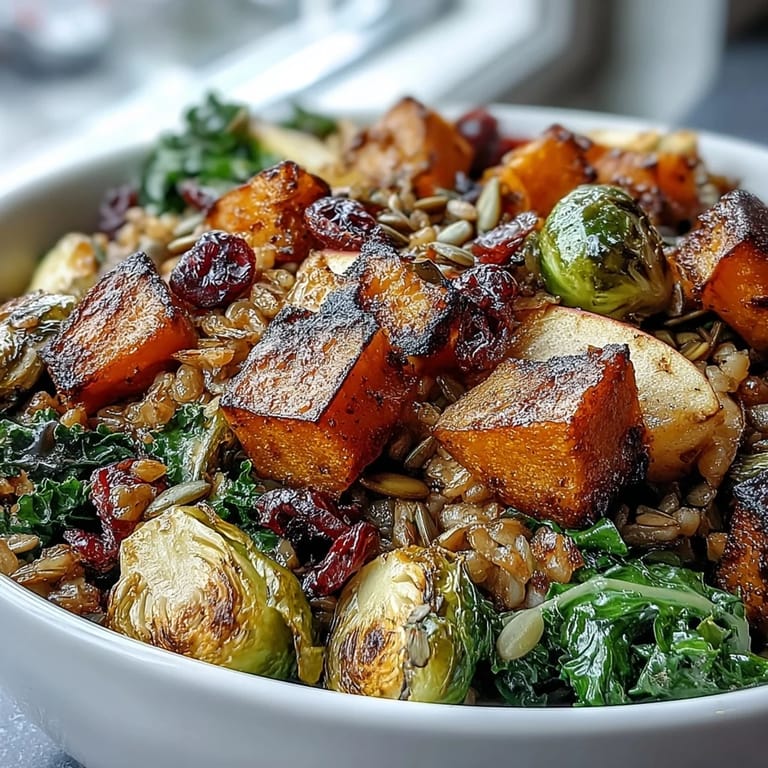
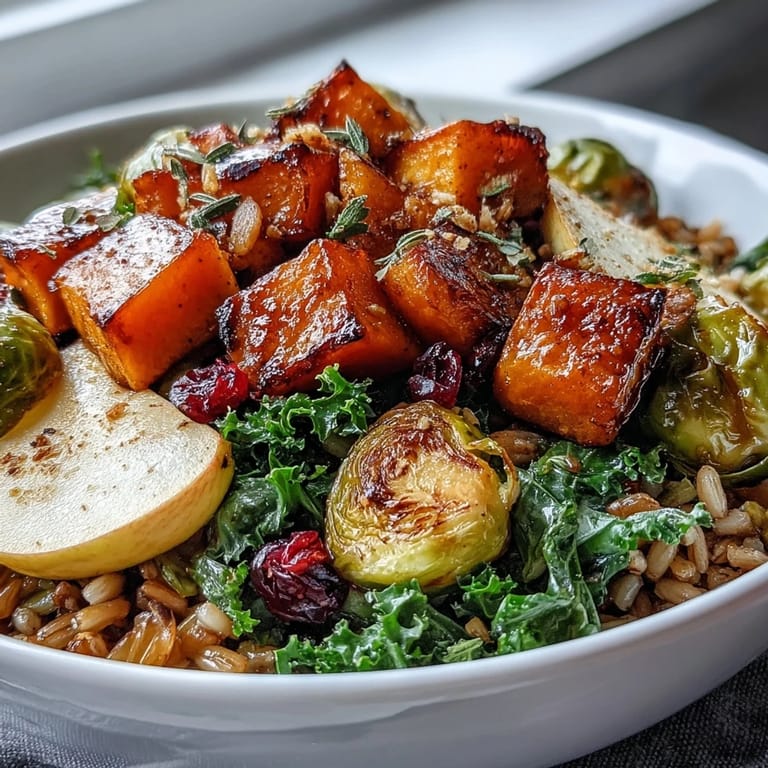
- Divide the cooked farro among four bowls, then layer on the roasted squash, Brussels sprouts, sautéed kale, and roasted apples. This is where it all comes together and suddenly looks like something you meant to create.
- Finish and serve:
- Top each bowl with pumpkin seeds, dried cranberries, and feta or vegan cheese if you're using it, then serve while everything is still warm enough to let the flavors really speak.
 Save
Save There was a moment one evening when I realized this bowl had become comfort food for me, not because it was indulgent, but because it felt like taking care of myself without any effort or guilt. That's when I knew it was worth making again and again.
Why This Bowl Became a Seasonal Staple
As the weather shifted and fall really settled in, I started thinking about food differently, craving vegetables instead of resisting them. This bowl felt like it understood that shift, giving me something warm and satisfying that also happened to be exactly what I wanted to eat. The roasting process creates these deep, complex flavors that you don't get from raw vegetables, which is probably why I found myself making this three or four times a month once I discovered it.
Customizing Your Bowl
The beauty of this recipe is how flexible it is without losing its personality, so don't be afraid to adjust based on what you have or what you're craving. I've made it with pears instead of apples when I had them, swapped the farro for quinoa when I was out, and even added roasted chickpeas on nights when I needed more protein. Every version tastes a little different but always feels like the same meal, which is exactly how a good recipe should work.
Storage and Make-Ahead Tips
This bowl is one of those rare dishes that actually tastes better the next day, making it perfect for meal prep or leftover lunches. I usually store the components separately so the kale doesn't get soggy and the pumpkin seeds don't lose their crunch, then assemble everything fresh when I'm ready to eat. If you're taking this to work, pack the toppings in a separate container and add them just before eating, which keeps everything crisp and intentional.
- Roasted vegetables keep for up to five days in an airtight container, making this perfect for building multiple meals throughout the week.
- The grains can be made in advance and reheated gently or eaten cold depending on your mood and what you have time for.
- Fresh kale is best wilted the same day you eat, but you can prep it ahead and store it separately so it's ready to go when you need it.
 Save
Save This bowl tastes like taking care of yourself in the most delicious way possible. Make it once and you'll understand why it became my answer to almost every question about what to eat when the weather turns cool.
Recipe FAQs
- → What grains work best in this bowl?
Farro provides a chewy, nutty base that pairs beautifully with roasted vegetables. Quinoa cooks faster and adds protein, while brown rice offers a familiar texture. All three grains absorb the seasonal flavors well.
- → Can I prepare this ahead for meal prep?
Absolutely. Roast vegetables and cook grains in batch, then store separately in airtight containers for up to 4 days. Reheat portions gently and add fresh toppings just before serving for best texture.
- → What protein additions work well?
Roasted chickpeas, crispy tofu cubes, or pan-seared tempeh complement the autumn flavors perfectly. For non-vegetarian options, roasted chicken or turkey breast would also pair nicely.
- → How do I prevent the kale from becoming bitter?
Wilting kale quickly over medium heat with just a splash of water keeps it tender without developing bitterness. Remove from heat as soon as it turns bright green and just begins to soften.
- → Can I use different winter vegetables?
Sweet potato, acorn squash, parsnips, or cauliflower would work wonderfully in place of butternut squash. The roasting times may vary slightly, so check tenderness periodically.
- → What's the best way to reheat leftovers?
Reheat the grain and vegetable components together in a 350°F oven for 10-15 minutes, or warm individual portions in the microwave. Add fresh toppings after reheating to maintain their texture.