 Save
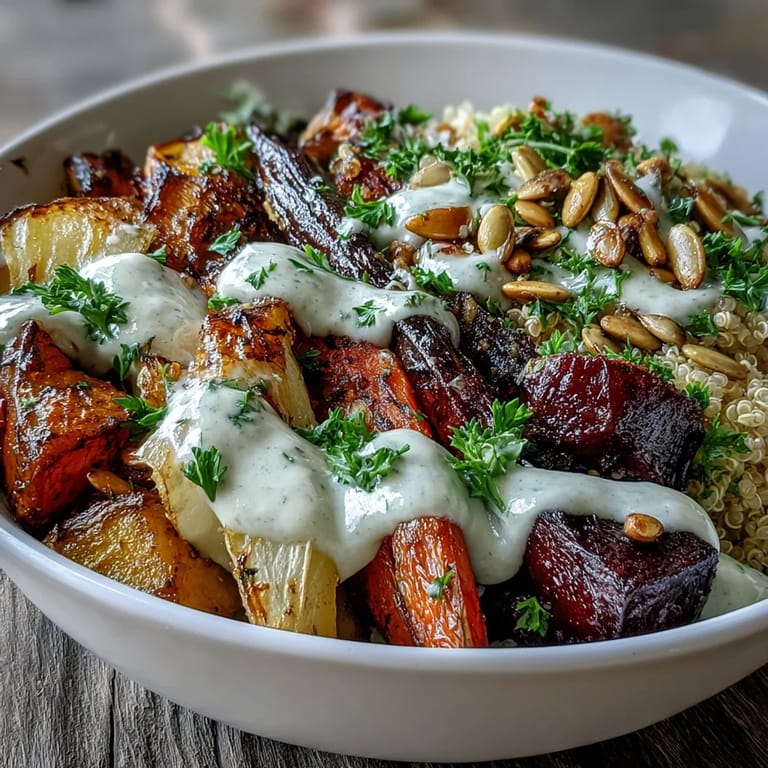
Save There's something about the smell of root vegetables caramelizing in a hot oven that stops me mid-conversation. My kitchen fills with this sweet, almost honeyed warmth that feels like autumn showing up unannounced. The first time I assembled this bowl, I wasn't trying to be healthy—I was simply trying to use what sat in my crisper drawer before they wrinkled beyond recognition. But then something shifted when I tasted that creamy tahini sauce against the earthy, charred vegetables. This became the bowl I make when I want to feel nourished without any fuss.
I served this to friends who showed up tired from moving apartments, and watching them perk up after a few bites was oddly moving. One guest asked for the recipe immediately, saying it tasted like the kind of food that knew exactly what her body needed. That moment reminded me that simple, whole foods have their own quiet power—they don't need to shout to be memorable.
Ingredients
- Carrots (2 medium): Their natural sweetness deepens when roasted, creating caramelized edges that taste almost like candy.
- Beets (2 medium): These bring earthiness and a stunning jewel-toned color—peel them with gloves unless you want magenta hands as a souvenir.
- Turnips (2 medium): Often overlooked, they become creamy and subtly sweet when roasted, a secret weapon for depth.
- Parsnips (2 medium): These are the understated stars—their starchy interior becomes fluffy while their edges crisp up beautifully.
- Olive oil (2 tbsp): Use your better oil here, the kind you actually taste, since there's nowhere to hide.
- Sea salt and black pepper: Don't skimp on seasoning the vegetables directly; it's what coaxes out their sweetness.
- Dried thyme or rosemary (1 tsp, optional): These herbs whisper herbaceous notes that make the vegetables taste more like themselves.
- Quinoa (1 cup, rinsed): Rinsing is non-negotiable—it removes the bitter coating and lets the nutty flavor shine.
- Water or vegetable broth (2 cups): Broth adds depth, but water works just fine if that's what you have.
- Tahini (⅓ cup): This is the soul of the sauce—use a good quality kind that hasn't separated into an oil slick.
- Lemon juice (2 tbsp): Freshly squeezed transforms the tahini from flat to bright and alive.
- Garlic (1 clove, minced): Just one clove, since it punches harder once it hits that creamy base.
- Maple syrup or honey (1 tsp, optional): A tiny bit smooths out the tahini's slight bitterness and rounds everything out.
- Fresh parsley and toasted seeds for garnish: These add color, crunch, and a reason to feel like you cooked something special.
Tired of Takeout? 🥡
Get 10 meals you can make faster than delivery arrives. Seriously.
One email. No spam. Unsubscribe anytime.
Instructions
- Heat your oven and prep your workspace:
- Set the oven to 425°F and line a baking sheet with parchment paper—this keeps cleanup minimal and prevents sticking. You want everything ready before vegetables hit the heat.
- Toss the vegetables in oil and seasonings:
- In a large bowl, coat your chopped root vegetables with olive oil, salt, pepper, and herbs if using. Make sure every piece glistens slightly; proper coating is what creates those caramelized edges.
- Roast until golden and tender:
- Spread vegetables in a single layer and roast for 30 to 35 minutes, stirring halfway through. You'll know they're done when the edges are dark and crispy and a fork slides through with just a little resistance.
- Cook the quinoa while vegetables roast:
- Combine rinsed quinoa with water or broth and salt in a saucepan, bring to a boil, then drop the heat and cover. Simmer for 15 minutes, then let it rest covered for 5 minutes before fluffing with a fork—this resting time matters.
- Whisk the tahini sauce until smooth:
- In a small bowl, whisk together tahini, lemon juice, water, minced garlic, salt, and a touch of maple syrup. If it's too thick, add water a tablespoon at a time until it reaches a drizzleable consistency.
- Build your bowls with intention:
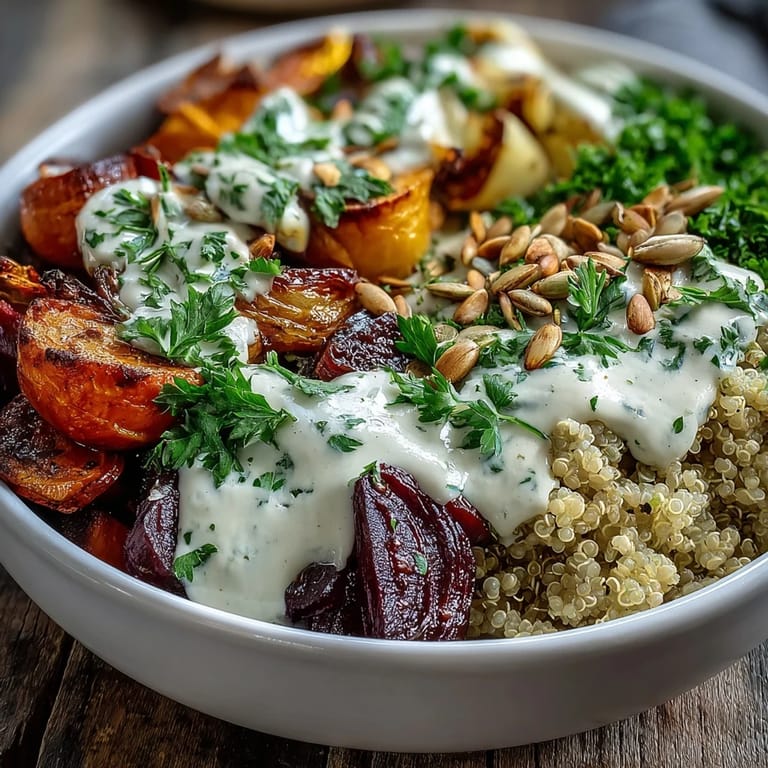
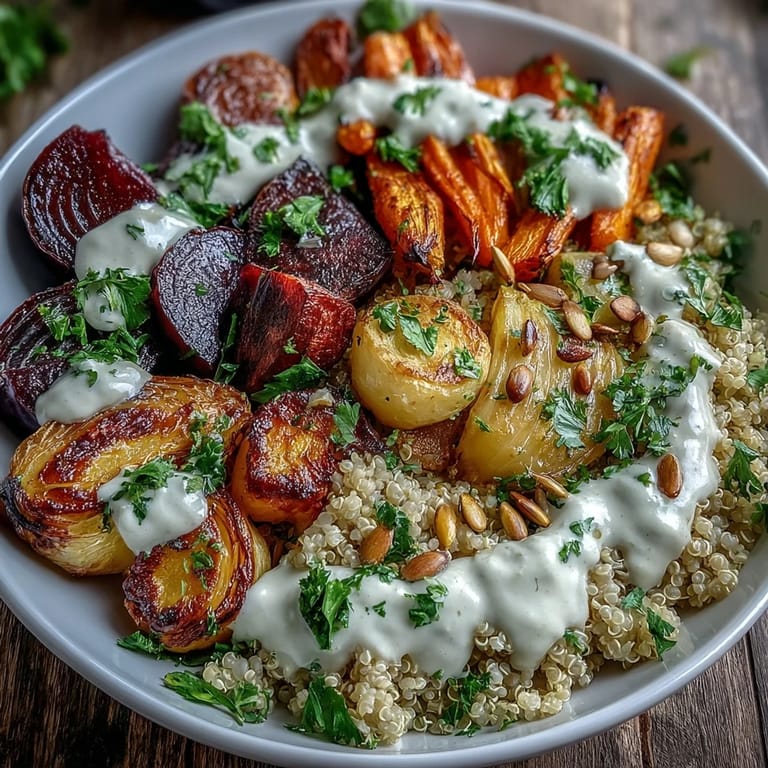
- Divide the fluffy quinoa among four bowls, crown each with roasted vegetables, then drizzle generously with tahini sauce. Finish with a scatter of parsley and toasted seeds for texture and color.
 Save
Save My partner now requests this bowl when they've had a long week, something about the warm spices and creamy sauce settling their nerves. It's become our quiet dinner, the kind where we eat and breathe and don't feel the need to perform for each other.
The Magic of Roasted Root Vegetables
Roasting root vegetables isn't complicated, but it's transformative—heat breaks down their starches and sugars, concentrating flavors into something almost caramelized. I used to boil them, thinking it was faster, until someone pointed out I was literally washing away everything good about them. Now I understand that patience with heat is the secret to vegetables that taste like themselves, only better.
Tahini Sauce as a Game Changer
Tahini sauce started as a Middle Eastern staple, but it's become my workhorse for any grain or vegetable bowl that feels lonely. The sesame paste brings this nutty richness that makes everything taste more expensive than it actually is. A squeeze of fresh lemon juice is what keeps it from being heavy—it's the difference between a sauce that coats your mouth and one that dances across your tongue.
Customizing Your Bowl
This bowl wants to be played with, honestly. The formula is simple enough that swapping ingredients feels intuitive rather than risky. I've used sweet potatoes when carrots ran out, added chickpeas for extra protein, and once threw in leftover roasted Brussels sprouts just because they were sitting there looking hopeful.
- Swap any root vegetable for another—rutabaga, sweet potato, or celeriac all work beautifully.
- Add chickpeas, white beans, or a poached egg on top for protein without thinking twice.
- Drizzle with tahini sauce or try a lemon vinaigrette depending on your mood that day.
 Save
Save This bowl feels like coming home in food form—nourishing, honest, and asking for nothing more than good ingredients and a little time. Make it once, and you'll understand why it lives on my regular rotation.
Recipe FAQs
- → Which root vegetables work best for roasting?
Carrots, beets, turnips, parsnips, and sweet potatoes roast beautifully. They develop natural sweetness and tender interiors with crispy edges when cooked at high heat.
- → Can I prepare the vegetables ahead of time?
Yes, peel and cut the vegetables up to a day in advance. Store them in an airtight container in the refrigerator and toss with oil and seasonings just before roasting.
- → What makes the tahini sauce smooth and creamy?
Whisking tahini with lemon juice and water initially creates a thick paste before thinning out. Continue adding water gradually while whisking vigorously until you reach a pourable consistency.
- → How do I know when the vegetables are done roasting?
The vegetables are ready when they're fork-tender and have golden-brown caramelized edges. Most root vegetables need 30-35 minutes at 425°F, though smaller pieces may cook faster.
- → Can I add protein to this bowl?
Chickpeas, roasted chickpeas, lentils, or a poached egg make excellent additions. You can also serve alongside grilled tofu or roasted chicken if you prefer.
- → How long does the tahini sauce keep?
The tahini sauce stores well in the refrigerator for up to a week. It may thicken when cold—simply whisk in a splash of water to loosen it before serving.