 Save
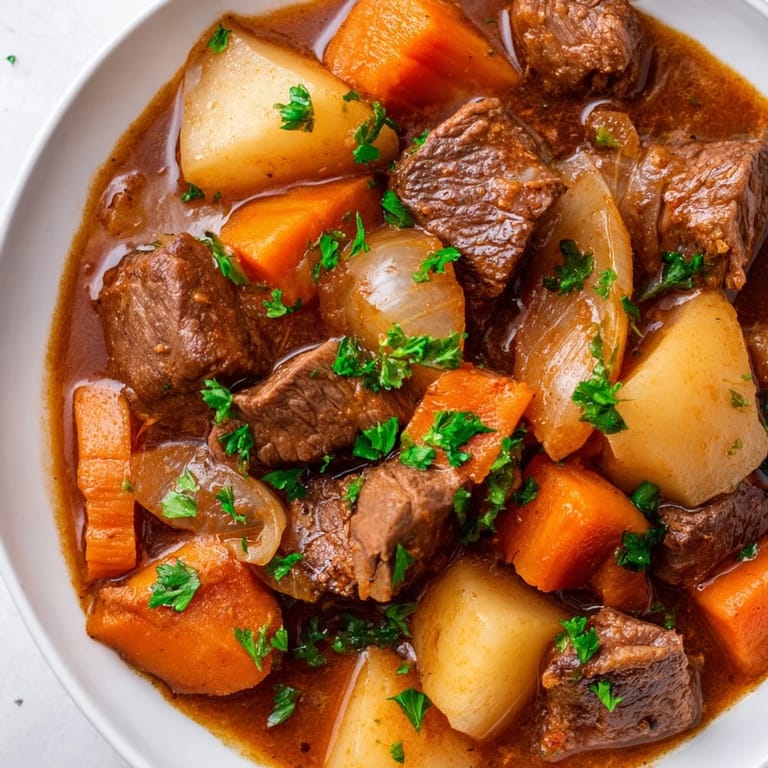
Save There's something about a pot of beef stew that stops you in your tracks on a cold afternoon. I learned this the hard way one November when my neighbor knocked on the door, drawn in by the smell of beef and Guinness simmering for hours. She stood in my kitchen looking almost mesmerized, and I realized then that Irish beef stew isn't just dinner—it's an invitation. The kind that fills both the stomach and something quieter, something that says you're welcome here.
My first real attempt at this stew happened during a cooking experiment that turned into something deeper. I was trying to impress someone, honestly, but what I discovered was that the slow hours of simmering gave me space to think, to settle into my own kitchen like it was a place that belonged to me. By the time the stew was ready, I'd forgotten about impressing anyone and was just genuinely excited to share it.
Ingredients
- Beef chuck: Use 1.5 kg (3.3 lbs) cut into 2-inch cubes—this tougher cut becomes silky and tender after hours of slow braising, which is exactly what you want.
- Potatoes: Four large ones, peeled and chunked, will break down slightly and thicken the broth while staying substantial enough to bite into.
- Carrots: Four large carrots sliced add natural sweetness that balances the savory depth—don't skip them.
- Onions and celery: Two large onions chopped and two celery stalks sliced are your flavor foundation; they soften into the background but build everything.
- Garlic: Three minced cloves add a quiet complexity that rounds out the whole dish.
- Beef stock: 1.2 liters (5 cups)—if you have homemade, use it, but good store-bought works beautifully.
- Guinness stout: 330 ml (one bottle) is optional but worth it; it deepens the color and adds a subtle richness that makes people ask what your secret ingredient is.
- Tomato paste: Two tablespoons add a touch of acidity and umami that makes the broth taste like it's been simmering since morning.
- Worcestershire sauce: Two tablespoons (check for gluten-free if needed) bring a savory, slightly tangy note that ties everything together.
- Bay leaves, thyme, and rosemary: Two bay leaves, 1 tsp dried thyme, and 1 tsp dried rosemary create an herbal backbone—don't use fresh here; dried holds up better to the long cooking.
- Salt and black pepper: Season boldly and taste as you go; this is a forgiving stew.
- Vegetable oil: Three tablespoons for searing the meat—the browning step is non-negotiable.
- Fresh parsley: Two tablespoons chopped for garnish add a bright finish that lightens the heaviness of the stew.
Tired of Takeout? 🥡
Get 10 meals you can make faster than delivery arrives. Seriously.
One email. No spam. Unsubscribe anytime.
Instructions
- Dry and season your beef:
- Pat the beef cubes completely dry with paper towels—this is the step people skip, but it's what gives you a proper brown crust instead of steam. Season each piece generously with salt and pepper while you're at it.
- Brown the meat in batches:
- Heat 2 tbsp oil in a large Dutch oven over medium-high heat until it's hot enough that the beef sizzles immediately when it hits the pan. Work in batches so you're not crowding the pot; you want a golden-brown crust, not gray steamed meat. This takes patience, but it's where the flavor lives.
- Build your base:
- Add the onions and celery to the now-empty pot and cook, stirring, for about 5 minutes until softened and fragrant. Add the minced garlic and cook for another minute until you can smell it—this is the moment the kitchen starts to feel intentional.
- Add the tomato paste:
- Stir in 2 tbsp tomato paste and let it cook for a full minute, coating the vegetables. This caramelizes the paste slightly and deepens the whole flavor profile.
- Deglaze and simmer (if using beer):
- Pour in the Guinness if you're using it, scraping the bottom of the pot with a wooden spoon to release all those browned bits stuck to the pan—that's liquid gold. Let it bubble and reduce for about 2 minutes.
- Bring everything together:
- Return the beef to the pot, then add the carrots, potatoes, bay leaves, thyme, rosemary, beef stock, and Worcestershire sauce. Stir to combine and bring to a gentle boil.
- Braise low and slow:
- Lower the heat, cover the pot, and let it simmer gently for 2 to 2.5 hours, stirring occasionally. You're listening for a barely audible bubble, not an aggressive boil. The beef should be fork-tender and fall apart slightly when you stir.
- Finish and taste:
- Remove the bay leaves, then taste and adjust seasoning with salt and pepper. If you want a thicker stew, mash a few potato pieces against the side of the pot and stir them in to thicken the broth.
- Serve with warmth:
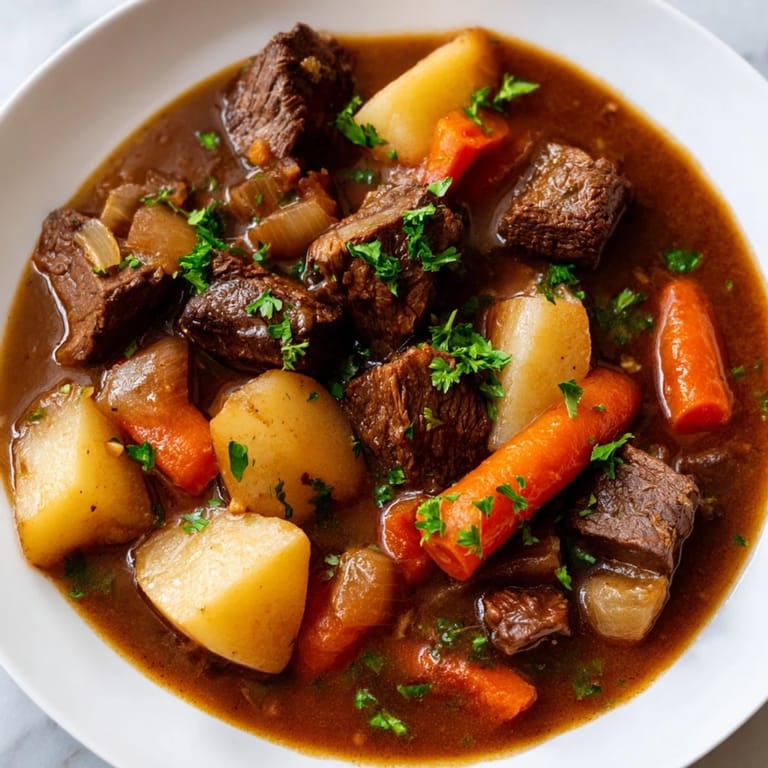
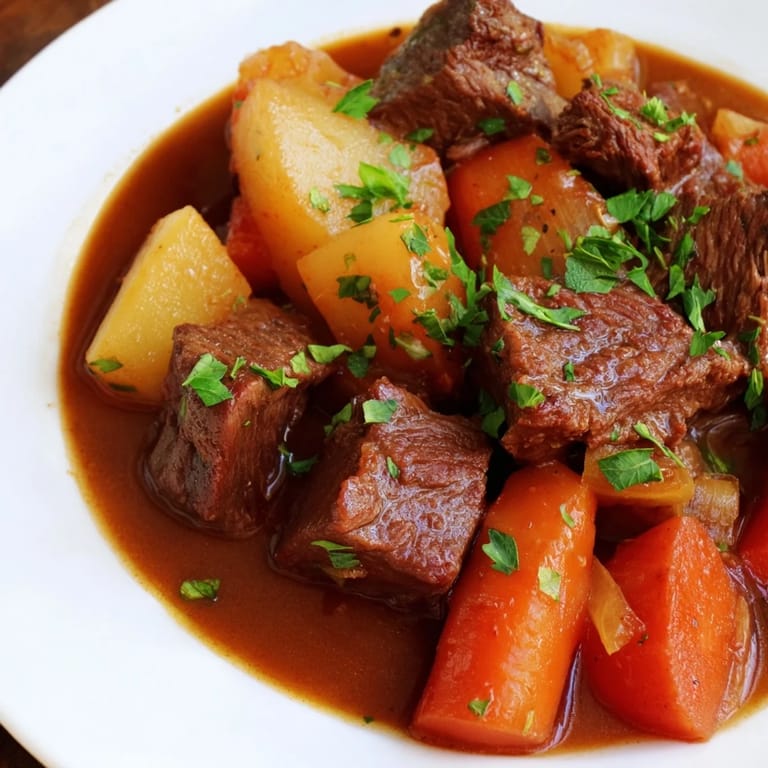
- Ladle into bowls, garnish with fresh parsley, and serve hot with crusty bread or over creamy mashed potatoes.
 Save
Save This stew became a tradition in my house almost by accident, requested by people who ordinarily never ask for seconds. There's something about sharing a bowl of something that took hours to make that changes the whole conversation at the table—it slows everyone down.
Why This Works
Beef stew is one of those dishes where the long, slow cooking isn't a burden—it's the point. The tough, cheaper cuts of beef chuck have fat and connective tissue that actually become your best friends during braising, turning silky and rich as they break down. The vegetables don't just flavor the broth; they become part of it, thickening it naturally. Every hour in the pot is an hour of flavor building on flavor, and there's really no shortcut that gets you there.
Variations and Swaps
Lamb is the traditional Irish swap, and if you make it that way, you'll understand why—it has a slightly gamier flavor that feels even more at home with the dark beer and herbs. You can also leave out the Guinness entirely if it's not your thing; the stew is just as honest without it, though slightly less complex. For a slower cooker, throw everything in after browning the meat and cooking the aromatics, then cook on low for 6 to 8 hours instead of 2.5 hours on the stovetop.
Serving and Storing
This stew is one of the rare dishes that genuinely improves overnight as the flavors deepen and marry together. Make it a day ahead if you can, store it in the fridge, and reheat gently on the stovetop. It freezes beautifully too—portion it into containers and it becomes emergency comfort food for months.
- Serve with thick slices of crusty bread, the kind you can actually soak into the broth.
- Mashed potatoes underneath turn it from a one-bowl meal into something more decadent and warming.
- A sharp salad on the side cuts through the richness perfectly, especially if you use a vinegary dressing.
 Save
Save There's a reason this stew has survived centuries and traveled across continents—it works, and it tastes like home. Once you make it, you'll understand why people come back to it again and again.
Recipe FAQs
- → What cut of beef works best for slow simmering?
Beef chuck is ideal for slow simmering due to its marbling, which breaks down and becomes tender during long cooking.
- → Can dark beer be substituted in the broth?
Yes, dark beer adds depth but can be omitted or replaced with additional beef stock for a gluten-free version.
- → How do I ensure the vegetables are tender but not mushy?
Adding them after the beef sears and simmering gently ensures veggies soften evenly without losing texture.
- → What herbs enhance the flavor in this Irish dish?
Bay leaves, thyme, and rosemary impart classic herbal notes that complement the beef and vegetables.
- → How can I thicken the broth if desired?
Mashing a few potato chunks against the pot side and stirring them back in helps naturally thicken the broth.
- → Is this dish suitable for gluten-free diets?
Omit the stout and ensure beef stock and Worcestershire sauce are gluten-free for a safe option.