 Save
Save I discovered this dish on a rainy afternoon when a chef friend stopped by with a mandoline and an armful of jewel-toned root vegetables. She arranged them on my biggest white platter with such deliberate artistry that I realized vegetables could be more than ingredients—they could be a conversation. Watching those slices fade from dense clusters into scattered whispers of color sparked something. That day, I learned that sometimes the most memorable meals are the ones that make people pause before they even take a bite.
I'll never forget the first time I served this to my sister's book club. They arrived expecting something predictable, and instead found this visual rhythm on the platter. One guest asked if she could photograph it before eating, and suddenly everyone was leaning in, studying the arrangement like it belonged in a gallery. That's when I realized this dish does something special—it transforms the act of eating into an experience.
Ingredients
- 1 small golden beet, thinly sliced: The sweetness and buttery color anchor the arrangement. Slice it just before serving so the edges stay crisp and the color remains vibrant.
- 1 small red beet, thinly sliced: Deep crimson richness that creates visual drama. The earthiness grounds the delicate vegetables beautifully.
- 1 small watermelon radish, thinly sliced: When you slice into it, those pink and white rings appear like a secret—the most visually striking element on the plate.
- 1 Persian cucumber, thinly sliced: Cool, crisp, and slightly sweet. These smaller cucumbers have thinner skins and fewer seeds, making them perfect for raw eating.
- 4 baby carrots, peeled and sliced on a bias: Bias cuts catch the light differently and feel intentional. The natural sweetness of baby carrots needs no cooking.
- 80 g creamy goat cheese, at room temperature: Soft dollops create pockets of tanginess and richness. Room temperature lets it spread slightly, creating softness against the crisp vegetables.
- 2 tbsp toasted hazelnuts, roughly chopped: Toasting brings out their buttery depth. The rough chop creates textural interest that feels less polished and more genuine.
- 1 tbsp black sesame seeds: Tiny jewels that add nuttiness and visual contrast. They cling to the goat cheese beautifully.
- 1/2 cup microgreens: Choose arugula or radish for peppery brightness. Their delicate nature means they're eaten raw to preserve their snap.
- 1 tbsp fresh dill, fronds only: Feathery and anise-like, dill echoes the lightness of the dish without overpowering.
- 2 tbsp extra virgin olive oil: Use one you genuinely love—its character matters here. I prefer buttery, grassy oils over peppery ones.
- 1 tbsp fresh lemon juice: Brightens everything and prevents the beets from staining other vegetables. Fresh juice is essential.
- 1 tsp honey: A whisper of sweetness that balances the lemon's acidity and echoes the natural sweetness of the vegetables.
- Salt & freshly ground black pepper, to taste: Season the dressing and nothing else—the vegetables release their own salts as they sit.
Tired of Takeout? 🥡
Get 10 meals you can make faster than delivery arrives. Seriously.
One email. No spam. Unsubscribe anytime.
Instructions
- Make your dressing first:
- Whisk together the olive oil, lemon juice, honey, a pinch of salt, and a few grinds of black pepper in a small bowl. Taste it—it should taste bright and slightly sweet, with the oil coating your mouth softly. This dressing is your flavor foundation, so take a moment to get it right.
- Arrange with intention:
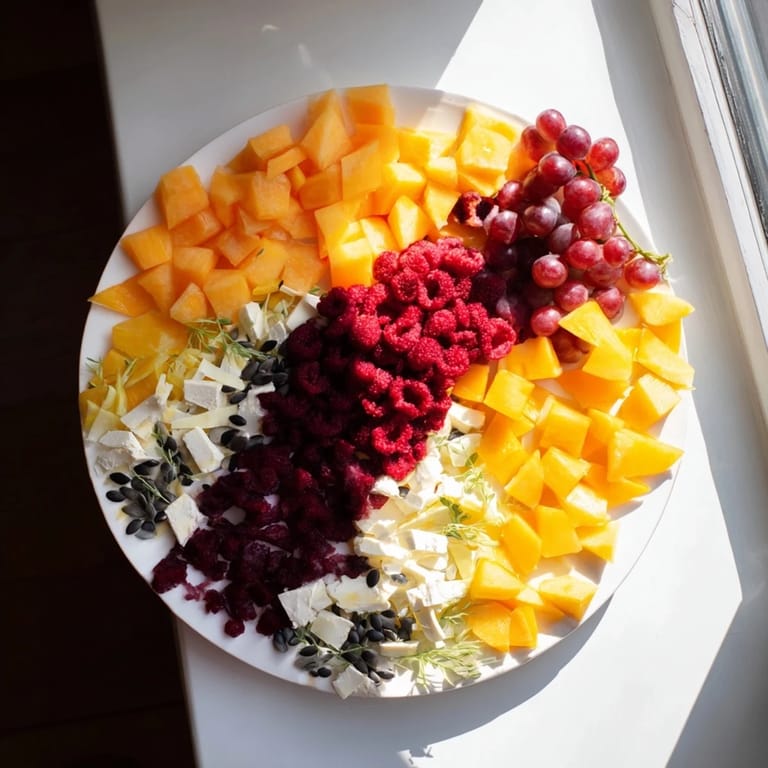
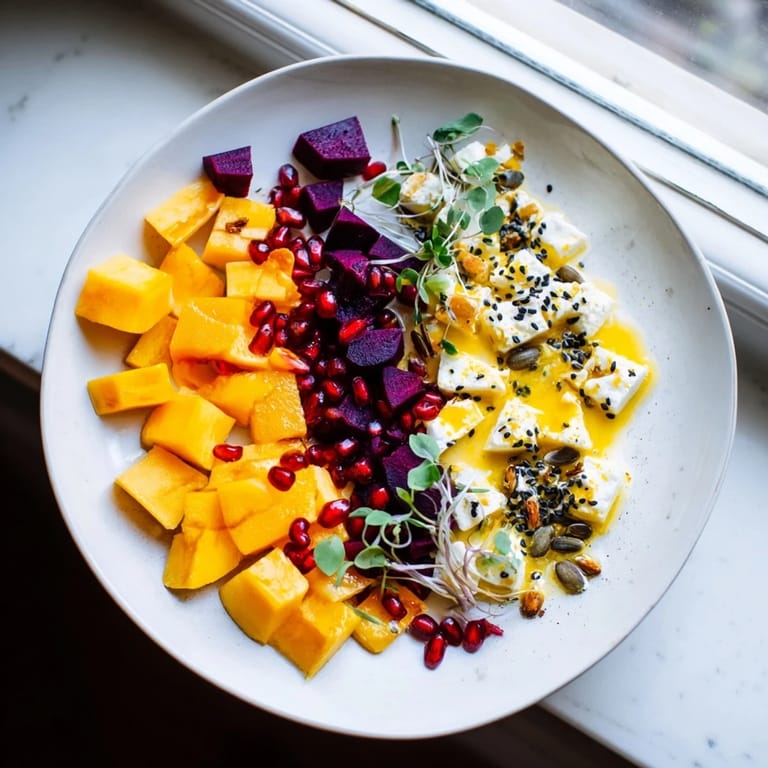
- On a large platter or four individual plates, begin layering your vegetable slices in one concentrated area. Overlap them like roof tiles, creating density and visual weight on one side. This is the anchor. Then gradually space them further apart as you move across the plate, eventually trailing into scattered, lonely slices at the edge. Think of it like a comet's tail fading into space.
- Dot in the goat cheese:
- Using a small spoon, drop tiny dollops of goat cheese among the densest cluster of vegetables. Let the creaminess nestle between the slices. As you move toward the sparse side, place fewer dollops, eventually leaving the edges almost bare. This reinforces the sense of movement.
- Scatter nuts and seeds:
- Sprinkle the toasted hazelnuts and black sesame seeds over the arrangement, concentrating them in the dense area where they'll cling to the goat cheese and create textural richness. Let them fade out toward the sparse edge, like they're being pulled away by an invisible force.
- Finish with greens and herbs:
- Toss the microgreens and dill fronds gently in your hands to separate them slightly, then scatter them across the platter using the same principle—dense in one area, fading toward the edge. The delicate greens should look like they're moving, not planted.
- Dress with restraint:
- Drizzle the dressing evenly across the platter, but use less on the sparse side. The dressing should glisten without pooling. If you're serving on individual plates, you can be more precise—drizzle around the vegetables rather than over them, so the visual arrangement stays clear.
- Serve immediately:
- This dish is best eaten within minutes of assembly. The vegetables stay crispest then, and the visual impact is strongest. Bring it to the table and watch people react before they taste a single bite.
 Save
Save The first time someone I'd just met told me this dish made them feel something—that it was beautiful enough to paint—I understood why my friend came to my kitchen that rainy day with a mandoline and vegetables. Food isn't always about taste. Sometimes it's about creating a moment where people slow down and really see what's in front of them.
Why This Arrangement Matters
The kinetic blur isn't just decoration—it's storytelling on a plate. By creating density that fades into sparseness, you're telling the viewer's eye where to look first and where to go next. It mimics motion, which makes the dish feel alive and intentional. The dense side says 'start here' with its richness of flavor and texture, while the sparse side invites curiosity. It's a gentle way of saying 'every element belongs, but some are more prominent than others.' When you understand this visual language, you can apply it to any arrangement. It transforms a simple vegetable plate into something that feels considered and deliberate.
Customizing for Seasons and Preferences
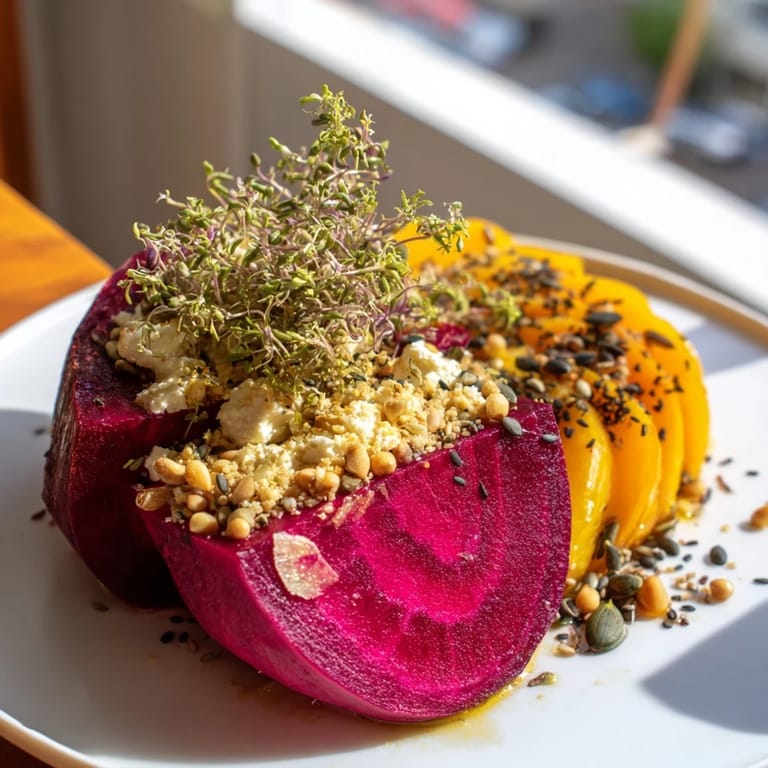
This recipe is a framework, not a prescription. In spring, I replace some vegetables with thin radish slices and add edible flowers like nasturtiums. Summer calls for thin heirloom tomato slices layered with basil. Autumn is the season for roasted beets and golden beets with walnut crumbles instead of hazelnuts. Winter is when I add thin ribbons of raw celery root for unexpected crunch. The technique stays the same, but the ingredients breathe with the season.
Pairing and Serving Ideas
This dish sings alongside crisp, acidic wines that echo the bright lemon in the dressing. A Sauvignon Blanc is my go-to, or a dry sparkling wine if you want to feel celebratory. If you're building a menu, follow this with something richer—a creamy pasta, a roasted fish, a tender steak. The lightness here makes whatever comes next feel more luxurious. You can also add thin slices of smoked salmon or trout for a pescatarian version, or drape paper-thin prosciutto if you want richness. For vegan guests, quality plant-based cheese works beautifully and honestly tastes just as good.
- Serve on chilled plates or platters if your kitchen is warm—cold surfaces help vegetables stay crisp longer
- If you're not serving immediately, assemble everything except the dressing, then dress just before guests arrive
- Remember that this is an appetizer that's generous enough to feel like a light lunch when paired with bread and good cheese
 Save
Save Cook this dish when you want to remind yourself and the people you feed that eating is both a practical act and a profound one. It takes less than an hour but feels like a gift.
Recipe FAQs
- → How is the kinetic motion blur effect achieved?
By overlapping thinly sliced vegetables densely on one side and gradually spacing them out, creating a gradient that simulates motion.
- → Can the goat cheese be substituted?
Yes, plant-based cheeses make a great alternative for vegan variations without altering the presentation.
- → What is the purpose of toasted hazelnuts and black sesame seeds?
They add crunch and a nutty depth that contrasts with the creamy cheese and fresh vegetables.
- → How should the dressing be applied?
Drizzle evenly over the platter, using less on the sparse side to enhance the blur visual effect.
- → Are there ingredient alternatives for seasonal variety?
Yes, substituting different root vegetables or edible flowers can refresh the dish while keeping its essence.