 Save
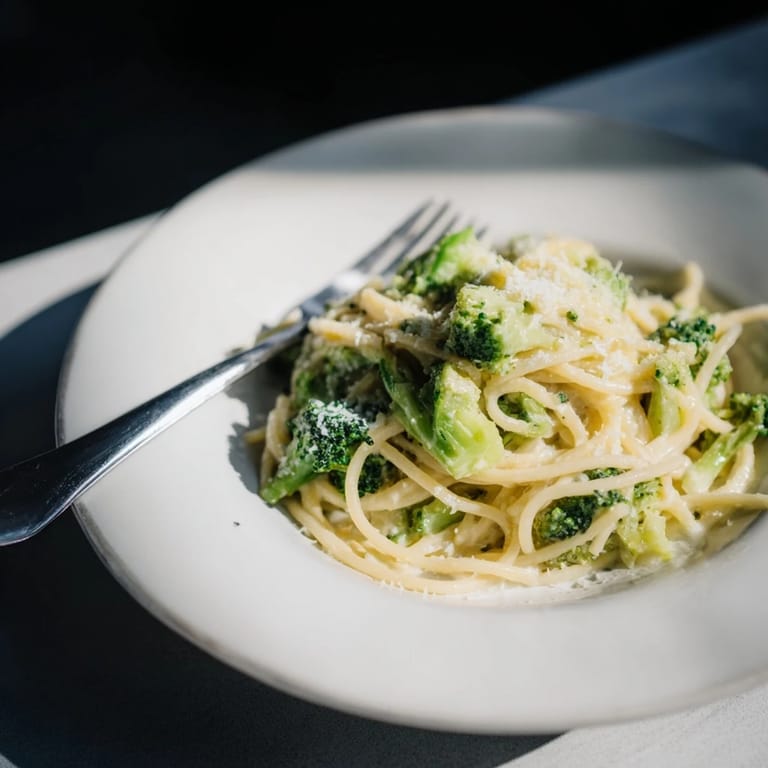
Save The first time I made this one-pot lemon broccoli pasta, I was in a tiny apartment kitchen with barely enough counter space to chop vegetables. I'd been skeptical about cooking pasta directly in its sauce liquid, but watching the broth transform into this silky emulsion felt like kitchen magic. My roommate walked in mid-simmer and immediately asked what smelled so incredibly bright and comforting. Now it's become my go-to when I want something that feels elegant but requires absolutely zero fuss.
I made this for my sister last spring when she was recovering from surgery and needed something nourishing but not heavy. She kept saying she wasn't hungry, then proceeded to have two bowls while telling me about her childhood memories of our grandmother's lemon chicken. The way the broccoli absorbs all that garlic and lemon became her new comfort food benchmark, and now she texts me every time she makes it for her own family.
Ingredients
- 12 oz dried spaghetti or linguine: Long pasta noodles work beautifully here because they have more surface area to catch that creamy sauce, though I've used penne in a pinch and it still delivers
- 4 cups broccoli florets: Cut them into uniform bite-sized pieces so they cook evenly alongside the pasta, and don't be afraid to pile them in high
- 4 cloves garlic, thinly sliced: Thin slices melt into the sauce better than minced garlic, creating those sweet mellow garlic notes throughout
- 1 small onion, finely chopped: Completely optional but adds a lovely depth that makes the dish feel more substantial
- 4 cups vegetable broth or water: Broth obviously adds more flavor, but I've made this with just water and extra garlic when my pantry was bare
- 1/2 cup whole milk or plant-based milk: This is the secret to that luxurious silky texture without actually using heavy cream
- Zest and juice of 1 large lemon: Both components matter zest for perfume, juice for that bright acid that cuts through everything
- 1/4 cup freshly grated Parmesan cheese: Freshly grated is non-negotiable here since pre-grated cheese has anti-caking agents that prevent smooth melting
- 2 tbsp olive oil: Use something decent quality since this is one of the main flavor builders
- 1/2 tsp sea salt: Start with this and adjust at the end since Parmesan is already quite salty
- 1/4 tsp black pepper: Freshly cracked makes a noticeable difference in the final depth
- 1/4 tsp crushed red pepper flakes: Even if you don't love heat, this tiny amount adds complexity without actual spiciness
- Fresh basil or parsley: The finishing touch that makes everything look and taste restaurant-worthy
Tired of Takeout? 🥡
Get 10 meals you can make faster than delivery arrives. Seriously.
One email. No spam. Unsubscribe anytime.
Instructions
- Build your flavor base:
- Heat that olive oil in your largest wide pot or deep sauté pan over medium heat, then add your sliced garlic and onion if you're using it. You want about 1 to 2 minutes of gentle sizzling until everything's fragrant and translucent, but absolutely not browned or bitter.
- Bring everyone together:
- Dump in your dried pasta, broccoli florets, vegetable broth, and milk all at once. Give it a good stir to combine, then crank up the heat and let it come to a rolling boil.
- Let the magic happen:
- Reduce to a steady simmer and cook uncovered for 10 to 12 minutes, stirring often enough that nothing sticks to the bottom. You'll watch the liquid transform from separate broth and milk into this gorgeous creamy sauce that coats each noodle.
- Awaken the flavors:
- Stir in your lemon zest and juice, Parmesan cheese, salt, pepper, and red pepper flakes. Taste and adjust anything that needs tweaking more salt, more acid, more whatever makes your palate happy.
- Let it rest:
- Remove from heat and let everything hang out for 2 to 3 minutes. The sauce will thicken slightly as it cools, which makes it cling to the pasta even better.
- Finish with flair:
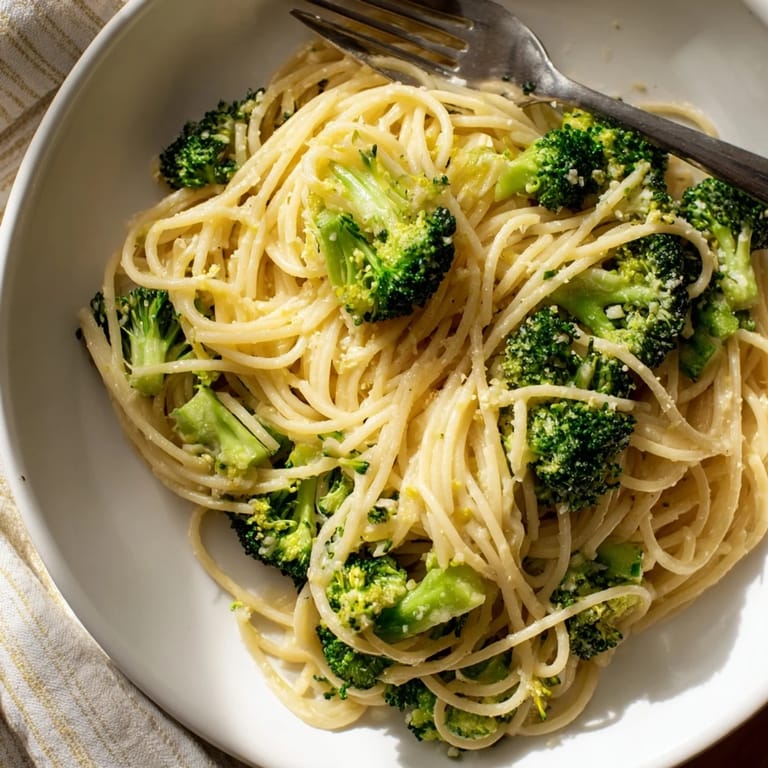
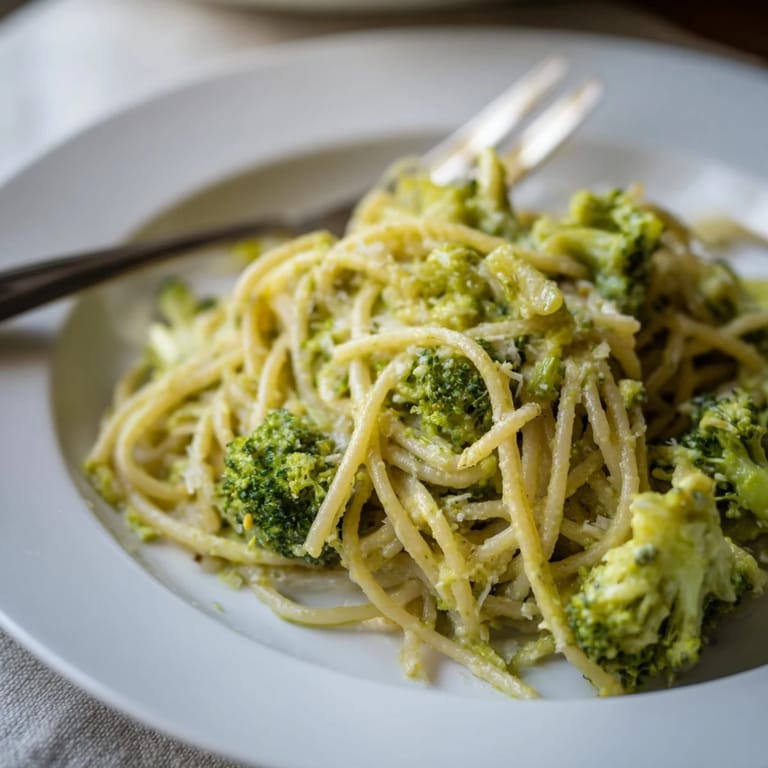
- Serve hot in shallow bowls with extra Parmesan grated tableside and those fresh herbs scattered on top like confetti.
 Save
Save This pasta became somewhat legendary during my first year of graduate school when I was surviving on a tight budget but still wanted to host dinner parties. My friends would actually request this specifically, and I loved that I could serve them something that felt sophisticated while costing maybe eight dollars total to make. There's something deeply satisfying about food that brings people together around a single pot.
Making It Your Own
Once you've got the basic technique down, this recipe becomes a canvas for whatever you have in your crisper drawer. I've swapped broccoli for asparagus in early spring, used zucchini ribbons in summer, and even added handfuls of spinach at the very end just to wilt. The beauty is in the method, not the specific vegetables.
The Protein Factor
While this is perfectly satisfying as a vegetarian main, I've learned that some people really need that protein anchor to feel complete. A can of drained chickpeas stirred in during the last few minutes of cooking works beautifully, or you can serve alongside grilled chicken or shrimp if you're not keeping it meatless. The sauce plays nice with pretty much everything.
Worth Noting
The pasta continues absorbing liquid even after it's done cooking, so if you're meal prepping or planning leftovers, err on the side of having slightly more sauce than looks perfect. I also learned the hard way that the lemon flavor mellow significantly over time, so I sometimes add an extra squeeze of fresh juice when reheating. It's like waking the dish back up.
- Grate your lemon zest before juicing, it's infinitely easier to handle a whole lemon
- Save some pasta water just in case you need to loosen the sauce later
- A microplane makes the finest, most evenly melting Parmesan
 Save
Save There's something profoundly comforting about a meal that creates its own sauce while it cooks, like it knows exactly what it's supposed to become. I hope this becomes one of those recipes you make without even thinking, the one you turn to on tired Tuesday nights and celebratory Friday evenings alike.
Recipe FAQs
- → Can I use fresh pasta instead of dried?
Yes, fresh pasta works well. Reduce cooking time to 3-5 minutes since fresh pasta cooks faster than dried. Add extra broth if needed to maintain sauce consistency.
- → What's the best way to prevent the pasta from sticking?
Stir frequently throughout cooking, especially in the first 5 minutes. Using a wide, shallow pot rather than a narrow one helps distribute heat evenly and allows easier stirring.
- → How do I make this dish dairy-free?
Substitute plant-based milk for dairy milk and use vegan Parmesan or nutritional yeast for umami flavor. The sauce will be slightly less creamy but still delicious and flavorful.
- → Can I add protein to this dish?
Absolutely. Stir in cooked chickpeas, white beans, or crispy pan-fried tofu in step 4. You can also top with grilled chicken or shrimp for a non-vegetarian version.
- → What vegetables pair well as substitutions?
Asparagus, zucchini, spinach, green peas, and snap peas all work wonderfully. Cut larger vegetables into similar bite-sized pieces for even cooking.
- → Why does my sauce seem too thin or too thick?
Sauce consistency depends on broth ratio and pasta starch release. For thinner sauce, add more broth before serving. For thicker sauce, simmer longer or stir in reserved pasta water gradually.