 Save
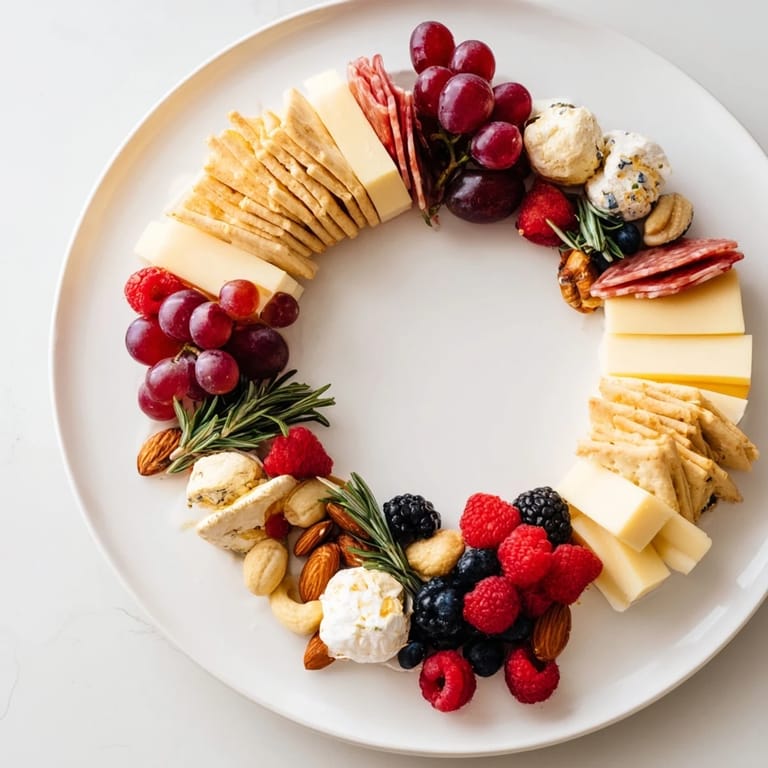
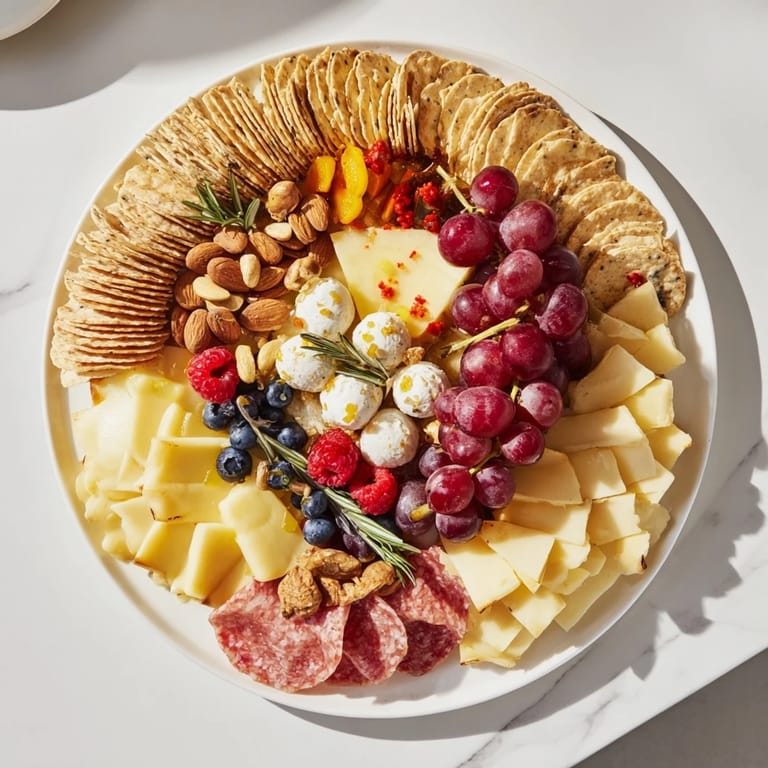
Save I discovered the magic of the Ouroboros Circle on a sun-drenched afternoon when a friend challenged me to create something that was as much art as it was food. I remember standing in my kitchen, suddenly inspired by the ancient symbol of a snake eating its own tail, and thinking: what if I could capture that infinite, self-contained beauty on a platter? That's when it clicked—arranging ingredients in a perfect ring, where the fanned crackers became a noble head and the jeweled grapes became a shimmering tail, meeting in eternal harmony. It took me three tries to get the flow right, but when I finally achieved that continuous circle, I felt like I'd unlocked something special.
I'll never forget when I first made this for a dinner party last spring. My guests arrived a bit early, and instead of hiding the platter, I left it on the dining table. Three people independently told me later that they'd spent a full minute just studying the circle before taking a single piece, almost reverently. One friend said it felt wrong to break something so beautiful, yet impossible to resist. That moment taught me that food isn't just about nourishment—it's about creating experiences that linger in memory.
Ingredients
- Brie, 100 g sliced: Choose a wheel that's ripe but not oozing—it should yield slightly to pressure but hold its shape. The creamy, buttery texture provides the platter's gentle heart
- Aged cheddar, 100 g cubed: Cube it generously and don't fuss about perfect edges; the sharp, crystalline tang cuts through the sweetness of the fruits and adds complexity
- Goat cheese, 80 g rolled into small balls: The tanginess here is crucial—it's the secret weapon that makes each bite feel alive. Roll the balls gently between your palms and chill them slightly for easier handling
- Prosciutto, 80 g thinly sliced: Let it come to room temperature briefly so it's silky and drapes beautifully rather than tearing. The umami saltiness anchors everything else
- Salami, 80 g folded: Choose a quality salami with good marbling; the fat is what carries the flavor and keeps the circle savory
- Artisanal crackers, 1 handful for fanning: Select a sturdy cracker that won't shatter—this is your platter's crown, so presentation matters here
- Baguette slices, 6 small: Toast them ever-so-lightly if you prefer them crisp, or leave them soft for contrast; they're the flexible connectors in your ring
- Red grapes in small clusters, 1 cup: These form the tail and provide bursts of natural sweetness; keep them clustered rather than loose for visual drama
- Mixed berries, 1 cup: Use what's freshest—blueberries, raspberries, blackberries create jewel-like gaps that catch the light and add tartness
- Sliced fig, optional: If you can find fresh figs, they add an elegant touch and their deep color grounds the composition
- Roasted almonds, 1/3 cup: The regular roasted variety provides familiar comfort and a subtle crunch
- Marcona almonds, 1/3 cup: These butter-soft Spanish almonds feel luxurious and add a different textural dimension
- Honey, 2 tbsp: Drizzle this warmly over the goat cheese for a finish that bridges sweet and savory, creating little pools of indulgence
- Fresh rosemary sprigs, 1 tbsp: The herbaceous piney notes are essential—they prevent the platter from feeling one-dimensional and add sophistication
Tired of Takeout? 🥡
Get 10 meals you can make faster than delivery arrives. Seriously.
One email. No spam. Unsubscribe anytime.
Instructions
- Set the stage with your canvas:
- Choose a large round platter or wooden board—the roundness is important because it echoes the Ouroboros symbol and naturally guides the eye around the circle. If your platter is wooden, you might rub it lightly with a neutral oil for a richer appearance
- Crown your circle with the fanned head:
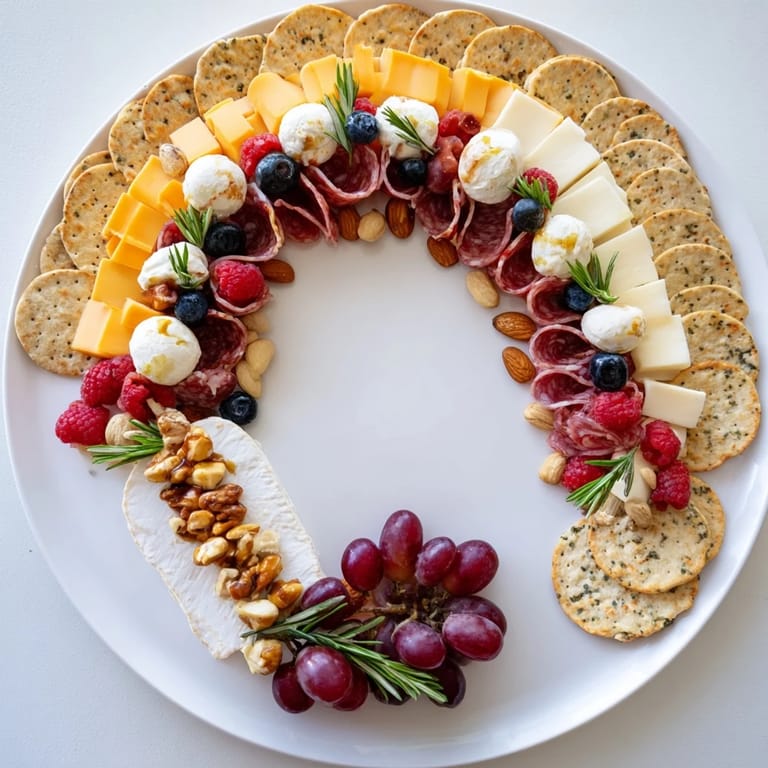
- At the 12 o'clock position, arrange your artisanal crackers in a fan formation, slightly overlapping like feathers. This is your platter's personality moment—make it proud and assertive
- Build the first arc with cheeses and meats:
- Moving clockwise from the cracker head, begin arranging slices and cubes in a loose alternating pattern. Place brie slices slightly overlapping, then cheddar cubes nestled nearby, then folded prosciutto or salami creating gentle waves. Think of this section as a conversation—each element should interact with its neighbor
- Connect with bread:
- Tuck baguette slices into the spaces between cheese and meat, letting them curve naturally around the circle. These are your bridges, creating continuity and rhythm
- Add berries for jeweled contrast:
- Scatter mixed berries into the gaps, allowing their deep colors to provide visual breaks and promise tartness on the palate
- Crown the opposite end with the fruit tail:
- At the 6 o'clock position, opposite your cracker head, arrange the red grape clusters to form the tail. Let them spill slightly, as if the snake's tail is flowing naturally
- Fill with goat cheese and nuts:
- Distribute the rolled goat cheese balls and both varieties of almonds throughout remaining gaps. The Marcona almonds should be positioned where they'll catch light
- Add fig slices and final touches:
- If using figs, arrange thin slices near the goat cheese for color contrast and textural richness
- Finish with the sacred drizzle:
- Warm the honey slightly so it flows easily, then drizzle it over the goat cheese balls in thin streams. Immediately follow with fresh rosemary sprigs, allowing them to catch the honey and create aromatic focal points
- Complete the circle:
- Step back and ensure the head and tail nearly touch, creating that unbroken serpentine loop. The arrangement should feel endless, continuous, eternal
- Serve with intention:
- Bring the platter to your guests and watch their faces as they encounter this edible art. Let them know they're breaking the circle, but that its essence will be shared among all who partake
 Save
Save There was a quiet moment during that first dinner party when everyone had gone home and I stood alone looking at the remaining fragments of the Ouroboros Circle scattered across the platter. The circle was broken, of course, as it was meant to be, but somehow that felt right—like the eternal symbol had finally shared its power with everyone gathered around it. I realized then that the most beautiful things are meant to be consumed, to nourish, to bring people together. The platter itself was fleeting, but the memory of it—how we all paused, admired, and then joyfully dismantled it together—that would last forever.
The Art of Visual Arrangement
The magic of this platter lies in its balance between precision and spontaneity. While you're creating a symbolic circle, you're also trusting your instincts about color, texture, and flow. I learned through experimentation that every ingredient should be visible and accessible—no hiding pieces under others—because this is a platter designed to be admired before it's consumed. The spacing matters too; too tight and it feels cluttered, too loose and the circle loses its power. Think of it like conducting an orchestra where each ingredient is an instrument, and the arrangement is your composition. You're not trying to be perfect; you're trying to be intentional.
Pairing and Serving Wisdom
The Ouroboros Circle doesn't just sit alone—it thrives when surrounded by the right atmosphere and beverages. A crisp white wine like Sauvignon Blanc will cut through the richness of the cheeses and meats beautifully, while a sparkling rosé adds a festive, celebratory note that matches the platter's visual drama. I've also discovered that a light, unoaked Chardonnay works wonderfully, as do some mineral-driven white wines. The key is choosing something with acidity to balance the creamy and salty elements. Beyond wine, don't overlook the power of sparkling water with fresh citrus—sometimes the simplest companions are the most elegant. Set the platter on a side table where guests can graze throughout the evening rather than treating it as a formal first course; this is food meant for lingering conversations.
Variations and Seasonal Adaptations
While the core Ouroboros Circle remains beautifully constant, it's infinitely adaptable to what your kitchen and seasons offer. In autumn, I swap the red grapes for dried apricots and add roasted pecans instead of almonds. Summer calls for the addition of edible flowers—pansies and violas add unexpected elegance—and perhaps fresh berries replace some of the grapes. For a vegan celebration, plant-based cheeses and nut-based protein alternatives create their own stunning circle, and honestly, the arrangement becomes even more colorful without the meats. I've also experimented with different nuts: pistachios for their gorgeous green hue, hazelnuts for earthiness, and toasted sunflower seeds for budget-friendly abundance. The figs can give way to sliced pears or apple, and the rosemary can be swapped for thyme or even edible lavender for something unexpected. The beauty is that the symbol remains constant while the details celebrate what's fresh and available to you
- In winter, consider adding pomegranate arils for jewel-like sparkle and tartness
- Spring begs for fresh peas in their pods and tender herbs like dill or tarragon scattered throughout
- Never skip the honey-rosemary finish, as it's the signature that ties everything together
 Save
Save The Ouroboros Circle reminds us that some of the most impressive moments in the kitchen come not from complexity, but from thoughtful arrangement and the confidence to let beautiful ingredients speak for themselves. Make this when you want to feel proud.
Recipe FAQs
- → What type of cheeses work best for this platter?
Soft and aged cheeses like brie, aged cheddar, and goat cheese balls provide diverse textures and flavors that complement fresh fruits and nuts well.
- → Can this platter be adapted for vegetarians or vegans?
Yes, omit meats for a vegetarian option or use plant-based cheeses and exclude meats to suit a vegan diet without compromising flavor.
- → How should the crackers be arranged for visual impact?
Arrange a handful of artisanal crackers fanned out to form the 'head' of the circle, creating a focal point opposite a cluster of fresh grapes as the 'tail.'
- → What nuts best enhance this presentation?
Roasted almonds and marcona almonds add crunch and visual appeal while pairing beautifully with the cheeses and fruits.
- → Is this platter suitable for parties and gatherings?
Absolutely; its easy-to-share circular layout and balanced flavors make it ideal for entertaining and casual snacking.
- → How can I add extra flavor to the cheese components?
Drizzle honey over the goat cheese balls and sprinkle with fresh rosemary sprigs to enhance aroma and taste.