 Save
Save I discovered The Pointillism Dot Matrix during a visit to a small gallery-style restaurant where the chef plated food like an artist creating on canvas. I was mesmerized watching each element placed with intention, and I thought, "I have to learn how to do this." What started as admiration became an obsession with understanding how simple ingredients could transform into pure visual poetry. Now, every time I make this, I'm reminded that cooking is indeed an art form, and your plate is the canvas.
I remember making this for my partner's birthday dinner, and watching their face light up when they saw the plate made every minute of preparation worth it. They said it was too beautiful to eat, but then they did anyway, slowly savoring each combination. That moment taught me that food plated with care becomes a memory, not just a meal.
Ingredients
- Beetroot puree (80g): Deep crimson dots that provide earthiness and natural sweetness. Cook until tender so it blends silky smooth, and never skip the pinch of salt—it brightens the flavor dramatically
- Carrot puree (80g): Warm golden-orange circles of pure comfort. Roasted carrots blend more smoothly than boiled ones, so take the extra step
- Green pea puree (80g): Bright green mounds that taste of spring. These create a fresh counterpoint to the earthier vegetables, so don't skip them
- Yellow bell pepper puree (80g): The sweetest element that balances everything. Roasting caramelizes the sugars, so the flavor is more rounded than raw
- Greek yogurt (60g): Creamy and tangy, this anchors the composition. Use full-fat for the richest texture—it pipes more beautifully
- Crème fraîche (40g): The luxury ingredient that adds sophistication. It's richer than sour cream and holds its shape better when piped
- Basil pesto (1 tbsp): Herbaceous and vibrant. Make it fresh if you can, or use quality store-bought—it's a crucial flavor anchor
- Red pepper coulis (1 tbsp): Silky and slightly sweet. This is essentially a smooth red pepper sauce that adds visual pop and gentle heat
- Balsamic reduction (1 tbsp): Glossy, dark, and sophisticated. The acidity here ties everything together like punctuation marks on your plate
- Pickled red onions (20g, finely diced): These add sharp acidity and a jewel-like appearance. The small dice is essential so they don't dominate any single bite
- Microgreens: Delicate and peppery, these catch the light and make the plate feel alive. Their texture is crucial for the final presentation
- Toasted black sesame seeds (1 tbsp): Nutty and mysterious, they add textural contrast. Toast them yourself right before using for maximum flavor
- Pomegranate seeds: Tart and juicy bursts that add brightness and visual jewels to your composition
- Edible flower petals (optional): These are pure theater. Use them when you want the plate to feel extra special
- Sea salt flakes and freshly ground black pepper: These finish the composition and let each element shine with its own seasoning
Tired of Takeout? 🥡
Get 10 meals you can make faster than delivery arrives. Seriously.
One email. No spam. Unsubscribe anytime.
Instructions
- Create Your Puree Palette:
- Blend each vegetable separately with a tiny pinch of salt and just a few drops of olive oil until completely smooth. The key here is patience—let your blender work its magic until there are absolutely no grainy bits. Transfer each puree to its own piping bag or squeeze bottle. This is where your setup happens, so take your time. You want each color distinct and ready when you need it.
- Prepare Your Creamy Elements:
- Spoon the yogurt and crème fraîche into separate piping bags. Put the pesto, coulis, and balsamic reduction into squeeze bottles with fine tips if possible. This is like setting up your artist's palette—everything should be within arm's reach and ready to flow.
- Begin the Pointillist Composition:
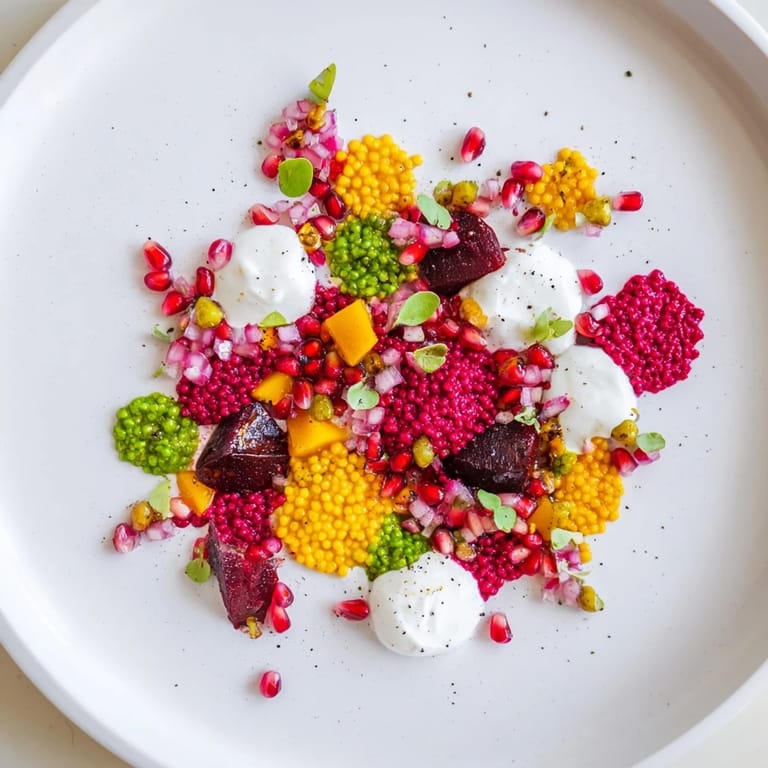
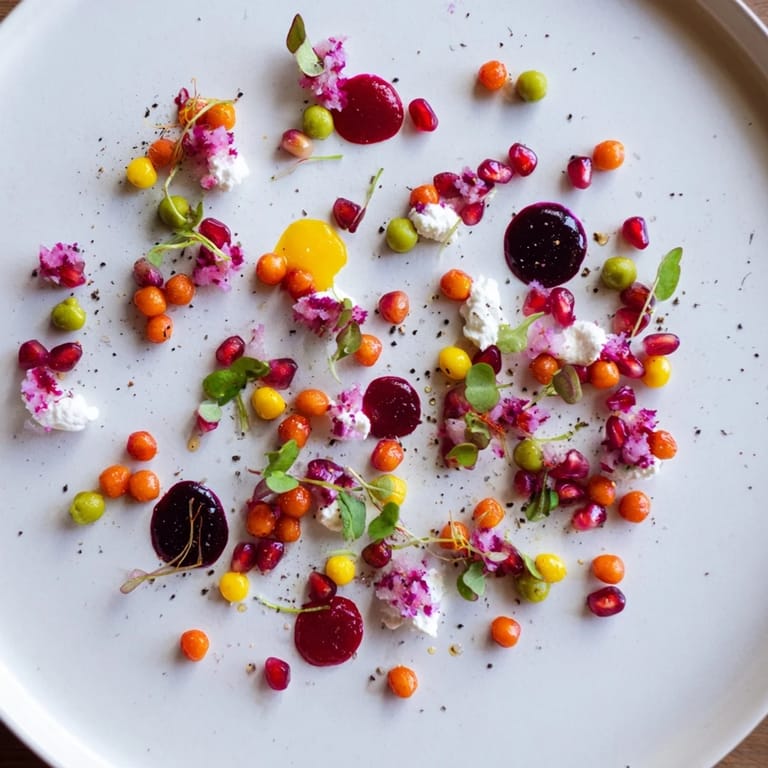
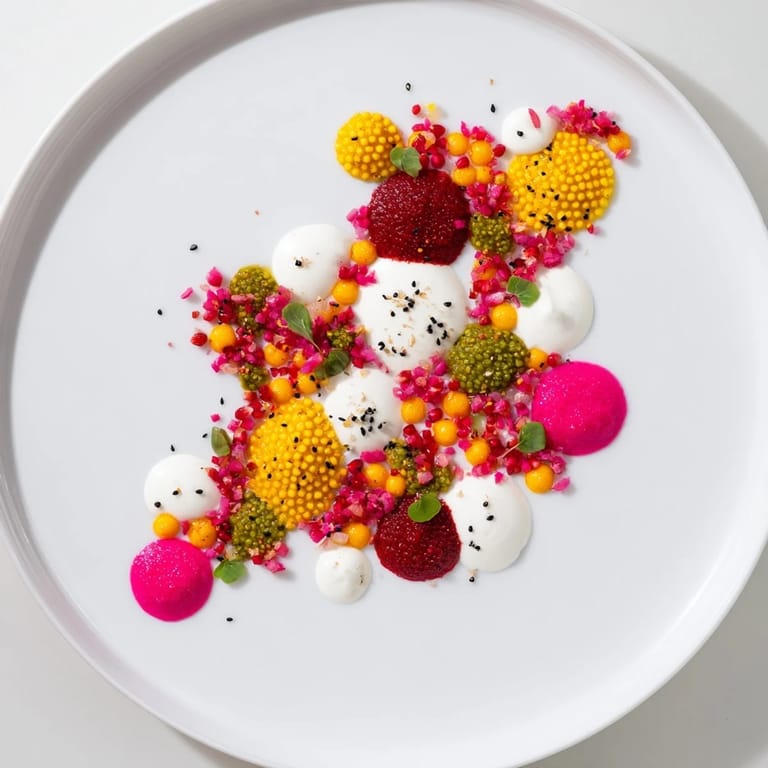
- On each serving plate, start creating dots and tiny mounds in a scattered, non-touching pattern across the entire white space. Vary the sizes—some dots smaller than peppercorns, some the size of a coin. Alternate colors randomly, thinking like a painter. The magic happens in the negative space; don't crowd the plate. Leave room for your eyes to rest and appreciate each color individually.
- Add Texture and Dimension:
- Now carefully sprinkle the diced pickled onions, scatter microgreens like you're placing them individually, and dust the sesame seeds and pomegranate seeds over and around your dots. Add edible flowers last if using—they're fragile and should be the final gesture. Think of yourself as placing each element with tweezers, even if you're using your fingers.
- Season and Serve Immediately:
- Finish with delicate sea salt flakes and a whisper of freshly ground black pepper. Then stop. Step back. Look at your creation. Serve immediately to preserve that visual impact—this dish is meant to be admired before it's eaten.
 Save
Save The first time someone ate this dish I made, they sat in silence for a moment, then said, "It tastes even better than it looks." That's when I realized the real point of this recipe—it's not just about visual beauty. It's about proving that art and flavor can exist together on the same plate, that thoughtfulness translates into taste.
The Philosophy of Pointillist Plating
This dish is an homage to Pointillism, the art technique where painters used small dots of pure color placed side by side, letting your eye blend them from a distance. On your plate, every dot and mound is a complete flavor and texture statement on its own, but together they create a unified experience. The beauty is that you control which flavors meet in your spoon. One bite might be beets and yogurt, the next might be carrot with basil pesto and pomegranate. There's no single "right" way to eat it, and that freedom is what makes it feel special.
Building Your Confidence with Color
The first time you try this, you might worry about the colors clashing or the composition looking messy. Here's the secret: you can't go wrong. These vegetables have naturally beautiful colors that complement each other in almost any arrangement. Start by laying out your purees in a loose pattern, then let the crèmes and sauces fill negative spaces. The diced onions and seeds are your final flourish that pulls everything together. Trust your instincts. If it looks unbalanced, it's probably because you've grouped too many of the same color in one area—scatter instead of clustering.
Variations That Expand Your Palette
Once you've made this once, you'll want to experiment. Purple sweet potato puree adds sophistication. Avocado creates creamy clouds. Spinach offers deep green. Roasted red pepper is richer than yellow pepper. The framework stays exactly the same, but your canvas evolves. Each new vegetable teaches you something about how flavors interact and how colors can tell a story on a plate. This recipe is less a fixed instruction and more an invitation to discover your own artistic voice in the kitchen.
- Try charcoal or activated black sesame for drama and visual depth
- Whipped ricotta can replace crème fraîche for a lighter, airier texture
- Finish with microgreens of different varieties for unexpected peppery notes
 Save
Save This dish taught me that cooking doesn't have to choose between being impressive and being approachable. Every element here is simple; the magic is in how you arrange them with intention and care. Make this when you want to remind yourself, and your guests, that food prepared with thought tastes like love.
Recipe FAQs
- → How do I achieve the pointillist effect on the plate?
Use piping bags or squeeze bottles to place small dots and tiny mounds of purees and sauces in scattered, non-touching patterns. Vary the size and color for visual interest.
- → Can the dish be adapted for vegan diets?
Yes, substitute the yogurt and crème fraîche with plant-based alternatives to maintain creamy texture without dairy.
- → What vegetables work best for the purees?
Beetroot, carrot, green pea, and yellow bell pepper provide vibrant colors and complementary flavors, but feel free to experiment with others like purple sweet potato or avocado.
- → How should the accents like pickled onions and sesame seeds be applied?
Sprinkle them delicately over and around the dots to add texture, bursts of flavor, and an appealing crunch while enhancing the dish’s color palette.
- → What is a good beverage pairing for this dish?
A crisp Sauvignon Blanc pairs well by complementing the fresh, vibrant vegetable flavors without overpowering the delicate accents.
- → How can I serve this dish to maintain its visual impact?
Serve immediately after plating to preserve the distinct dots and fresh textures before any blending or moisture change occurs.