 Save
Save I'll never forget the moment I first understood that a cheese board could be more than just arranged food on a plate. It was at a small dinner party where a friend created this magnificent landscape of cheeses, and I watched guests actually pause before eating, admiring the artistry. That's when I realized a cheese platter could tell a story, invite exploration, and transform a simple appetizer into an experience worth lingering over.
I made this for a dinner party last spring, and something magical happened. As people gathered around the board, they stopped talking about their day and started really tasting, really noticing how the crisp apple balanced against the salty Manchego, how the honey pooled between the peaks. That's when I knew this wasn't just about cheese anymore.
Ingredients
- Aged Manchego, 150 g: This Spanish cheese forms your first mountain peak with its nutty, slightly salty character. Cut it into tall irregular chunks to catch the light and create visual drama. I learned that odd angles work better than neat cuts here.
- Parmigiano-Reggiano, 150 g: Break this into rugged shards rather than slicing it. The crystalline texture catches light beautifully and the salty umami becomes a natural anchor for your landscape.
- Aged Cheddar, 150 g: Slice into tall triangles to create variety in your mountain shapes. The deeper flavor adds complexity to your cheese trio.
- Brie, 100 g: Cut into thick wedges for the softer hills. These gentle slopes provide textural contrast to the hard peaks.
- Gorgonzola, 100 g: Break into rustic pieces. The creamy blue veining adds visual interest and an adventurous flavor note for brave explorers.
- Red grapes, 1 cup: Halve these to tuck into valleys. They provide bright color and refresh the palate between cheeses.
- Cherry tomatoes, 1 cup: Halve these too. Their acidity is essential for cutting through rich cheese flavors.
- Cucumber, 1 small: Slice into rounds. The cool crunch became my secret weapon for resetting taste buds between bites.
- Apple, 1 small: Thin slices provide a subtle sweetness that elevates the entire board. Toss lightly in lemon juice if preparing ahead.
- Dried apricots, 1/2 cup: These jewel-like pieces add concentrated sweetness and gorgeous color contrasts.
- Roasted almonds, 1/2 cup: These are your boulders. They add crunch and visual texture that makes the landscape feel alive.
- Walnuts, 1/2 cup: Scatter these alongside almonds for variety in shape and earthiness.
- Baguette slices, 12: Toast these lightly if you like. They form the paths people naturally follow across your landscape.
- Assorted crackers, 12: Choose a variety of shapes and colors to add visual rhythm to your board's edges.
- Honey, 2 tbsp: Drizzle this in small pools as golden accents. It's not just flavor, it's visual magic.
- Fresh rosemary sprigs: These fragrant branches add a natural, garden-like authenticity to your creation.
Tired of Takeout? 🥡
Get 10 meals you can make faster than delivery arrives. Seriously.
One email. No spam. Unsubscribe anytime.
Instructions
- Create Your Mountain Range:
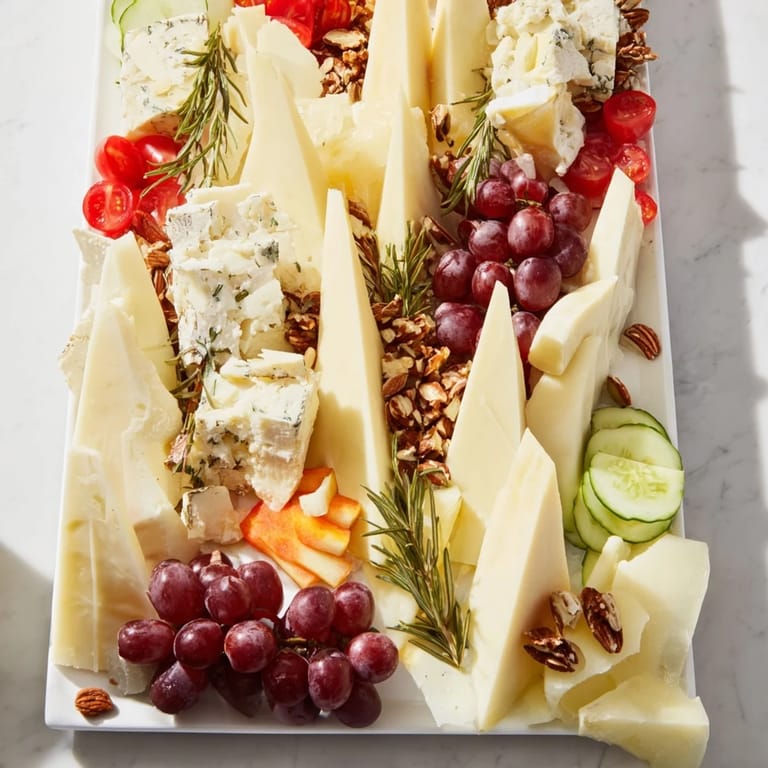
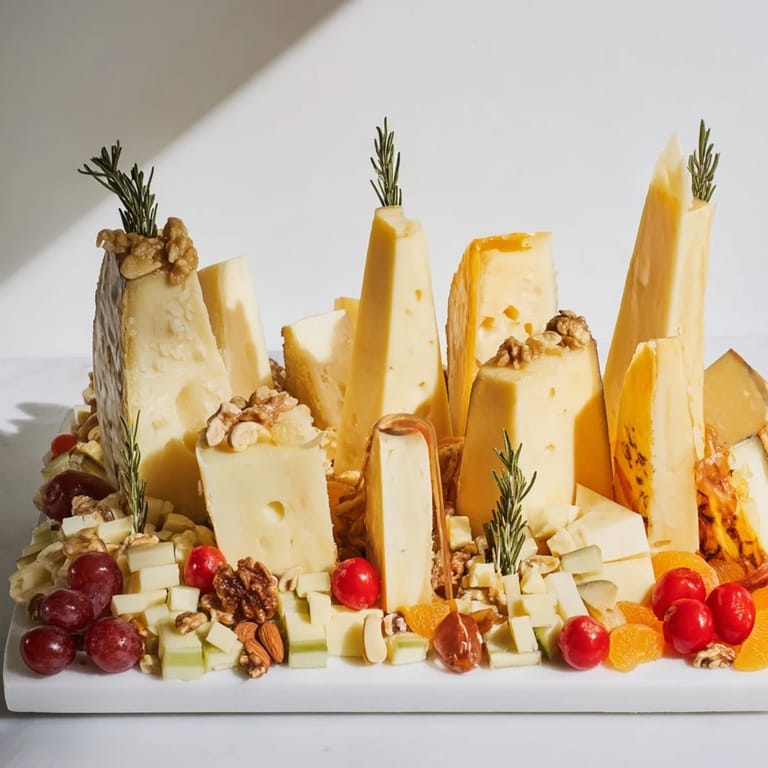
- Arrange the tall chunks of hard cheeses vertically on your wooden board, positioning them to create dramatic peaks at varying heights. Think of it like building a skyline. The Manchego, Parmigiano, and Cheddar should stand proud and commanding, with space around them for what comes next.
- Build the Foothills:
- Now wedge your softer cheeses around the base of those hard cheese mountains. The Brie and Gorgonzola nestle in like gentle rolling hills. This is where you start seeing the landscape come alive as shapes and colors begin to create depth.
- Fill the Valleys:
- In the lower spaces between cheeses, cluster your grapes, tomatoes, cucumber, and apple slices. Work methodically, thinking about color balance. I like to group similar colors together in small clusters rather than scattering randomly. The cherry tomato halves create little red ponds, the cucumber rounds look like stepping stones.
- Scatter the Boulders:
- Sprinkle almonds and walnuts around the board. They need to look almost accidental, as if nature placed them. This is the moment the board transforms from arranged to alive. The nuts catch light and add dimension.
- Create the Paths:
- Arrange your baguette slices and crackers along the edges like pathways through your landscape. Space them so guests understand where to begin their journey. This creates natural flow and invitation.
- Add the Final Touches:
- Drizzle honey in small pools, letting it rest in the valleys and glisten on select cheeses. Tuck fresh rosemary sprigs between cheeses like little trees. Stand back and look at your creation. This is the moment you'll feel proud.
- Serve and Watch:
- Present it to your guests and encourage them to explore freely, to build their own combinations. The beauty of this board is that every person discovers something different. Serve immediately while everything is fresh and the honey still shimmers.
 Save
Save What struck me most wasn't just how beautiful this board was, but how it changed the way my guests interacted with each other. They weren't just eating, they were discovering together, pointing out combinations, laughing about which cheese tasted best with which fruit. Food became conversation, and that conversation became memory.
The Art of Cheese Selection
Building this board taught me that cheese selection is about creating conversation through contrast. Hard cheeses provide structure and complexity, while soft ones offer comfort and creaminess. The journey should feel like traveling through different landscapes, tasting how salt and sweetness and earthiness all work together. I've learned to trust my palate and buy cheeses I'm genuinely curious about rather than always reaching for the familiar.
Why This Landscape Works
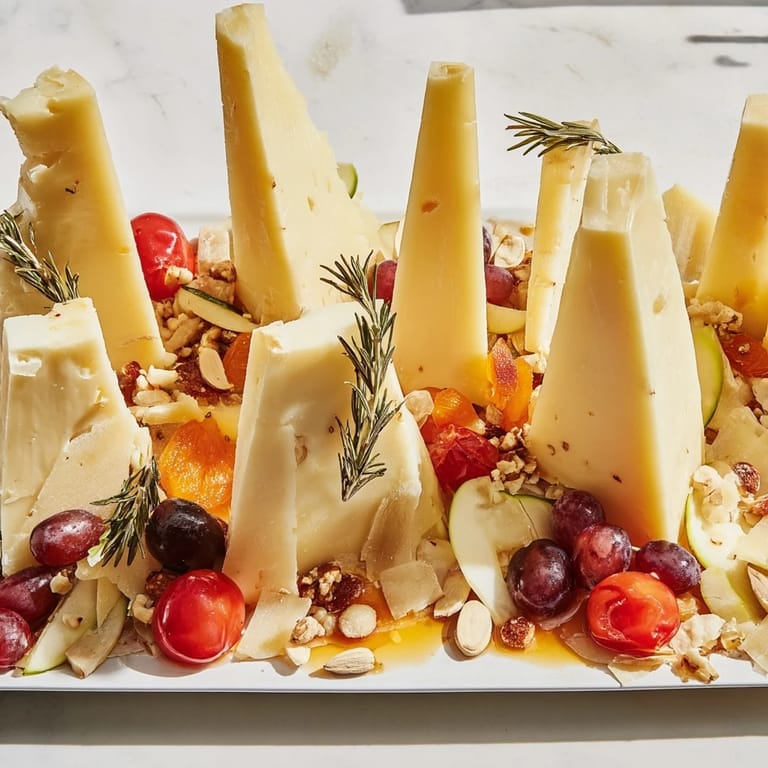
There's something primal about arranging food in a landscape that speaks to us. It transforms eating from a functional act into an experience of exploration and discovery. The vertical stacking creates visual interest your eye can't look away from, and the three-dimensional approach means every angle offers something new. Guests naturally slow down, look more carefully, and taste more thoughtfully.
Building Your Own Masterpiece
The beauty of this board is that it's completely personal. Your landscape should reflect cheeses you love and flavors that speak to you. Don't be afraid to substitute, to rearrange, to make it your own version of this edible geography.
- Consider the seasons when choosing fruits and vegetables. Summer calls for stone fruits and berries, while fall invites pears and figs.
- Variety in color matters just as much as variety in flavor. A board with good visual rhythm is more appetizing than one that looks monochromatic.
- Remember that your guests are part of the creation too. Their choices about what combinations to try will reveal who they are as eaters and thinkers.
 Save
Save This sculptural cheese landscape is really about inviting people into something beautiful and asking them to participate in its creation. Every board you make will be different, and that's exactly as it should be.
Recipe FAQs
- → How do you create the mountain peaks with cheese?
Use tall, irregular chunks of hard cheeses like Manchego, Parmigiano-Reggiano, and Cheddar, arranging them vertically for height and dramatic effect.
- → What fruits complement the cheese landscape?
Red grapes, cherry tomatoes, cucumber rounds, apple slices, and dried apricots add color, sweetness, and freshness to the valleys and slopes.
- → How can I add texture to the platter?
Scatter roasted almonds and walnuts across the board to mimic rocky boulders and provide crunch alongside the cheeses and fruits.
- → What breads work best for the paths and plateaus?
Thin baguette slices and assorted crackers arranged along the edges create sturdy, textured paths that balance the softer elements.
- → How does honey and rosemary enhance the presentation?
Drizzling honey adds sweetness and visual appeal while fresh rosemary sprigs contribute a forest-like aroma and natural accent to the arrangement.