 Save
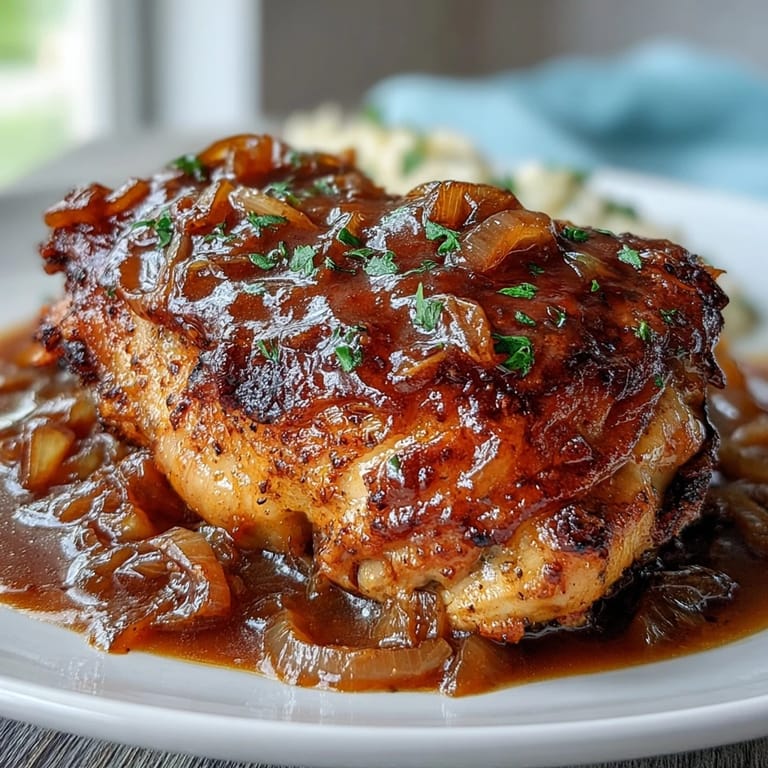
Save My grandmother's kitchen smelled like caramelizing onions and rendered chicken skin on Sunday afternoons, and that's when I learned that smothered chicken isn't really about the chicken at all—it's about patience and that golden, savory gravy that makes everything worth the wait. She'd stand at her cast iron skillet with a wooden spoon, humming something I could never quite place, and somehow turn simple ingredients into the kind of meal that made people forget their troubles for a while. The first time I tried making it myself, I rushed the onions and ended up with something pale and forgettable, which taught me that good food respects the clock, not the other way around. Now when I make this, I'm not just cooking; I'm honoring that memory and everything she taught me about feeding people with intention.
I made this for my neighbor last winter when his wife was recovering from surgery, and watching him sit at my kitchen table with a plate of this chicken, his shoulders finally relaxed for the first time in weeks—that's when I understood why these old recipes matter so much. He came back three days later asking if I'd teach him how to make it, and now it's his go-to dish when he wants to show someone he cares.
Ingredients
- Bone-in, skin-on chicken thighs and drumsticks (8 pieces total): The bones add gelatin and flavor to your gravy, while the skin crisps up beautifully and keeps the meat juicy through the long simmer—this is non-negotiable for authentic texture.
- Salt, black pepper, paprika, garlic powder, onion powder: These seasonings go directly on the chicken before breading, creating a flavorful base that blooms during frying.
- All-purpose flour (1 cup for breading, plus 3 tablespoons reserved): The flour creates a golden crust when fried and later thickens your gravy into something silky and coating.
- Vegetable oil (1/3 cup): You need enough heat and fat to get that initial golden sear; don't be shy with the oil or the chicken will stick and steam instead of fry.
- Yellow onions (2 large, thinly sliced): These are the soul of this dish—sliced thin so they melt into the gravy and build that deep, sweet-savory flavor that defines the whole plate.
- Chicken broth (2 cups, low-sodium): Low-sodium lets you control the salt level and prevents the final dish from tasting tinny; homemade stock elevates this to something really special.
- Dried thyme, butter, paprika: Thyme whispers in the background, butter rounds out the gravy with richness, and that pinch of paprika ties the whole flavor story together.
Tired of Takeout? 🥡
Get 10 meals you can make faster than delivery arrives. Seriously.
One email. No spam. Unsubscribe anytime.
Instructions
- Pat and season your chicken:
- Use paper towels to dry each piece thoroughly—moisture is the enemy of a good crust. Season both sides generously with salt, pepper, paprika, garlic powder, and onion powder, letting the seasonings settle for a minute so they actually stick.
- Bread the chicken:
- Combine flour, salt, and pepper in a shallow bowl, then dredge each piece, shaking off the excess flour so you get a light, even coating. Save that extra flour sitting in the bottom of the bowl—about 3 tablespoons—because you'll need it for the gravy.
- Fry until golden:
- Heat the oil in your skillet over medium heat until it shimmers, then lay each chicken piece skin-side down. You'll hear a satisfying sizzle that means everything is working—fry for 6 to 8 minutes per side until the skin turns deep golden brown and the edges look crispy. The chicken won't be fully cooked yet, and that's exactly right.
- Build your onion base:
- Pour off all but 2 tablespoons of the oil, then add those thinly sliced onions to the same skillet. Let them cook low and slow, stirring often, for about 8 to 10 minutes until they're soft and golden at the edges—this is where the magic starts, as the onions caramelize and release their sweetness into the hot fat.
- Make your roux:
- Sprinkle that reserved flour over the onions and stir constantly for about 1 to 2 minutes until the flour turns light golden brown and smells nutty. This step is crucial because it removes the raw flour taste and creates the base for a silky gravy.
- Whisk in the broth:
- Gradually pour in your chicken broth while whisking constantly, scraping up all those caramelized brown bits stuck to the bottom of the pan—those are pure flavor. Add the thyme, paprika, salt, pepper, and butter, then let everything simmer for 2 to 3 minutes until the gravy thickens and coats the back of a spoon.
- Braise the chicken:
- Nestle your golden chicken pieces back into the gravy, skin-side up, then spoon some of that silky gravy over the top. Cover the skillet, reduce the heat to low, and let it simmer gently for 25 to 30 minutes until the chicken is fork-tender and the internal temperature hits 165°F.
- Serve with purpose:
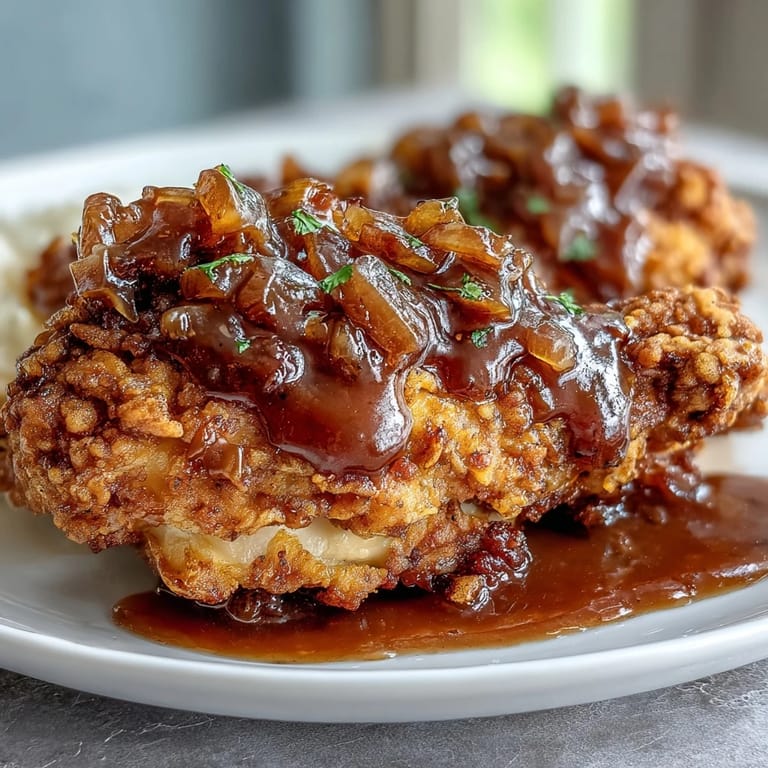
- Spoon the chicken onto plates and ladle that rich onion gravy generously over everything. This is the moment people understand why this dish has survived generations—it's that good.
 Save
Save There's a moment right at the end of cooking, when you lift the lid and the steam rises up and you smell that combination of caramelized onions, thyme, and tender chicken—that's when you know it's going to be something people remember. I made this for my daughter's boyfriend the first time he came to dinner, and the way his eyes lit up when he tasted it told me everything I needed to know about how to welcome him into our family.
Why This Recipe Works So Well
The technique of frying first and braising second creates a textural contrast that single-method cooking can never achieve—you get crispy, golden skin on the outside that stays crispy even after simmering, while the inside stays impossibly tender and juicy. The onions have time to soften and become almost transparent, melting into the gravy so completely that people ask what the secret ingredient is, not realizing it's just onions cooked with respect and time. This is why bone-in, skin-on chicken matters so much; the bones release gelatin that makes the gravy naturally silky without needing cream, and the skin acts like a little shield protecting the meat underneath.
Serving and Pairing Ideas
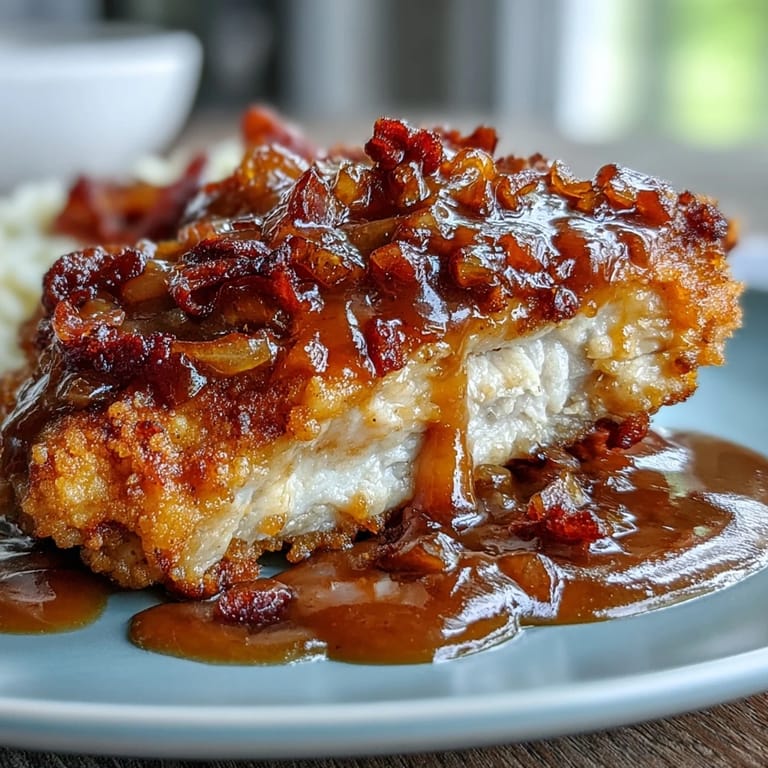
Mashed potatoes are the natural choice because they're perfect vehicles for soaking up that gravy, but creamy polenta works beautifully too if you want something slightly different. Rice, collard greens, buttered egg noodles, or even crusty bread for sopping up every last drop all work with this dish, and honestly, the gravy is so good that almost anything underneath becomes an excuse to eat more of it. The key is choosing something that won't fight the flavors—you want a vehicle for the chicken and gravy, not a side dish vying for attention on the same plate.
Adjusting for Your Kitchen
If you prefer boneless, skinless chicken breasts, they'll work but adjust your expectations slightly—they cook faster and won't give you that same skin texture, so reduce the simmering time to about 15 to 20 minutes and watch for dryness. For extra depth, use homemade stock if you have it, or splurge on quality broth from the refrigerated section instead of the canned stuff. If your family likes heat, add a pinch of cayenne pepper to the flour mixture before breading, or stir a tiny bit into the finished gravy.
- Substitute chicken thighs alone if drumsticks aren't your preference, just keep the total weight similar so cooking times stay accurate.
- If your skillet doesn't have a lid, tightly tent the chicken with foil after returning it to the gravy—trapped steam is what makes it braise.
- Let leftover chicken and gravy cool completely before refrigerating, and it'll keep for three to four days and actually tastes better reheated.
 Save
Save This is the kind of dish that teaches you something every time you make it, whether it's about how onions transform through heat or how food becomes memory when it's made with care. Make it for people you want to feed well, and watch how something so simple becomes something they ask you to make again and again.
Recipe FAQs
- → What cut of chicken works best for this dish?
Bone-in, skin-on chicken thighs and drumsticks provide the best flavor and moisture retention during cooking.
- → How do I know when the chicken is fully cooked?
Chicken is done when it reaches an internal temperature of 165°F (74°C) and the juices run clear when pierced.
- → Can I substitute fresh herbs in the gravy?
Yes, fresh thyme or other herbs can be used instead of dried thyme for a more aromatic flavor, just add them during simmering.
- → What is the purpose of dredging the chicken in flour?
Dredging creates a light crust when fried that helps lock in moisture and also thickens the onion gravy as it simmers.
- → How can I make the gravy richer?
Using homemade chicken stock and finishing with butter enhances the gravy’s depth and smooth texture.
- → What sides pair well with smothered chicken and onion gravy?
Classic sides include mashed potatoes, rice, or collard greens which complement the rich gravy and tender chicken.