 Save
Save There's something almost magical about the moment when a Thai takeout craving meets a half-empty pasta box in your pantry. I was standing in my kitchen on a random Tuesday evening, scrolling through my phone, when that familiar ache for something warm and comforting mixed with bright, zesty flavors hit me. Instead of ordering out, I grabbed what I had on hand and decided to improvise, combining creamy peanut sauce with linguine in a way I'd never tried before. That first bowl changed how I think about fusion cooking, teaching me that the best dishes often come from happy accidents and a willingness to blur culinary lines.
I made this for my neighbor one evening when she mentioned being too tired to cook, and watching her face light up as she took that first bite reminded me why food matters so much. She asked for the recipe immediately, then came back three days later to tell me she'd made it twice already. That's when I knew this wasn't just a weeknight solution anymore; it had become the kind of dish that people reach for when they want something delicious but don't want to spend their whole evening in the kitchen.
Ingredients
- 340g linguine or spaghetti: The thinner pasta catches the peanut sauce better than thicker shapes, and linguine has this elegant drape that makes the dish feel less casual than it actually is.
- 450g boneless, skinless chicken breast, thinly sliced: Slicing it thin is the secret to getting those golden edges without needing to pound it flat; thin pieces cook evenly and soak up all the flavor.
- 1 tbsp vegetable oil: Any neutral oil works, but I've learned that sesame oil tempts you to use too much because it smells so good.
- Salt and black pepper: Season the chicken generously; this is your only chance to season it before it hits the sauce.
- 1 cup ready-made Thai peanut sauce: This is where you can take shortcuts and feel zero guilt; quality brands are genuinely delicious and save you from a long ingredient list.
- 2 tbsp soy sauce: It adds depth and saltiness that plays beautifully against the sweetness of the peanut sauce.
- 2 tbsp lime juice: Fresh lime is non-negotiable here; bottled juice tastes flat compared to the real thing.
- 1 tsp grated fresh ginger: Microplane your ginger right before using it so you get those bright, spicy notes that wake up the whole dish.
- 2 cloves minced garlic: Mincing fine matters because garlic needs to disappear into the sauce, not lurk in chunks.
- Fresh cilantro and mint: These aren't garnishes that get stirred in and forgotten; they're the final notes that transform the dish from tasty to memorable.
- Green onions: Split the portion so some softens into the sauce while the rest stays crisp as a textural contrast.
- Roasted peanuts: Chop them roughly so they stay chunky and remind you what you're eating.
Tired of Takeout? 🥡
Get 10 meals you can make faster than delivery arrives. Seriously.
One email. No spam. Unsubscribe anytime.
Instructions
- Start the pasta water:
- Get a large pot of salted water boiling while you prep everything else; I learned this the hard way by standing around waiting for water to boil while my chicken got cold. The salt in the water should taste like the sea, which sounds dramatic but it's honestly the most important seasoning step.
- Cook the pasta:
- Drop the pasta in and set a timer based on the package instructions, then taste it two minutes early. Pasta continues cooking from residual heat, so pulling it out just shy of al dente is the move that keeps it from turning mushy when you toss it with the hot sauce.
- Sear the chicken:
- While pasta cooks, heat oil in your skillet over medium-high heat until it shimmers. Once the chicken hits the pan, resist the urge to poke at it; let it sit undisturbed for a minute so it gets those golden, caramelized edges that make it taste like something special.
- Season and rest:
- The moment the chicken is cooked through, transfer it to a plate and let it sit. This gives the outside a chance to firm up and keeps it from being rubbery when you toss it back in.
- Build the sauce:
- In the same skillet, reduce the heat to medium and add your peanut sauce, soy sauce, lime juice, ginger, and garlic. You'll smell when it's ready; it should smell warm and complex, not raw anymore. Stir occasionally and let it simmer gently for a couple of minutes.
- Bring it together:
- Add the drained pasta and cooked chicken back to the skillet, then toss until every strand gets coated. This is oddly satisfying to watch and do, and you can feel the dish coming together under your hands.
- Finish with freshness:
- Kill the heat, then stir in your cilantro, mint, and half the green onions. The residual warmth wilts the herbs just enough without turning them dark and bitter.
 Save
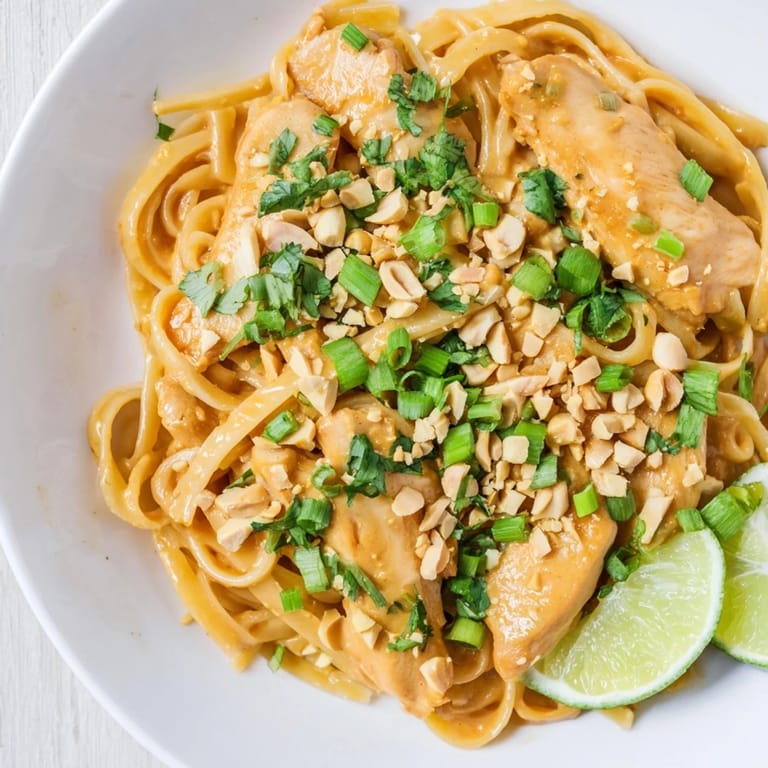
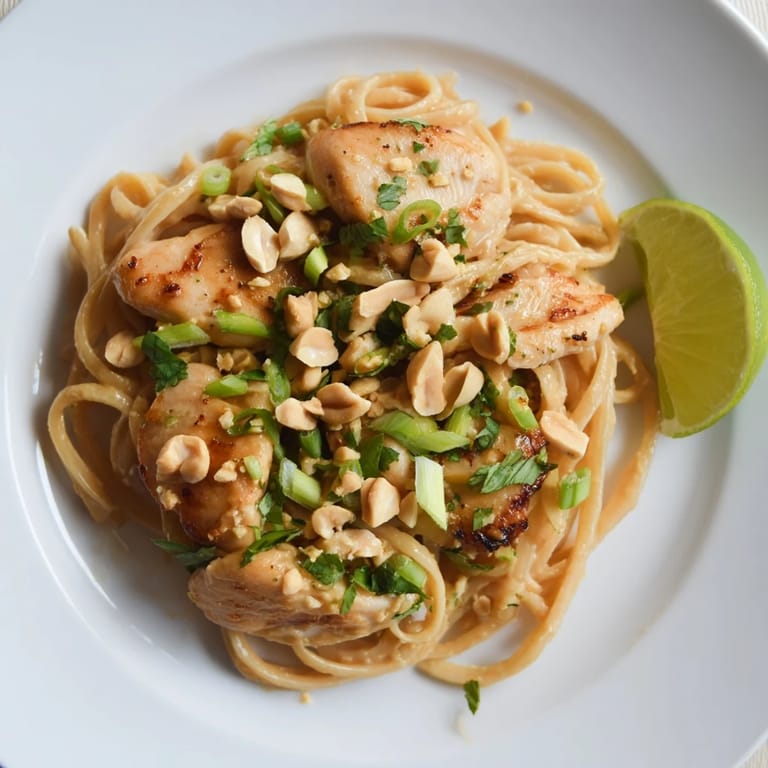
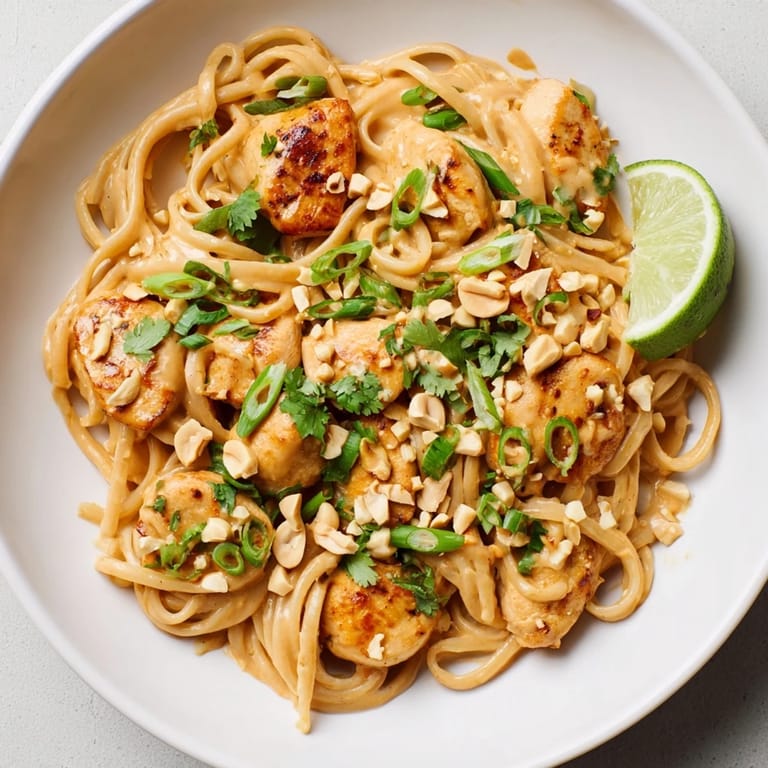
Save There's a moment right after you plate this dish when the steam rises up and carries the smell of lime, peanuts, and fresh herbs directly into your face, and in that moment you feel a little proud of yourself for creating something this good in under 40 minutes. My friend texted me a photo of her version with the caption "this is my new comfort food," and somehow that felt like the highest compliment.
Why This Fusion Works
Thai peanut sauce and Italian pasta shouldn't work together, but they do because they're both built on the same principle: coatings that make every bite interesting. Peanut sauce brings saltiness, sweetness, and richness, while lime and ginger keep it from sitting heavy on the pasta. The herbs tie everything together by adding brightness and sophistication that keeps you coming back for another bite.
Playing With Heat and Flavor
The beauty of this dish is how flexible it is once you understand the base. I've made it with sriracha added to the sauce when I wanted something spicy enough to make my nose run, and I've made it with extra lime when I wanted it brighter and almost sour. Ginger can be increased if you like that warming, almost medicinal quality, and garlic lovers (myself included) sometimes sneak in an extra clove minced right into the sauce.
Stretching and Substituting
This recipe feeds four comfortably, but I've multiplied it for dinner parties and halved it for those nights when it's just me and leftover chicken. The sauce stays consistent whether you use regular pasta, rice noodles, or even a mix of noodles and vegetables. If you want to go vegetarian, tofu pressed and sliced thin becomes crispy in the same way the chicken does, and it absorbs the sauce beautifully.
- Swap in whatever vegetables you have on hand: snap peas, bell peppers, and carrots all taste amazing when tossed through this.
- Make it heartier by adding a drizzle of sesame oil right before serving for a nuttier flavor.
- Batch the sauce separately and refrigerate it so you can throw together quick weeknight meals whenever you want.
 Save
Save This dish has become my go-to when I want something that tastes like I actually know what I'm doing in the kitchen, even though it's honest enough to admit how simple it really is. Every time I make it, I remember that sometimes the best meals come from curiosity and a willingness to let your pantry guide you.
Recipe FAQs
- → What type of pasta works best with this dish?
Long noodles like linguine or spaghetti hold the sauce well and complement the chicken's texture.
- → Can the dish be made spicier?
Yes, adding sriracha or red chili flakes to the sauce amps up the heat without overpowering the flavors.
- → How should I cook the chicken for optimum tenderness?
Sauté thinly sliced chicken breast over medium-high heat until golden and cooked through, about 5–7 minutes.
- → Are there suitable alternatives for a gluten-free version?
Replacing regular pasta with rice noodles provides a gluten-free option while maintaining the dish's texture.
- → What fresh herbs enhance the flavor best?
Chopped cilantro and fresh mint add brightness and aromatic notes that balance the creamy peanut sauce.