 Save
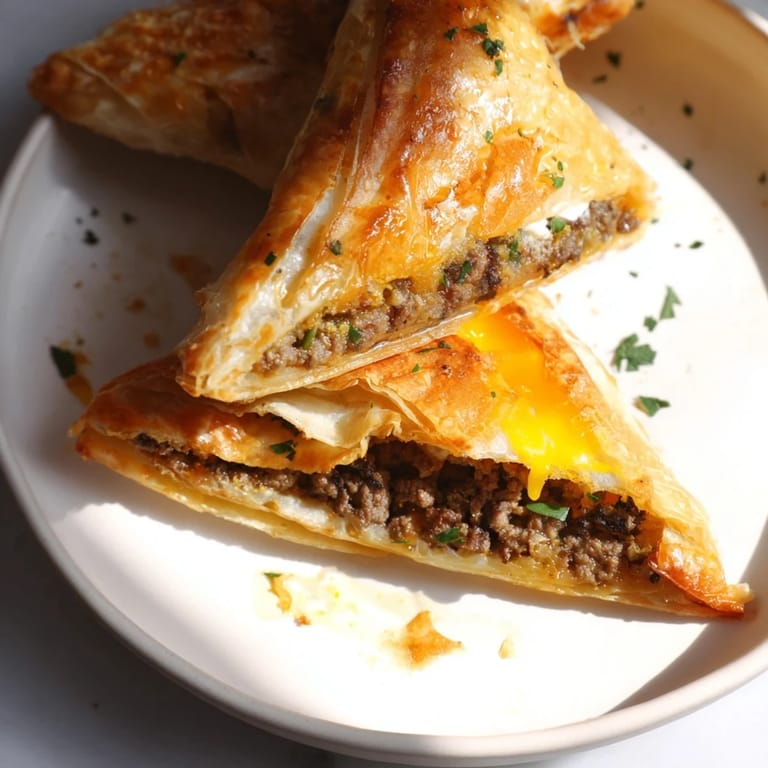
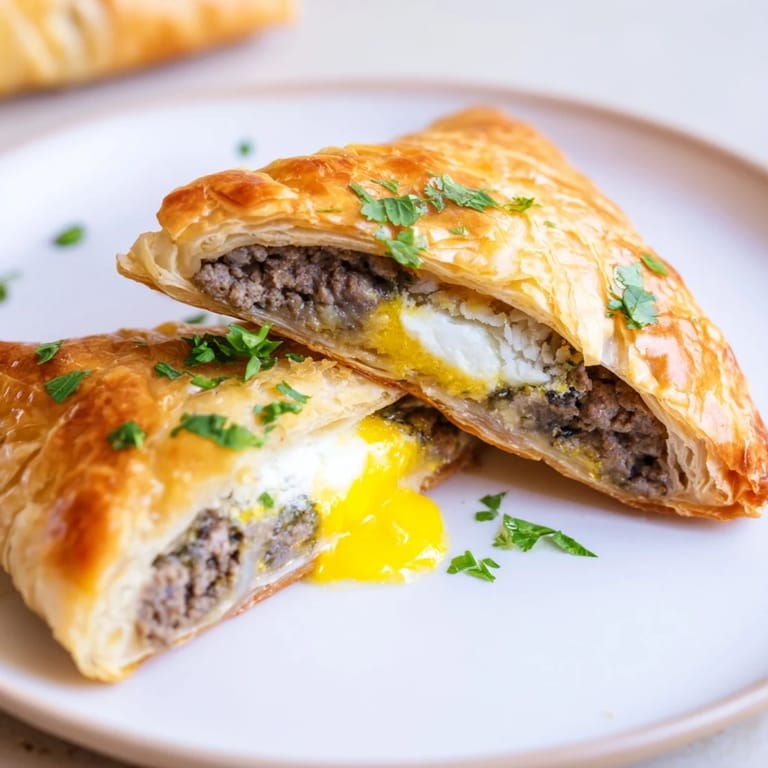
Save The first time I bit into a brik at a café in Tunis, I understood immediately why these parcels are practically sacred street food there. The phyllo shattered between my teeth with such crispy audacity, giving way to a warm, runny egg yolk that soaked into the spiced meat underneath—it was pure theater in a single bite. I spent the next hour watching vendors fold them with the kind of practiced speed that made it look effortless, though I'd later discover the gentle precision it actually demands. When I finally tried making one at home, I was nervous about that egg in the middle, convinced it would either leak everywhere or refuse to cook. Now I make them for friends who've never experienced that moment when they break through the golden exterior and the yolk flows into the meat filling.
I made these for my partner's birthday dinner once, and I remember him closing his eyes after that first bite, completely silent for a moment—the highest compliment I've ever received in a kitchen. We sat on the balcony with lemon wedges and a simple salad, and he kept asking how something so simple could taste so complete. That night taught me that sometimes the best meals aren't complicated; they're just honest flavors executed with care.
Ingredients
- Ground beef or lamb, 120 g: This is where the brik gets its savory backbone—lamb will give you a more traditional Tunisian flavor, but beef works beautifully too and feels less heavy.
- Small onion, finely chopped: It needs to be small because you're not trying to add bulk here, just sweetness and depth as it cooks down into the meat.
- Fresh parsley, 1 tbsp chopped: Stir this in at the end to keep it bright and green; cooked into oblivion, it disappears.
- Ground cumin, 1 tsp: This is non-negotiable—it's the voice that makes the filling distinctly North African.
- Ground coriander, 1/2 tsp: It adds a subtle floral note that prevents the filling from tasting one-dimensional.
- Salt and black pepper: Taste as you go because the phyllo will be neutral and the egg won't add much seasoning.
- Phyllo pastry sheets, 4 large: Handle them like they're made of gossamer because they tear if you breathe on them wrong, but they're tougher than you'd think once they warm up in your hands.
- Large eggs, 4: The whole point of this dish—they should be room temperature if possible so they cook through evenly.
- Gruyère or mozzarella cheese, 4 tbsp grated (optional): This was traditionally included in some versions, and it adds richness without overpowering the other flavors.
- Sunflower or vegetable oil for frying: You need enough to create that golden crisp—shallow frying won't give you the texture you're after.
Tired of Takeout? 🥡
Get 10 meals you can make faster than delivery arrives. Seriously.
One email. No spam. Unsubscribe anytime.
Instructions
- Sauté the aromatics and build the filling:
- Warm a little oil in your skillet and let the onion soften until it's translucent, which takes about three minutes—you'll smell when it's right. Add the ground meat and toast it with the cumin and coriander, breaking it up as it cooks, until no pink remains and everything smells deeply savory.
- Season and cool:
- Stir in the parsley, salt, and pepper, then let the mixture cool on a plate for a few minutes so you're not burning yourself or the phyllo when you handle it.
- Prepare your phyllo:
- Lay one sheet on a clean, dry surface and if it feels tissue-thin (some brands are more delicate), stack two together for insurance.
- Layer the filling and egg:
- Spoon two to three tablespoons of the meat mixture slightly off-center—you need room to fold. Make a small nest in the filling and crack an egg directly into it, then scatter the cheese over everything if you're using it.
- Fold into a package:
- Fold the phyllo over the filling to form either a triangle or a rectangle, pressing the edges where they overlap and using a tiny bit of water on your fingertip to seal any gaps that might let hot oil sneak in.
- Get the oil ready and fry:
- Pour about three to four centimeters of oil into a large pan and heat it over medium-high heat until it shimmers—it should feel almost hot to your hand held above it, but not smoking. Carefully slide the filled brik in and let it fry for two to three minutes per side until it's golden and crispy, rotating it once.
- Drain and serve immediately:
- Fish it out with a slotted spoon and let it rest on paper towels for just a moment, but not too long or the pastry will soften as it cools. Serve while it's still crackling and the egg inside is still warm.
 Save
Save I'll never forget the time my friend's five-year-old tried one of these and announced, completely deadpan, that it was a "fancy egg," and then asked for a second one. That moment crystallized something I'd been feeling—that these pastries bridge the gap between everyday comfort food and something that feels almost celebratory on the plate.
The Oil Temperature Matters More Than You Think
I learned this by failing spectacularly once, when I got impatient and cranked the heat up too high. The exterior turned dark brown in seconds while the egg inside was barely warmed through, and I had to scrape burnt bits out of the pan for twenty minutes. Now I use the old trick of dropping a tiny piece of phyllo into the oil—if it sizzles and floats immediately, you're in the zone. The way the brik should sound when it hits the pan is like a gentle sizzle, not a violent crackle.
Why This Tastes Like Home to So Many People
Tunisian street food has this quality where it's never trying too hard, but every ingredient is there for a reason. The spice blend makes you sit up and pay attention, the egg makes it filling enough for a meal, and the pastry gives you something to hold onto. I think a lot of us are searching for food that does one thing really well instead of ten things in a mediocre way, and that's exactly what brik delivers.
Variations and Personal Touches
Once you understand the basic technique, this becomes a blank canvas for whatever you have on hand or whatever you're craving that day. I've made them with tuna and capers when I had seafood in the fridge, and with a potato and herb filling when I wanted to go vegetarian. A friend of mine adds a pinch of harissa to the meat mixture and swears by it, and honestly, she's right. The one constant is that whatever filling you choose should be cooked or mostly cooked before you wrap it up, because you don't have long to cook these once they hit the oil.
- Try adding harissa or red pepper flakes to the meat for heat and depth.
- Tuna mixed with a little preserved lemon works beautifully if you're avoiding red meat.
- Don't skip the lemon wedges on the side—they cut the richness perfectly.
 Save
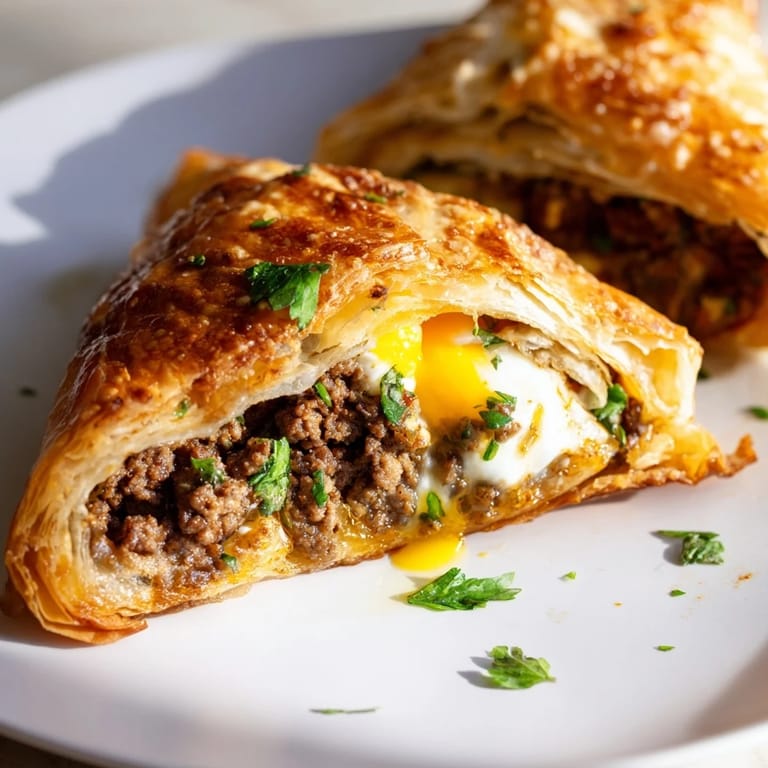
Save These are one of those recipes that feels like a small gift you can give yourself or someone else—quick enough to make on a regular Tuesday, special enough to feel like you tried. Once you make your first one and nail that moment when the crispy exterior gives way to warm, spiced meat and a perfect egg, you'll understand why they're sacred.
Recipe FAQs
- → What type of meat is best for the filling?
Ground beef or lamb works well, providing a rich, savory base seasoned with cumin and coriander.
- → Can I substitute the egg inside the pastry?
The egg adds moisture and texture, but alternatives like tuna or potato can replace the filling for variation.
- → How do I prevent the delicate pastry from tearing?
Handle the phyllo gently and use two sheets together if very thin; sealing edges with water helps maintain shape.
- → What oil is recommended for frying?
Sunflower or vegetable oil is ideal to achieve a crisp, evenly fried exterior without overpowering flavors.
- → Are there flavor variations to try?
Add harissa or chili flakes to the meat mix for a spicy kick, or include grated cheese for richness.