 Save
Save There was a morning last spring when my neighbor knocked on the kitchen door with a bundle of asparagus from her garden, still wet with dew. I had eggs, good bread, and that moment of inspiration where you just know what needs to happen. These tartines came together in the time it took for coffee to brew, and somehow they tasted like both comfort and celebration at once.
I made this for a friend who'd just moved into a new apartment and was too overwhelmed to cook for herself. Watching her eat these tartines at her empty kitchen counter, actually smiling, reminded me that sometimes the simplest meals are the ones that matter most. She's been making them ever since.
Ingredients
- Asparagus spears: Look for thin to medium spears with tightly closed tips, and don't skip the ice bath after blanching—it locks in that vibrant green color and tender-crisp texture.
- Eggs: Large eggs are essential here because you need enough yolk to create that creamy, luxurious scramble that makes these tartines special.
- Crème fraîche or Greek yogurt: This is the secret to silky eggs that never turn rubbery; fold it in at the very last second off the heat.
- Unsalted butter: Use real butter, not margarine, because those delicate shallots and eggs deserve the real thing.
- Rustic country bread or sourdough: Thick slices matter here—they need to stay crisp underneath while supporting the creamy topping without collapsing.
- Shallot and chives: These aromatics are quiet but essential; they add a whisper of allium flavor that makes everything taste more intentional.
- Lemon zest and juice: Don't skip either form—the zest adds brightness while the juice at the end adds a finishing punch that ties everything together.
Tired of Takeout? 🥡
Get 10 meals you can make faster than delivery arrives. Seriously.
One email. No spam. Unsubscribe anytime.
Instructions
- Blanch the asparagus:
- Bring salted water to a rolling boil and add the asparagus, watching for that moment when it turns from pale to vibrant green, usually around 2 to 3 minutes. Transfer immediately to an ice bath so it stops cooking and stays tender-crisp, then pat it completely dry.
- Toast the bread:
- Get your slices golden and crisp; this is your foundation and it needs to stay sturdy enough to hold the creamy eggs without becoming soggy. Work quickly so the toast is still warm when you build the tartines.
- Build your egg base:
- Melt butter over medium heat and let the shallot soften into it for a minute or two until it becomes fragrant and translucent. Whisk your eggs lightly in a bowl—no need to beat them into submission—and pour them in, then stir gently and constantly until they're just barely set but still look slightly underdone.
- Finish with grace:
- Remove the pan from heat and fold in the crème fraîche, chives, lemon zest, salt, and pepper all at once; residual heat will complete the cooking and make them impossibly creamy. The eggs should look almost loose at this moment, which is exactly when to stop.
- Assemble and serve:
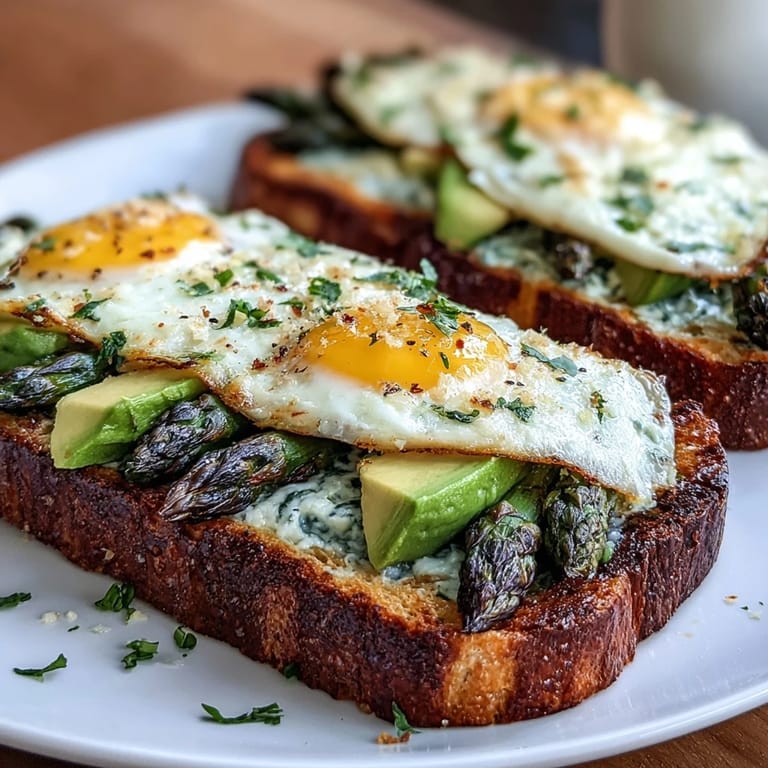
- Spread the warm creamy eggs generously over each toast, top with three asparagus spears arranged at a slight angle, then finish with a squeeze of fresh lemon juice and a shower of extra chives. Eat while everything is still warm.
 Save
Save There's something about standing in your kitchen on a quiet morning, the butter foaming, the lemon scent rising up, that feels like taking care of yourself in a way that other things don't quite match. This dish became my answer to those mornings when I needed to feel nourished and present.
Why Spring Vegetables Matter Here
Asparagus in spring tastes nothing like asparagus in winter; it's sweeter, more tender, and that early-season quality is honestly what makes this dish sing. If you're cooking this outside of asparagus season, thin green beans or even young broccoli spears can work, but the dish will taste better when you use what's actually in season. That one principle—cooking with what's fresh—changed how I approach this tartine and everything else I make.
The Bread Makes the Whole Thing
I've made these with flimsy sandwich bread and they fall apart; I've made them with thick, hearty country bread and they become something you want to eat slowly. The bread is doing more than just being a vessel—it's part of the texture and the experience, so choose something with actual structure and flavor. Toast it properly, and it becomes almost crispy, which is the textural contrast your palate actually needs against the creamy eggs.
Variations and Small Secrets
Once you nail this basic formula, the tartine becomes your canvas. I've added a whisper of Dijon mustard to the butter, swapped the chives for fresh tarragon (which tastes impossibly elegant with eggs), and crumbled soft goat cheese on top when I wanted something richer. The structure stays the same but the mood changes completely based on what you're in the mood for and what's sitting in your pantry waiting to be used.
- A sprinkle of grated Parmesan or crumbled goat cheese adds richness and another layer of flavor that makes people wonder what your secret ingredient is.
- Fresh dill, tarragon, or parsley can replace or complement the chives depending on what you have and what direction you want the flavor to travel.
- Serve with a crisp Sauvignon Blanc or dry rosé if you're feeling civilized, or just with very good coffee if it's a quiet morning alone.
 Save
Save This is the kind of recipe that teaches you something every time you make it, whether it's about the exact moment eggs go from silky to grainy or how transformative one really good ingredient can be. Once you understand what's happening in the pan and why, you'll find yourself making variations forever.
Recipe FAQs
- → How should asparagus be prepared for best texture?
Blanch asparagus in salted boiling water for 2-3 minutes until tender-crisp, then cool immediately in ice water to preserve texture and color.
- → What is the best way to achieve creamy eggs for topping?
Whisk eggs lightly and cook gently in butter with shallots, stirring constantly until softly set. Folding in crème fraîche or Greek yogurt adds extra creaminess.
- → Which bread types work best for tartines?
Rustic country bread or sourdough slices about 1/2-inch thick provide a crisp yet sturdy base that complements the creamy topping well.
- → Can the tartines be served warm or cold?
They are best served immediately while warm to enjoy the contrast of creamy eggs and crisp toast alongside fresh asparagus.
- → What garnishes enhance the flavor profiles?
Fresh chives, a drizzle of lemon juice, and a sprinkle of freshly ground black pepper brighten and elevate the dish’s flavors beautifully.