 Save
Save I remember the first time I arranged vegetables on a platter like a painter with a canvas. My friend Sarah was hosting her gallery opening, and I wanted to bring something that matched the artistic energy of the evening. As I laid out those colorful vegetables in flowing lines toward the center, something magical happened—it stopped being just appetizers and became edible art. That night, watching guests circle the platter like it was a centerpiece rather than food, I realized the most memorable dishes tell a visual story before anyone takes a single bite.
I'll never forget when my nephew looked at this arrangement and said it looked like the geography lesson he was struggling with in school. His mom laughed, and suddenly everyone at the table was talking about river systems while eating vegetables. That's when I knew this dish had become more than just appetizers—it was a conversation starter, a moment where food sparked curiosity and connection instead of just satisfying hunger.
Ingredients
- Hummus or Greek yogurt dip (1 1/2 cups): This is your river, the anchor that holds everything together. Hummus gives earthiness and richness, while Greek yogurt keeps it lighter if that's your preference. The creaminess against the crisp vegetables creates the contrast that makes every bite interesting. I've learned that letting it come to room temperature for ten minutes makes it easier to shape and spread smoothly.
- Cherry tomatoes (1 cup, halved): These little gems are nature's candy, and their bright red becomes your most vibrant visual element. Halving them flat lets them sit on the platter like they belong there, not rolling around causing chaos. Always taste one before committing—sometimes they're sweet perfection, sometimes they're mealy, and you'll know immediately.
- Cucumber (1 cup, sliced into sticks): Cool, refreshing, and the palest part of your arrangement, cucumber provides both visual and textural contrast. I slice mine about quarter-inch thick because they're sturdy enough to dip without shattering, yet thin enough to feel delicate. Pat them dry before arranging or they'll weep water onto your beautiful platter.
- Colorful bell peppers (1 cup, sliced into strips): This is where the real artistry happens—red, yellow, orange, and if you can find them, purple peppers create those striking visual lines that make the whole thing pop. I always slice them lengthwise to get those long, elegant strips that flow naturally toward the center. Sweet peppers have this gentle crunch that surprises people in the best way.
- Carrots (1 cup, peeled and cut into thin sticks): Orange ribbons that add warmth and a satisfying crunch that other vegetables can't quite match. I use a vegetable peeler to create thin sticks because they feel more delicate and refined than chunks. Fresh carrots have this natural sweetness that becomes more pronounced the fresher they are.
- Radishes (1/2 cup, thinly sliced): These bring peppery heat and white circles that punctuate your color story. Radishes are often overlooked, but they're the secret weapon for adding sophistication and a little edge to an otherwise mild spread.
- Snap peas (1/2 cup, trimmed): Sweet, crunchy, and perfectly green—they're the bridge between vegetables and dessert in how tender they feel. Their natural curve works beautifully in flowing lines.
- Fresh parsley (2 tablespoons, chopped): The final garnish that ties everything together with color and a subtle herbaceous note. Don't skip this step even though it seems minor—it's like the signature on the painting.
- Olive oil (1 tablespoon for drizzling): This creates shine and richness on the dip, making it look like it's glistening under gallery lights. The golden shimmer is part of the visual magic.
- Smoked paprika or zaatar (1 teaspoon, optional): If you add this, it brings warmth and depth that elevates the whole experience. Smoked paprika whispers of something sophisticated, while zaatar brings Mediterranean herbaceousness.
Tired of Takeout? 🥡
Get 10 meals you can make faster than delivery arrives. Seriously.
One email. No spam. Unsubscribe anytime.
Instructions
- Prepare your canvas:
- Find your largest, flattest serving platter—this is going to be the stage for your vegetables. A white or neutral platter works best because it makes the colors sing, but a dark slate also looks stunning if that's what you have. Think of it like choosing your canvas color as an artist would. Take a moment to visualize how you want the dip to wind across the platter before you start.
- Create the river:
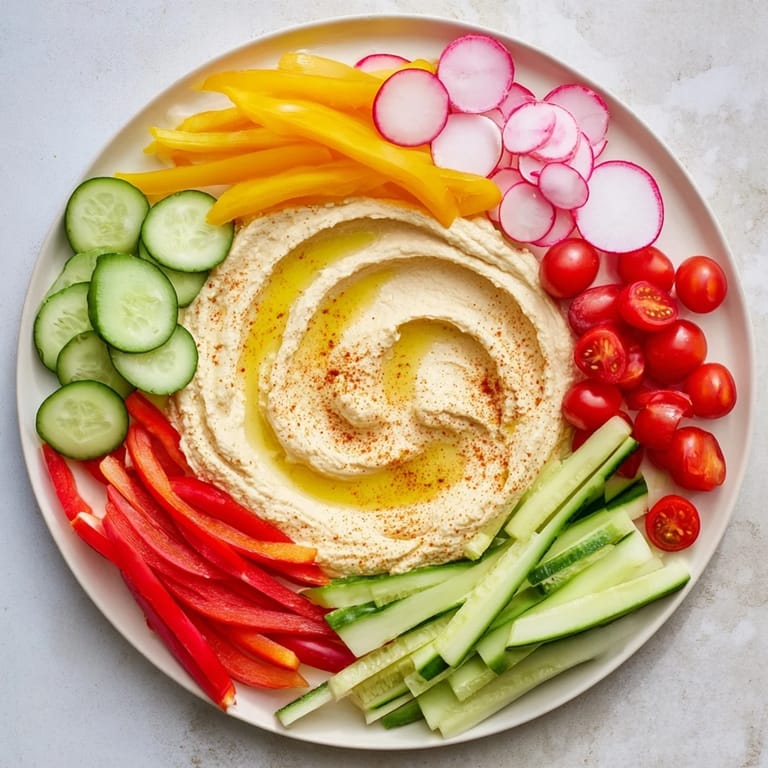
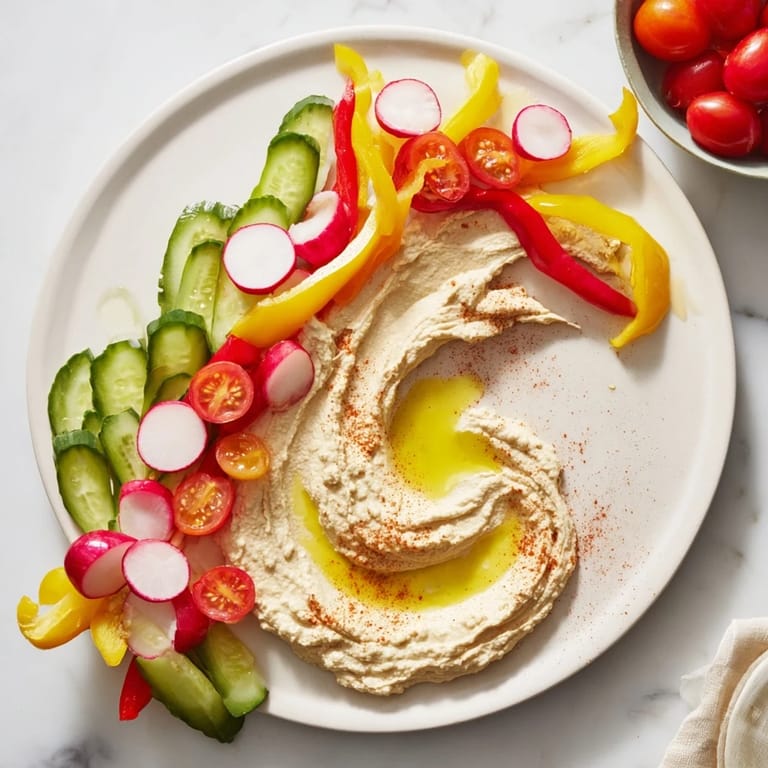
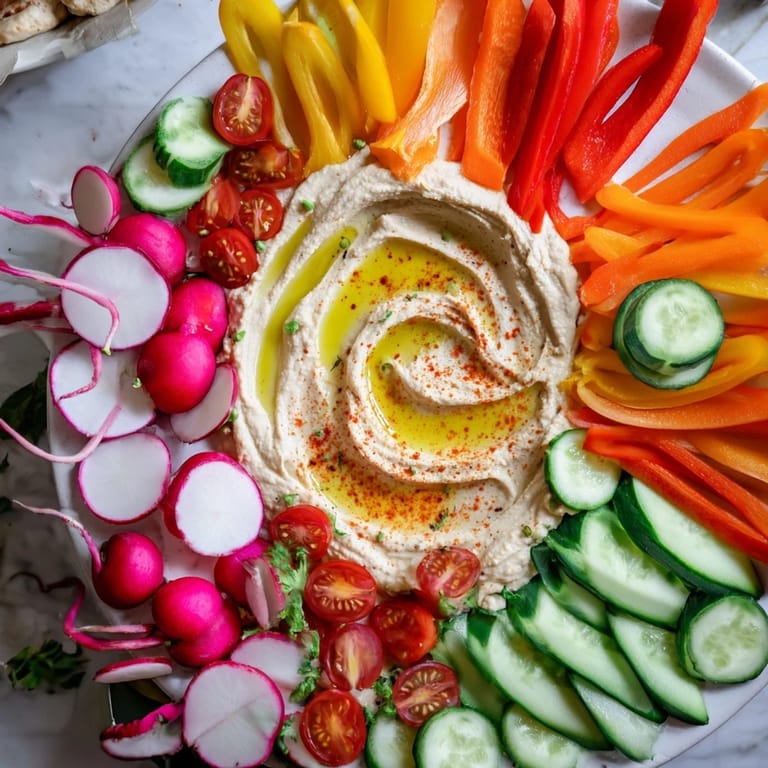
- Spoon your hummus or yogurt dip in a wide, winding line across the center of your platter, letting it meander like an actual river would. Use the back of a small spoon to smooth and shape it, creating gentle curves rather than a straight line. Don't overthink this—imperfect curves look more natural than something too perfect. The dip should be thick enough to hold its shape but soft enough that vegetables will nestle into it.
- Arrange the tributaries:
- Now comes the fun part. Start at the edges of your platter and arrange vegetable sticks and slices in branching lines that flow toward your central river of dip, like tributaries merging into a larger river system. Vary your colors so reds, oranges, yellows, and greens are distributed across the entire platter rather than clumped together. Alternate the shapes—some long cucumber sticks next to round tomato halves, crispy carrots beside soft pea pods. This visual dance is what makes people stop and stare before they even think about eating.
- Add the finishing touches:
- Drizzle the olive oil over the dip so it catches the light and looks inviting. Sprinkle your smoked paprika or zaatar across the dip if you're using it—this adds both color and flavor depth. The final scatter of fresh, vibrant green parsley across the entire platter is your signature, the thing that says this was made with intention and care.
- Serve with intention:
- Bring this to the table and watch what happens. Serve immediately so everything is at its crispest and the presentation is at its most striking. Have extra vegetables or pita chips nearby if people want more dipping options, but honestly, this platter often steals the show as it is.
 Save
Save The moment that made me truly love this dish came when I made it for my daughter's birthday party. As the kids came into the kitchen, one of them gasped and said it looked like a map she was learning about in class. Suddenly, this appetizer became a teaching tool, a conversation starter, and a memory maker all at once. Food stopped being just food and became something that sparked joy, curiosity, and connection. That's when I knew this recipe would be in my rotation forever.
The Art of the Vegetable Platter
There's something deeply satisfying about arranging vegetables like you're creating edible art. The color theory you instinctively learned in grade school becomes practical—you're thinking about warm tones near cool tones, about breaking up large color blocks with smaller accent colors. I've found that the most visually stunning platters follow a principle of gentle chaos, where everything feels intentional but not rigid. Leave some negative space so your eyes can rest. Group some vegetables tightly while spreading others out. This balance between organization and spontaneity is what transforms a platter from functional to memorable.
Making It Your Own
The beauty of this recipe is that it's endlessly adaptable to whatever you have on hand and whatever your guests love. I've made versions with beet hummus as the river for a deep burgundy effect, with tzatziki for a creamy white base that makes the vegetables pop even more dramatically, with baba ghanoush for an earthy, sophisticated feel. Each variation tells a different story. I've added edible flowers for special occasions, scattered microgreens for extra texture and color, and even created a smaller platter version for intimate dinner parties. The river delta concept is flexible—it's about creating flow and visual interest, not following rigid rules. Think of it as your template, not your instruction manual.
Why This Dish Gets Remembered
People remember beautiful food long after they've eaten it. I've hosted dozens of gatherings over the years, and guests mention the river delta platter unprompted years later. It's not because the vegetables taste revolutionary—it's because they felt cared for. Someone took time to arrange their food like it mattered, like their presence was worth that effort. That's a language everyone understands. Plus, there's something about a vegetarian appetizer that feels substantial and celebrated rather than like the alternative option. This platter says you are worth the care, the creativity, the presentation.
- Make this for the next gathering where you want to set a tone of creativity and intention
- Keep fresh vegetables in your life because they deserve to be treated like the beautiful things they are
- Remember that food is always about more than nutrition—it's about connection, memory, and the stories we build around the table
 Save
Save This dish has taught me that presentation is love made visible. Every time you arrange this platter, you're saying something kind without words. Serve it with confidence and joy.
Recipe FAQs
- → What vegetables work best for this platter?
Crunchy and colorful vegetables like cherry tomatoes, cucumbers, bell peppers, carrots, radishes, and snap peas offer a variety of textures and colors that complement the creamy center.
- → Can I substitute the hummus with other dips?
Absolutely! Beet hummus, baba ghanoush, or tzatziki serve as great alternatives to create different flavor profiles while maintaining the visual appeal.
- → How do I create the river effect with the dip?
Spoon the hummus or yogurt in a wide, winding line across the platter’s center and use the back of a spoon to smooth and shape it to resemble the river’s flow.
- → Are there any allergens in this dish?
Traditional hummus contains sesame and yogurt dips contain dairy. Be sure to check dip ingredients and pita chips for potential allergens.
- → What is the best way to serve this platter?
Serve immediately for best freshness. Pair with pita chips or extra vegetables for guests to graze on at parties and gatherings.